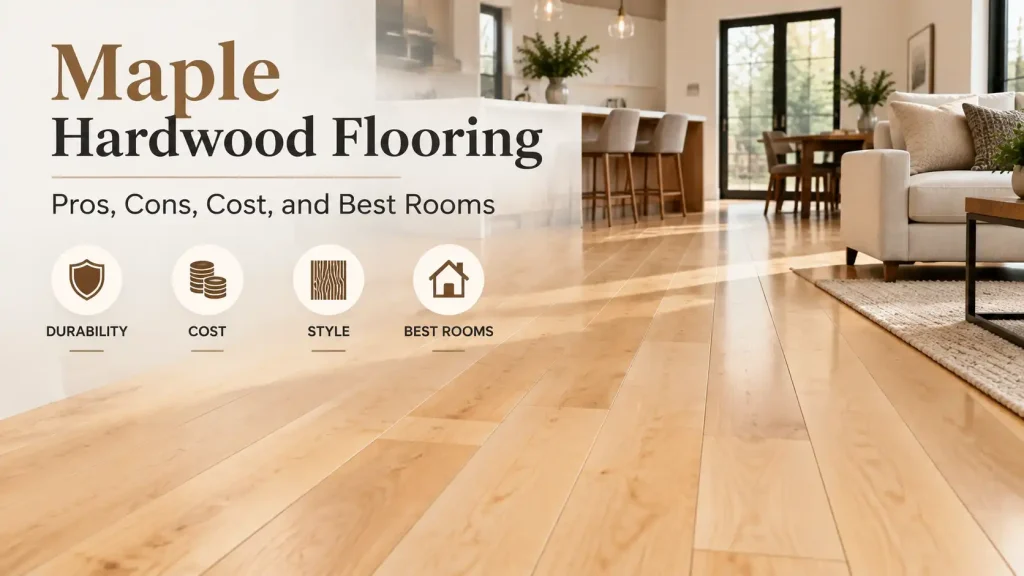
Maple is one of the hardest domestic hardwoods you can put on a floor, with a Janka rating of about 1,450 harder than both red and white oak. It brings a bright, clean, modern look with fine, subtle grain, which makes it a favorite for high-traffic homes and even commercial spaces. Its one real catch: maple’s tight grain resists stain and can go blotchy, so it is happiest in its natural light color or bought prefinished. Here is the honest guide, including the parts most product pages skip.
At National Hardwood Flooring & Moulding, we have supplied maple flooring to Southern California homeowners, designers, and contractors since 1984. Browse our full hardwood flooring range, or read on for the complete maple guide.
Is Maple Good for Flooring?
Genuinely yes, with one condition. Maple’s strength is hardness: it resists dents and surface wear better than most hardwoods you will find in a showroom.
| Species | Janka rating |
| American black walnut | ~1,010 |
| Red oak | 1,290 |
| White oak | 1,360 |
| Hard maple | ~1,450 |
| Hickory | 1,820 |
At 1,450 on the Janka scale, hard maple beats red oak (1,290) and white oak (1,360), and it far outperforms softer woods like walnut (1,010). Only hickory (1,820) is meaningfully harder among common domestic species. That makes maple an excellent choice for kitchens, hallways, family rooms, and high-traffic homes with kids and pets.
The condition: maple is more sensitive to humidity than oak. If your indoor humidity swings hard between seasons and you don’t manage it, maple can show gaps in winter and slight cupping in summer. In variable climates, engineered maple is the safer construction (more on that below).
Hard Maple vs. Soft Maple
A quick clarification that saves buyers from a mistake. “Maple” covers several species, and they are not equal for flooring:
- Hard maple (sugar maple): Janka ~1,450. This is the flooring maple dense, durable, the same wood used for bowling alleys and gym floors.
- Soft maple: A group of weaker maple species, noticeably less hard. Fine for furniture and trim, not the right pick for a durable floor.
When you shop maple flooring, you want hard (sugar) maple. If a price looks unusually low, confirm the species before you buy.
The Staining Problem: Does Maple Stain Well?
This is the single most important thing to understand about maple, and it is exactly what product pages gloss over. Maple does not stain well. Its dense, tight, closed grain resists stain absorption, so color soaks in unevenly the result is often blotchy and streaky, especially with darker tones. The few spots with slightly more open grain drink up more stain and go darker, which exaggerates the patchiness.
What to do about it:
- Embrace natural. Maple’s creamy, light color is its strength. A clear or light satin finish gives the most consistent, professional result and needs no staining at all.
- Buy prefinished for dark looks. Factory finishing controls color with equipment no job site can match. If you want a darker maple, a prefinished product is the reliable route — not on-site staining.
- If you must stain on site, use a pro. Dyes, gel stains, and water-popping help, but even then maple never takes color as predictably as oak. This is a job for an experienced finisher. See our stains and finishes and wood stain guide for options.
Bottom line: if you specifically want a dark, custom-stained floor, white oak takes color far more predictably and may be the better species.
Grain, Color, and Style
Maple’s look is clean and contemporary: pale, creamy tones from near-white to light golden, with a fine, subtle grain that reads smooth and uniform rather than busy. It makes rooms feel larger and brighter and works beautifully in modern, Scandinavian, and minimalist interiors. For a bit more surface texture, ask about wire-brushed maple. Because the grain is so understated, maple is the opposite of a bold, characterful floor like hickory which one is right depends on the look you want.
The Honest Cons: Scratches, Dirt, and Humidity
Maple is hard, but no floor is bulletproof, and its light color changes how wear shows.
- Scratches are more visible. Maple resists scratches well because it is hard, but the scratches it does get, along with dark pet hair and dirt, stand out more against its pale, smooth surface than on a heavily grained wood like oak.
- Humidity movement. Maple expands and contracts more than oak, so uncontrolled indoor humidity can cause winter gaps or summer cupping. Keep indoor humidity stable, or choose engineered.
- Light-only palette. Given the staining difficulty, maple is a commitment to the lighter end of the spectrum. Re-coloring it dark later is not a simple job.
Solid vs. Engineered Maple
Construction matters as much as species.
- Solid maple: milled from one piece; can be sanded and refinished multiple times. Best in climate-controlled rooms above grade where humidity is steady.
- Engineered maple: a real maple veneer over a stable plywood core. Far more stable against humidity the smart choice for slabs, basements, radiant heat, and the Valley’s temperature swings. It usually comes prefinished, which conveniently sidesteps maple’s staining problem.
We stock both solid and engineered maple in a range of widths and grades, with samples in the showroom so you can compare in person.
Maple Flooring Cost
Maple is competitively priced. Material typically runs comparable to or slightly below white oak — which surprises people, since maple is actually harder — because maple grows abundantly across North America. Where cost climbs is custom color: on-site staining of maple demands a skilled finisher and extra prep, so a dark, custom-stained maple floor costs more in labor than a natural or prefinished one.
For an accurate number on your project, bring your square footage and grade preference to our Van Nuys showroom and we will price the material and walk you through your finishing options.
Maple vs. Oak, Walnut, and Hickory
| Feature | Maple | Oak | Walnut | Hickory |
| Janka | 1,450 | 1,290–1,360 | 1,010 | 1,820 |
| Grain | Fine, subtle | Open, prominent | Straight–wavy | Bold, varied |
| Color | Light, creamy | Golden / pink | Dark brown | Blonde–brown mix |
| Stain | Poor (blotchy) | Excellent | Moderate | Resists |
| Best use | High traffic | Versatile | Low traffic | High traffic |
Read the full comparisons in our hickory vs. oak flooring and walnut hardwood flooring guides.
Maple Flooring Pros and Cons
Pros
- One of the hardest domestic hardwoods (Janka 1,450) — excellent dent resistance.
- Bright, clean, modern look that makes rooms feel larger.
- Smooth, tight grain is easy to keep clean.
- Competitively priced; strong value for its hardness.
- Great for kitchens, high-traffic homes, and commercial spaces.
Cons
- Resists stain and goes blotchy — dark colors need prefinished product.
- Light surface shows scratches and dark pet hair more readily.
- More humidity-sensitive than oak; manage indoor RH or go engineered.
- Committed to a lighter palette; hard to re-color dark later.
Maple Flooring FAQ
Are maple hardwood floors good?
Yes. Maple is one of the hardest domestic hardwoods, so it stands up to heavy traffic, kids, and pets. Its main limitation is staining, so it is best in its natural light color or bought prefinished.
What are the disadvantages of maple wood flooring?
Maple resists stain and can look blotchy if stained dark on site, its light surface shows scratches and dirt more, and it is more sensitive to humidity than oak.
What is the most popular hardwood floor right now?
White oak leads current demand for its versatility and stain-friendliness, but maple remains popular for bright, modern interiors and high-traffic homes.
Are maple floors expensive?
Maple material is competitively priced, often comparable to or slightly below white oak. The cost rises mainly if you want a custom on-site stain, which requires a skilled finisher.
See Maple in Person
The best way to judge maple is to view full-size samples under your own lighting and finish. Visit our Van Nuys showroom to compare solid and engineered maple across grades and widths, or browse our hardwood flooring range online. Contractors and designers can ask about trade pricing and bulk sourcing.