National Hardwood Flooring & Moulding supplies solid hardwood flooring to contractors, homeowners, and designers across Southern California. Our Van Nuys location stocks solid wood flooring in domestic and imported species, with prefinished and unfinished options across multiple grades. As a solid wood flooring supplier serving the Los Angeles area since 1984, we provide materials, installation products, and contractor pricing for residential and commercial projects.
Solid hardwood flooring consists of planks milled entirely from a single piece of wood. Standard solid hardwood measures 3/4 inch in thickness, though thinner profiles of 5/16 inch are available for specific applications. The uniform wood composition throughout each plank distinguishes solid flooring from engineered products with layered cores.
The thickness of solid hardwood provides material for multiple sanding and refinishing cycles over the floor’s lifespan. A 3/4-inch plank can be sanded and refinished as many as ten times when performed by experienced contractors, allowing the floor to serve a building for generations with proper maintenance.
National Hardwood stocks solid flooring in species suited to different design requirements and performance needs.

Red oak and white oak remain the most installed hardwood flooring species in North America. Oak provides consistent availability, predictable finishing characteristics, and hardness ratings suitable for residential traffic. Red oak features warm undertones and prominent grain patterns. White oak offers cooler tones with tighter grain and increased resistance to moisture penetration.
Hard maple delivers a tight grain pattern with light coloration before staining. The density of maple exceeds oak, making it suitable for high-traffic residential and commercial installations. Maple accepts stains differently than oak, often requiring professional application for even color distribution.
American black walnut provides darker coloration without staining, featuring brown tones with purple and gray undertones. Walnut falls lower on hardness scales than oak or maple, making it better suited to residential spaces with moderate traffic.
Hickory ranks among the hardest domestic flooring species available. The grain displays significant color variation between light and dark tones within individual planks. Hickory suits installations requiring durability in active households.
We stock imported species including Brazilian cherry, mahogany, teak, and other exotic hardwoods. Imported species offer color profiles and hardness ratings not available in domestic options.
Solid hardwood grading describes the visual characteristics of each plank. Grade classifications follow industry standards set by the National Wood Flooring Association.
Clear grade flooring presents consistent color with minimal knots, mineral streaks, or sapwood. Planks in clear grade run longer on average than lower grades. This grade costs more than others and suits installations prioritizing visual uniformity.

Select grade approaches clear grade in consistency while permitting limited natural character marks. Select floors display minimal color variation with occasional small knots.
Number one common grade includes more color variation, shorter boards, and visible knots and pinholes. This grade provides a traditional hardwood appearance at a lower cost than select grades.
Number two common grade features significant color variation between planks, larger knots, and shorter average board lengths. The natural character appeals to homeowners and designers seeking visible wood grain and variation.
Cabin grade includes unfilled knotholes, worm holes, and wide color variation. The rustic appearance suits projects where natural character is the design goal.

Solid hardwood flooring ships in prefinished and unfinished forms, each with installation and appearance implications.
Prefinished solid hardwood arrives with factory-applied stains and protective finishes. Aluminum oxide coatings and UV-cured finishes provide durability ratings exceeding most site-applied finishes. Prefinished flooring eliminates on-site sanding dust, finish odors, and curing time. Installation proceeds faster, and the floor is ready for use immediately after completion.
The beveled edges on most prefinished flooring products create visible lines at plank joints. Some manufacturers offer microbevel profiles that reduce joint visibility.
Unfinished solid hardwood requires sanding, staining, and finishing after installation. This process allows contractors to apply custom stain colors matching existing woodwork, cabinetry, or design specifications. Site-finished floors present a flat surface without beveled edges between planks.
Unfinished flooring requires additional time and labor for sanding and finishing. The workspace must remain unoccupied during finish application and curing, typically requiring three to seven days depending on the finish system used.
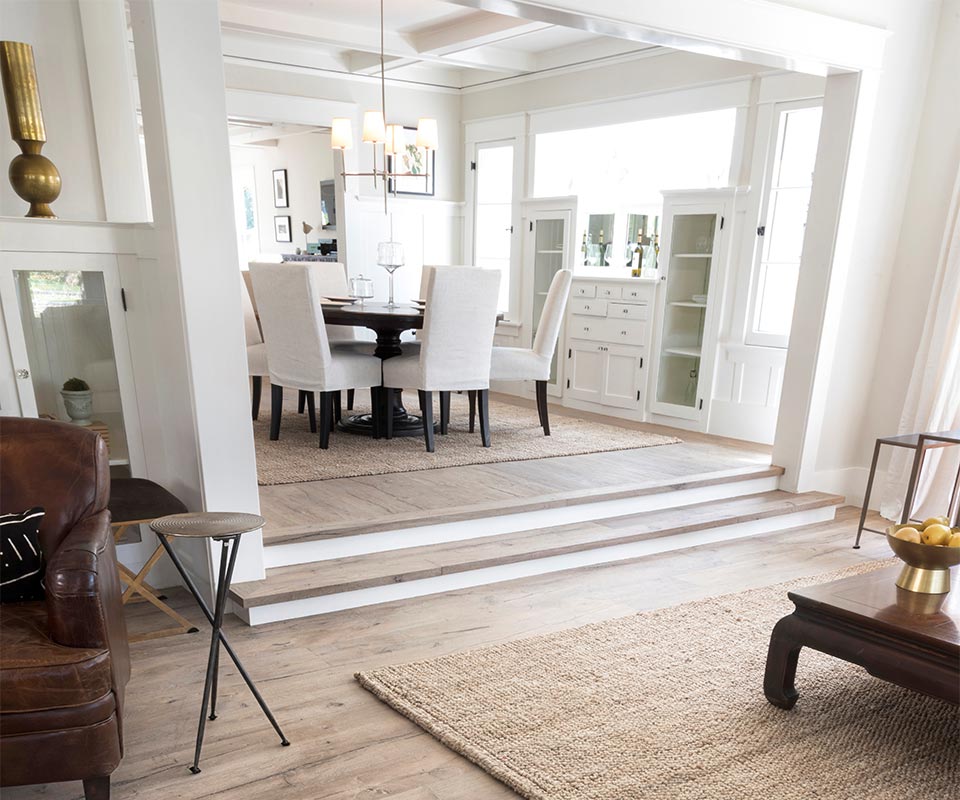

Solid hardwood flooring requires specific subfloor and environmental conditions for successful installation.
Solid hardwood is typically nailed or stapled to plywood subfloors. The subfloor must be structurally sound, level, and dry. Installation over concrete slabs requires a plywood subfloor system or the use of glue-down products designed for concrete application.
Solid hardwood expands and contracts with changes in humidity. Installation environments must maintain consistent humidity levels between 30 and 50 percent relative humidity. Spaces with significant humidity fluctuation may experience gapping during dry periods or cupping during humid seasons.
Solid hardwood is not recommended for below-grade installations, basements, or spaces with radiant heating systems unless specific product lines and installation methods are used.
Flooring materials must acclimate to the installation environment before installation. Bundles should be opened and stored in the space for a minimum of three to five days, allowing the wood to reach equilibrium moisture content with the surrounding environment.
Solid hardwood floors provide decades of service with appropriate maintenance. Regular sweeping or vacuuming removes grit that causes surface scratches. Periodic damp mopping with hardwood-specific cleaners maintains the finish without introducing excess moisture.
The thickness of solid hardwood allows for refinishing when surface wear becomes visible. Professional sanding removes the old finish and a thin layer of wood, restoring the floor’s appearance. The ability to refinish solid hardwood multiple times makes it a long-term flooring investment for buildings expected to remain in service for generations.
Visit our showroom at 14959 Delano Street in Van Nuys to view solid hardwood samples across species and grades. Our staff provides guidance on product selection, installation methods, and finishing options.
Monday through Friday: 7:30 AM to 5:00 PM Saturday: 8:00 AM to 3:00 PM Sunday: Closed
Phone: (800) 848-5556 or (818) 988-9663
We supply solid hardwood flooring to contractors and homeowners throughout Los Angeles, Ventura County, and California, and randomly through the USA.
Specials & Promotions

Sign up for National Hardwood Flooring & Moulding Mobile Deals!
Text “Special” to (818) 645-6320 to sign up for special discounts & promotions.
