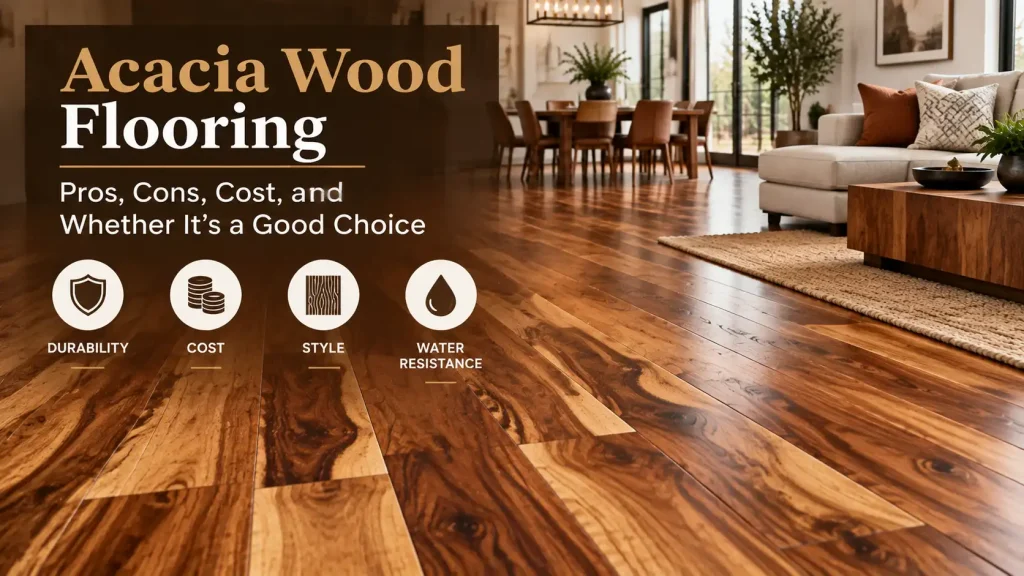
Acacia is a very hard, character-rich exotic hardwood with dramatic grain, warm color variation, and natural resistance to water and insects. It is harder than oak, maple, and even hickory, yet it is priced as one of the more affordable exotics. The trade-offs: acacia comes in shorter planks with strong color variation, it needs careful acclimation, and it fades in direct sun. Here is the honest guide to whether it is right for your home.
At National Hardwood Flooring & Moulding, we have supplied acacia flooring to Southern California homeowners, designers, and contractors since 1984. Browse our full hardwood flooring range, or read on for the complete acacia guide.
Is Acacia Good for Flooring?
For the right buyer, yes. Acacia combines standout hardness, natural water and insect resistance, and a bold, distinctive look, all at a value price for an exotic. It is an excellent choice when you want a durable floor with visible wood character. It is a weaker fit if you want a uniform, calm floor or long, seamless planks — acacia is the opposite of subtle.
How Hard Is Acacia?
Acacia is one of the harder woods you can put on a floor.
| Species | Janka rating |
| American black walnut | ~1,010 |
| Red oak | 1,290 |
| White oak | 1,360 |
| Hard maple | ~1,450 |
| Acacia | ~1,700–2,300 |
| Hickory | 1,820 |
| Brazilian cherry (Jatoba) | ~2,350–3,500 |
Published values vary by species, but acacia typically lands around 1,700 to 2,300 on the Janka scale — harder than red oak (1,290), white oak (1,360), maple (1,450), and even hickory (1,820). That makes it excellent at resisting dents and scratches in busy homes. The flip side of that density: acacia is harder to cut, nail, and sand, so it needs power tools to install and is more demanding to refinish.
Why Is Acacia So Cheap?
This is one of the most common questions about acacia, and it is a fair one how can an exotic hardwood cost less than teak or mahogany? A few reasons:
- Fast-growing and abundant. Acacia species grow quickly and are widely cultivated, so raw supply is high, which keeps prices down.
- Short planks. Acacia trees yield shorter boards, which are less costly to produce than the long, clear planks of premium species.
- Value positioning. It is sold as an affordable exotic the look and hardness of a premium wood at a mid-range price.
Important: cheap does not mean low quality here. But because “acacia” covers many species and product programs, quality does vary — which is the next thing to understand.
‘Acacia’ Is Many Species — Quality Varies
“Acacia” is not one wood. It is a broad label covering many species (you will see names like short-leaf and long-leaf acacia), and hardness, color, board length, and grading differ between them and between manufacturers. That is why one acacia floor can feel premium and another disappointing. To buy well: check the specific product’s hardness and grade, look at full-size samples rather than a small swatch, and confirm board lengths and finish. We are happy to walk you through the differences so the installed floor matches what you saw in the showroom.
Look, Grain, and Short Planks
Acacia’s signature is drama. Expect strong color variation light golds, warm browns, and darker streaks, often within a single plank plus visible knots and figure. Combined with its typically shorter boards (which means more seams), acacia reads as a busy, lived-in, characterful floor. Many people love that richness; if you want a uniform, minimal look, acacia is the wrong species. Hand-scraped and wire-brushed acacia lean further into the rustic look.
Durability, Water, and Insect Resistance
Beyond hardness, acacia has genuine natural advantages: it resists water, mold, and insects better than most domestic hardwoods, thanks to its dense structure and natural oils. That makes it more forgiving in kitchens and humid climates than many woods. Two honest caveats: acacia is water-resistant, not waterproof, so wipe spills promptly and keep it out of bathrooms and laundry rooms; and it is fire-resistant, not fireproof.
The Real Cons: Acclimation, Sun Fade, and Refinishing
Three practical issues decide whether an acacia floor succeeds.
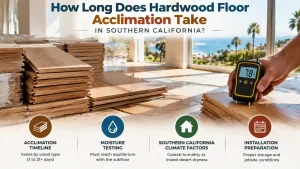
- Acclimation is critical. This is the number-one real-world failure with acacia. It must acclimate to your home’s humidity before installation, or it can shrink, gap, or buckle. Keep indoor humidity stable year-round.
- Sun fade. Acacia’s color shifts and fades under direct sunlight. In sunny Southern California rooms with big windows, rotate rugs and furniture and use window treatments so the floor ages evenly.
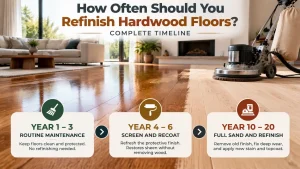
- Its hardness makes sanding a tough job, and its color variation means refinishing results look different from a uniform wood. Plan accordingly.
Solid vs. Engineered Acacia
Construction matters, especially given acacia’s acclimation sensitivity.
- Solid acacia: milled from one piece; can be refinished over its life. Needs careful acclimation and stable humidity.
- Engineered acacia: a real acacia veneer over a stable core. Much more forgiving of humidity and slabs, which directly reduces the shrink/buckle risk — often the safer choice for acacia. Usually prefinished.
We stock both solid and engineered acacia, with samples in the showroom so you can compare in person.
Acacia Flooring Cost
Acacia is an affordable exotic. It typically costs more than entry-level domestic oak but far less than premium exotics like teak or mahogany, and it comes in solid, engineered, and laminate forms to fit different budgets. Machine-scraped finishes cost less than hand-scraped. For an accurate figure on your project, bring your square footage and grade preference to our Van Nuys showroom and we will price the material and finishing.
Acacia vs. Oak and Other Species
| Feature | Acacia | Oak | Maple | Hickory |
| Janka | 1,700–2,300 | 1,290–1,360 | 1,450 | 1,820 |
| Grain | Bold, high variation | Open, even | Fine, subtle | Bold, varied |
| Planks | Often short | Long | Long | Long |
| Water resist. | Naturally high | Moderate | Moderate | Moderate |
| Price | Affordable exotic | Mid | Mid | Mid–high |
See the full comparisons in our hickory vs. oak, walnut, and Brazilian cherry guides.
Acacia Flooring FAQ
Is acacia wood good for flooring?
Yes. Acacia is very hard, naturally water- and insect-resistant, and distinctive, making it a strong choice for busy, character-loving homes. Just plan for its short planks, color variation, and acclimation needs.
Why is acacia so cheap?
Acacia grows fast and is abundant, and it yields shorter planks, so it is priced as an affordable exotic. Cheap does not mean low quality, but quality varies between species and products, so buy from full-size samples.
What are the disadvantages of acacia wood flooring?
Short planks and heavy color variation, a need for careful acclimation to avoid shrinking or buckling, fading under direct sun, and difficulty sanding and refinishing due to its density.
Is acacia wood flooring expensive?
It is mid-priced — more than entry-level oak but well below premium exotics like teak or mahogany, with solid, engineered, and laminate options across budgets.
See Acacia in Person
Because acacia varies so much between species and products, seeing full-size samples is the best way to buy well. Visit our Van Nuys showroom to compare solid and engineered acacia across grades, finishes, and plank sizes, or browse our hardwood flooring range online. Contractors and designers can ask about trade pricing and bulk sourcing.