Choosing between water-based and oil-based polyurethane is one of the most critical decisions when installing or refinishing hardwood floors. The protective coating you apply dictates not only how effectively the timber repels daily traffic, spills, and pet claws, but also how the color of the wood transforms over time.
While oil-based polyurethane has served as the traditional industry standard for decades, modern water-based formulations have largely overtaken the residential market. Today, premium two-component water-based finishes match or exceed the durability of traditional oil finishes without the prolonged chemical odors, lingering drying periods, or heavy yellow-amber discoloration.
Understanding the differences between these two finish chemistries ensures you select the best protection for your interior aesthetic, living schedule, and long-term maintenance expectations.
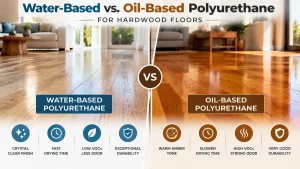
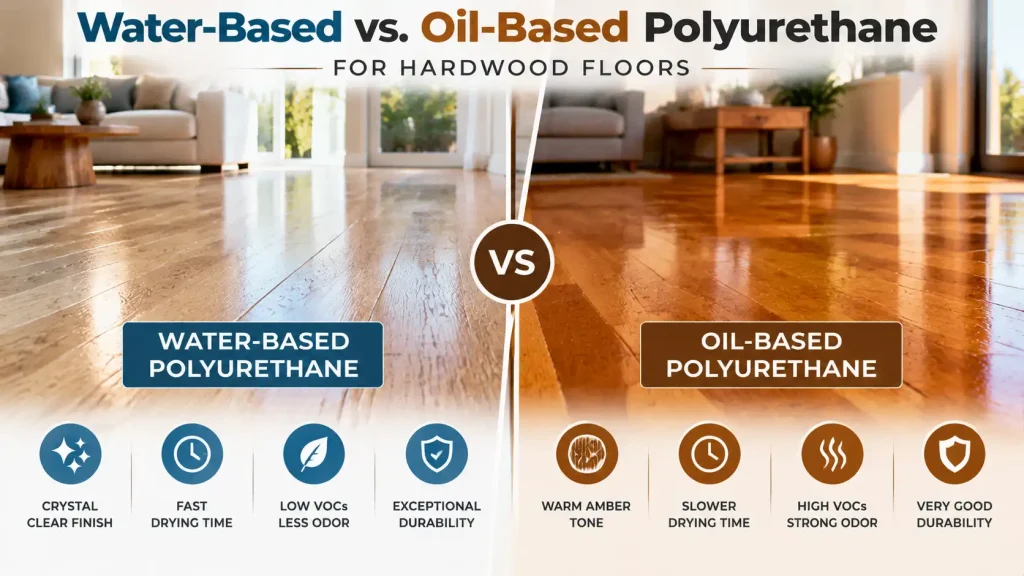
Comparison at a Glance: Water-Based vs. Oil-Based Polyurethane
Water-Based Polyurethane (e.g., Bona Traffic HD, Loba 2K Supra)
Chemical Base: Waterborne acrylic and polyurethane resins with optional isocyanate hardeners
Visual Color Profile: Crystal clear; does not alter the natural tone of the wood
Yellowing / Ambering Over Time: Non-yellowing; stays clear for the lifetime of the finish
Drying Time Between Coats: Rapid (2 to 3 hours per coat)
Full Chemical Cure Window: 3 to 7 days
Odor and VOC Levels: Very low odor; meets strict California air quality regulations
Durability and Scratch Resistance: Exceptional in commercial 2-component formulas; highly resistant to scuffs
Average Material Cost: Premium ($85 to $140+ per gallon)
Best Suited For: Natural white oak, gray/whitewash stains, modern Scandinavian interiors, and occupied homes
Oil-Based Polyurethane (Traditional Alkyd / Urethane)
Chemical Base: Petroleum-derived mineral spirits and linseed/soybean alkyd resins
Visual Color Profile: Warm, amber glow upon application; darkens natural grain lines
Yellowing / Ambering Over Time: Continuously ambers into an orange-gold tone under UV light
Drying Time Between Coats: Slow (8 to 24 hours per coat)
Full Chemical Cure Window: 30 days
Odor and VOC Levels: High solvent odor; heavy chemical off-gassing requiring temporary relocation
Durability and Scratch Resistance: Very good; thick, flexible film that handles gradual foot traffic well
Average Material Cost: Economical ($40 to $65 per gallon)
Best Suited For: Traditional red oak, warm walnut, historic home restorations, and tight budgets
1. Visual Appearance: Crystal Clear vs. Warm Ambering
The most noticeable difference between these two finishes is how they interact with the natural color of raw timber.
The Water-Based Look: True-to-Color and Non-Yellowing
Water-based polyurethane dries completely clear, functioning like an invisible glass shield over your floor.
It does not change the base pigment of the timber or alter stained wood.
It will not turn orange, gold, or brassy over time, even when exposed to direct sunlight from large windows and glass sliding doors.
If you are investing in modern white oak flooring, bleached timber, or pale modern stains, water-based polyurethane is essential. Applying an oil-based finish over light oak will immediately impart a yellowish cast that ruins the clean, natural tone.
The Oil-Based Look: Traditional Amber Depth
Oil-based polyurethane contains natural resins and petroleum solvents that impart an immediate golden-amber hue to the lumber.
It accentuates the grain patterns of classic domestic hardwoods, giving dark species and traditional honey stains an appealing, vintage depth.
However, this ambering never stops. As the finish ages and absorbs ambient ultraviolet radiation, the chemical polymers continue to oxidize, turning floors a distinct orange-gold tone over 3 to 5 years. While this works well in historic colonial architecture, it clashes with modern, cool-toned design palettes.
2. Durability and Scratch Performance
A common misconception is that oil-based finish is inherently harder and more durable than water-based polyurethane. Decades ago, this was true. Today, chemical engineering has changed the dynamic entirely.
Single-Component vs. Two-Component Water-Based Finishes
Water-based finishes fall into two distinct performance tiers:
Single-Component (1K): Standard residential waterborne finishes sold in consumer paint stores. They offer moderate durability suitable for low-traffic bedrooms and guest suites.
Two-Component (2K) Commercial Polyurethane: Formulations like Bona Traffic HD or Loba 2K Supra require the contractor to mix an external catalyst (hardener) into the resin jug right before application. Once cured, these finishes create an extraordinarily dense, cross-linked molecular lattice that outperforms standard oil-based polyurethane in Taber abrasion resistance tests. They resist micro-scratching from dog claws, high heels, and grit significantly better than soft oil finishes.
Oil-Based Durability Characteristics
Oil-based polyurethane dries into a thicker, slightly softer, and more pliable plastic film.
Because the film is somewhat flexible, it handles seasonal expansion and contraction of solid timber well.
However, because the surface film remains softer than a catalyzed 2K waterborne finish, it is more susceptible to fine surface scuffs, furniture friction marks, and visible claw scratches from large active pets.
3. Drying, Curing, and Project Timeline
The chemical drying mechanism directly determines how quickly you can move back into your home.
PROJECT TIMELINE BREAKDOWN:

[ Water-Based Polyurethane: 3 Coats in 1-2 Days ]
Coat 1 (Dry: 2-3 hrs) --> Coat 2 (Dry: 2-3 hrs) --> Coat 3 (Dry: overnight)
Result: Walkable in socks after 24 hrs; 80% cured in 48 hrs; full cure in 3 to 7 days.

[ Oil-Based Polyurethane: 3 Coats in 3-4 Days ]
Coat 1 (Dry: 12-24 hrs) --> Sand/Prep --> Coat 2 (Dry: 24 hrs) --> Coat 3 (Dry: 24 hrs)
Result: Walkable in socks after 48 hrs; full chemical cure takes 30 days.
Water-Based Application Speed
Water-based finishes dry primarily through water evaporation.
Multiple coats can often be applied in a single working day (re-coating window is typically 2 to 3 hours).
Floors can generally handle light foot traffic in socks within 24 hours of the final coat.
Modern two-component water-based finishes reach 80 to 90 percent of their final hardness within 48 to 72 hours, meaning area rugs and furniture can return to the space much sooner.
Oil-Based Application Delays
Oil-based finishes dry through a slow process of chemical oxidation.
Each coat requires 8 to 24 hours of drying time before the surface can be buffed and prepped for the subsequent coat. Applying a three-coat system takes several days of labor.
You cannot walk on the floor for at least 24 to 48 hours after the final coat.
Full chemical curing takes a full 30 days. During this month-long window, placing heavy area rugs or dragging furniture can easily dent or mark the soft finish.
4. VOC Levels, Smell, and California SCAQMD Regulations
Volatile Organic Compounds (VOCs) are chemical solvents released into the air as liquid finishes dry and cure. These fumes present respiratory concerns and carry strong chemical odors.
Air Quality Standards in Southern California
In regions governed by the South Coast Air Quality Management District (SCAQMD)—which includes Los Angeles, Orange, and parts of Riverside and San Bernardino counties—strict environmental standards heavily restrict the sale of high-VOC architectural coatings.
Traditional high-solvent oil-based polyurethanes (often exceeding 450 to 550 grams per liter of VOCs) are heavily restricted or banned from standard retail distribution in many Southern California jurisdictions.
Compliant oil-based alternatives have been re-engineered with synthetic solvents to lower their VOC rating, but these modified formulas often dry slower and feel stickier during application than original alkyd finishes.
Water-Based Environmental Safety
Waterborne finishes use purified water as their primary carrier liquid, drastically reducing solvent emissions:
Most commercial water-based polyurethanes register well below 150 grams per liter, with many ultra-low VOC systems under 50 grams per liter.
The smell is faint, non-pungent, and dissipates rapidly within 24 to 48 hours of proper room ventilation.
Homeowners, children, and pets do not need to evacuate the property for days during application, making it the preferred choice for occupied remodels and multi-family condo buildings.
5. Build Thickness, Coats, and Total Material Costs
While water-based finishes hold performance advantages, oil-based polyurethane still holds a noticeable edge in raw material pricing and film build per coat.
Thickness and Coat Count
Oil-based polyurethane has higher solids content by volume. It leaves a thick, substantial build on the timber, typically requiring only 2 to 3 coats for maximum protection.
Water-based polyurethane goes down thinner per pass. Professional flooring contractors generally apply 1 coat of specialized water-based sealer followed by 2 to 3 coats of topcoat to achieve an equivalent dry-film thickness.
Upfront Cost vs. Labor Savings
Material Costs: A gallon of builder-grade oil-based polyurethane costs roughly $40 to $65. By contrast, a gallon of premium two-component water-based polyurethane ranges from $85 to over $140.
Labor Costs: While water-based materials cost more upfront, their rapid drying times allow crews to complete jobs in fewer total days, often balancing out overall project labor expenses.
Alternative Finishes: What About Hardwax Oils?
Polyurethane is not the only option for modern timber. If you prefer an organic, raw look where you can physically feel the grain beneath your bare feet, penetrating plant oils offer an appealing alternative. Review our comparison of hardwax oil vs polyurethane to explore how zero-VOC, spot-repairable finishes like Rubio Monocoat compare to film-forming finishes.
Summary: Which Should You Choose?
Choose Water-Based Polyurethane if:
You are installing natural white oak flooring, modern gray stains, or pale custom finishes and want zero yellowing.
You cannot vacate your home for an extended period and need minimal chemical odor and fast return to normal living.
You live in Southern California where strict regional air quality regulations restrict high-VOC solvent finishes.
You have active pets or children and need the scratch resistance of a commercial two-component (2K) catalyzed finish.
You want to maintain a clean ultra-matte, satin, or low-sheen contemporary aesthetic.
Choose Oil-Based Polyurethane if:
You are refinishing traditional red oak vs white oak flooring and want to accentuate the deep, warm, honey-amber tones of classic timber.
You are working with a tight material budget and want high film thickness in fewer total applications.
You have an unoccupied project or vacation home where heavy solvent off-gassing and slow drying times will not disrupt your living schedule.
You are matching an older, existing amber-toned hardwood floor in an adjacent room.
Frequently Asked Questions
Can you put water-based polyurethane over oil-based stain?
Yes, but the oil-based stain must dry completely first. Trapped solvents will prevent the water-based topcoat from adhering properly. Under standard indoor conditions (70 degrees Fahrenheit and 40 to 50 percent relative humidity), allow oil-based stains to dry for at least 48 to 72 hours before applying a water-based finish.
Does water-based polyurethane scratch easier than oil-based?
No. Standard single-part DIY water-based finishes may scratch moderately, but commercial-grade two-component (2K) waterborne finishes cure significantly harder than oil-based polyurethane. They offer superior resistance against micro-scuffs, pet claw abrasions, and high-traffic wear.
Why did my white oak floor turn yellow after finishing?
If your white oak floor took on an amber or yellow-orange tint, it was almost certainly coated with an oil-based finish, an oil-modified sealer, or an unsuitable solvent product. To maintain the pale, natural look of white oak, always specify a dedicated non-yellowing water-based acrylic sealer followed by a water-based polyurethane topcoat.
How many coats of water-based polyurethane do I need?
Professional trade standards recommend three total coats: one coat of a water-based tannin-blocking sealer followed by two coats of a high-performance water-based polyurethane (or three topcoats in high-traffic commercial or kitchen environments).
To inspect finish sample boards, compare water-based sheens in person, and explore premium hardwood flooring collections, visit the National Hardwood Flooring and Moulding showroom at 14959 Delano St, Van Nuys, CA 91411, or contact our architectural finish specialists to review specifications for your upcoming installation.