If you’ve been quoted on hardwood flooring in the last five years, two species have come up almost every time — red oak and white oak. They look related because they are. They behave very differently because of small things you can’t see without a microscope. The choice isn’t aesthetic alone; it touches durability, water resistance, refinishing, resale value, and how the floor will move under your feet a decade from now. The good news: with the right specification, both species make excellent residential floors that last generations.
The 60-Second Answer
Choose red oak if you want warmer, pinkish-amber tones, you’re matching an older traditional home, you’ll be staining medium-to-dark, or you’re budget-conscious. Red oak typically costs less, takes stain beautifully, and its busier grain forgives small scratches and dings.
Choose white oak if you want a clean, neutral, modern look — especially with light, gray, or natural finishes — you have a kitchen or entry exposed to spills, you want a slightly harder and less permeable oak, or you’re optimizing for current resale tastes.
Want the full picture? Jump to the master comparison table → or take the sample-direction quiz →
01 · OriginsSame family. Different fingerprints.
Red oak (Quercus rubra) and white oak (Quercus alba) are both native North American hardwoods in the same genus. From across a room they can look almost interchangeable. Up close, on a single board, the differences are obvious — and on a microscope slide, they are dramatic.
Red oak grows faster and grows almost everywhere east of the Mississippi, which is why it dominated American flooring for most of the 20th century. White oak is slower-growing, more demanded for other industries (whiskey barrels, boats, fine furniture, European-style architecture), and consequently more expensive and slightly less available — particularly in wider planks and longer lengths.
The single most important structural difference between them is invisible to the eye: white oak’s cells are plugged with tyloses — tiny, balloon-like membranes the tree grows inside its own vessels. Red oak doesn’t have them. This is the reason whiskey ages in white oak barrels and not red oak ones. It’s the reason white oak handles a wet kitchen better. And it’s the reason a chemist can tell them apart in fifteen minutes with a $4 chemical. We’ll come back to all three.
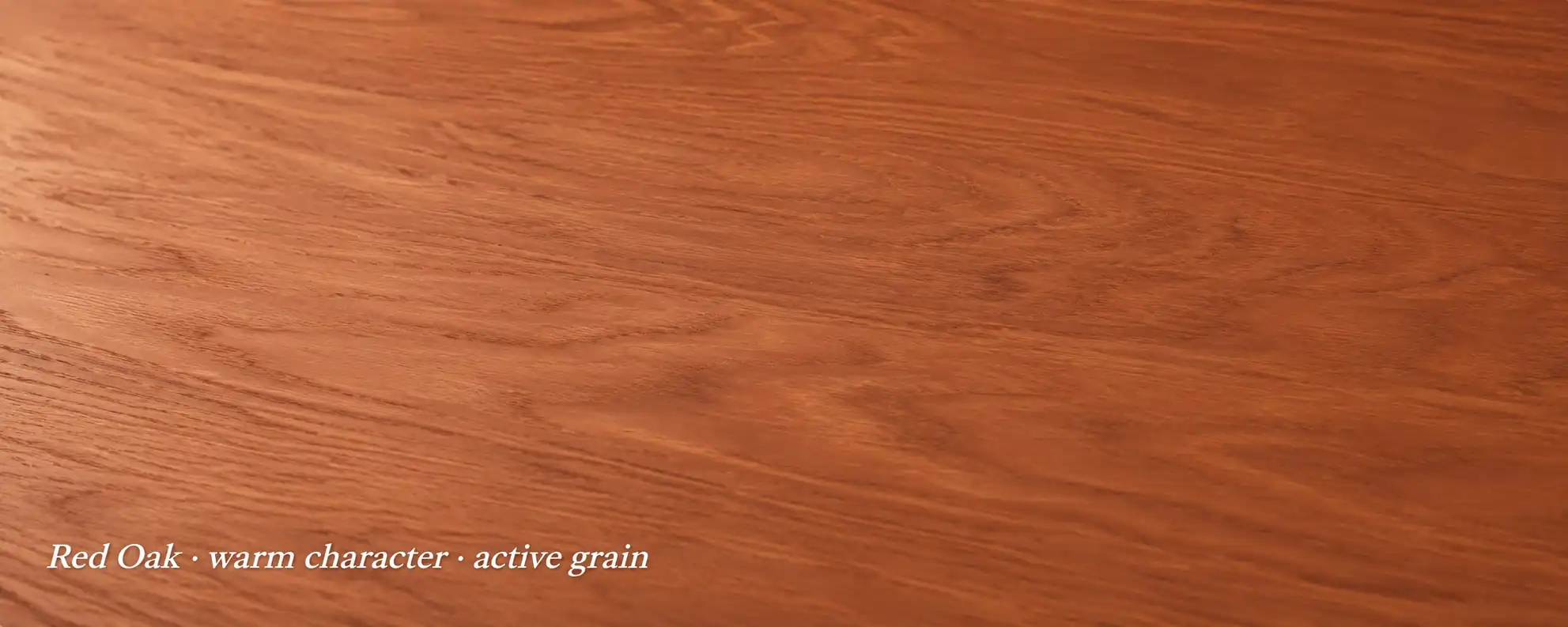
Red Oak
Quercus rubra
Warm, busy, classic. The default American floor for a century. Pink and salmon undertones. Wide, open grain that takes stain dramatically and visually camouflages small marks of use.
- Janka
- 1,290 lbf
- Color
- Pink / salmon
- Grain
- Open, dramatic
- Water
- Moderate
- Cost
- $ · Lower
- Best fit
- Traditional homes
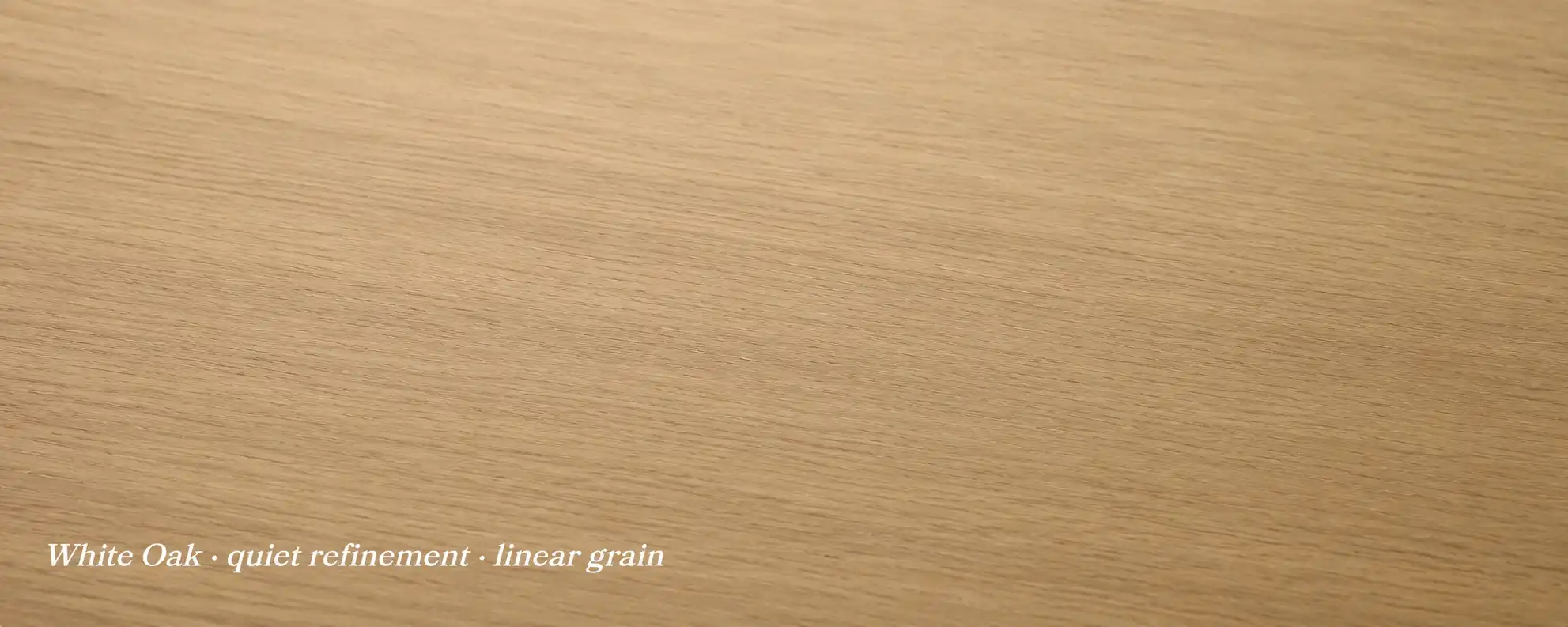
White Oak
Quercus alba
Cool, calm, contemporary. The default of nearly every magazine kitchen since 2018. Beige and taupe undertones. Tighter, more linear grain. Naturally less permeable to liquid because of tyloses in the cell structure.
- Janka
- 1,360 lbf
- Color
- Beige / taupe
- Grain
- Closed, linear
- Water
- Better
- Cost
- $$ · Higher
- Best fit
- Modern homes
02 · The Master ComparisonEverything side by side.
Bookmark this. Send it to your contractor. We’ve kept it honest, including where the two species genuinely tie. For a deeper look at how oak fits the broader hardwood category, see why hardwood flooring is worth the long-term investment.
03 · Color & UndertoneThe trick is what happens after the stain.
Counterintuitively, red oak is the lighter board out of the gate. Strip both species back to bare wood and red oak reads as a warm, blond-pink board, while white oak reads as a slightly darker, cooler tan-to-olive. The “red” in red oak isn’t full redness — it’s a pink-salmon tint that shows up in the heartwood.
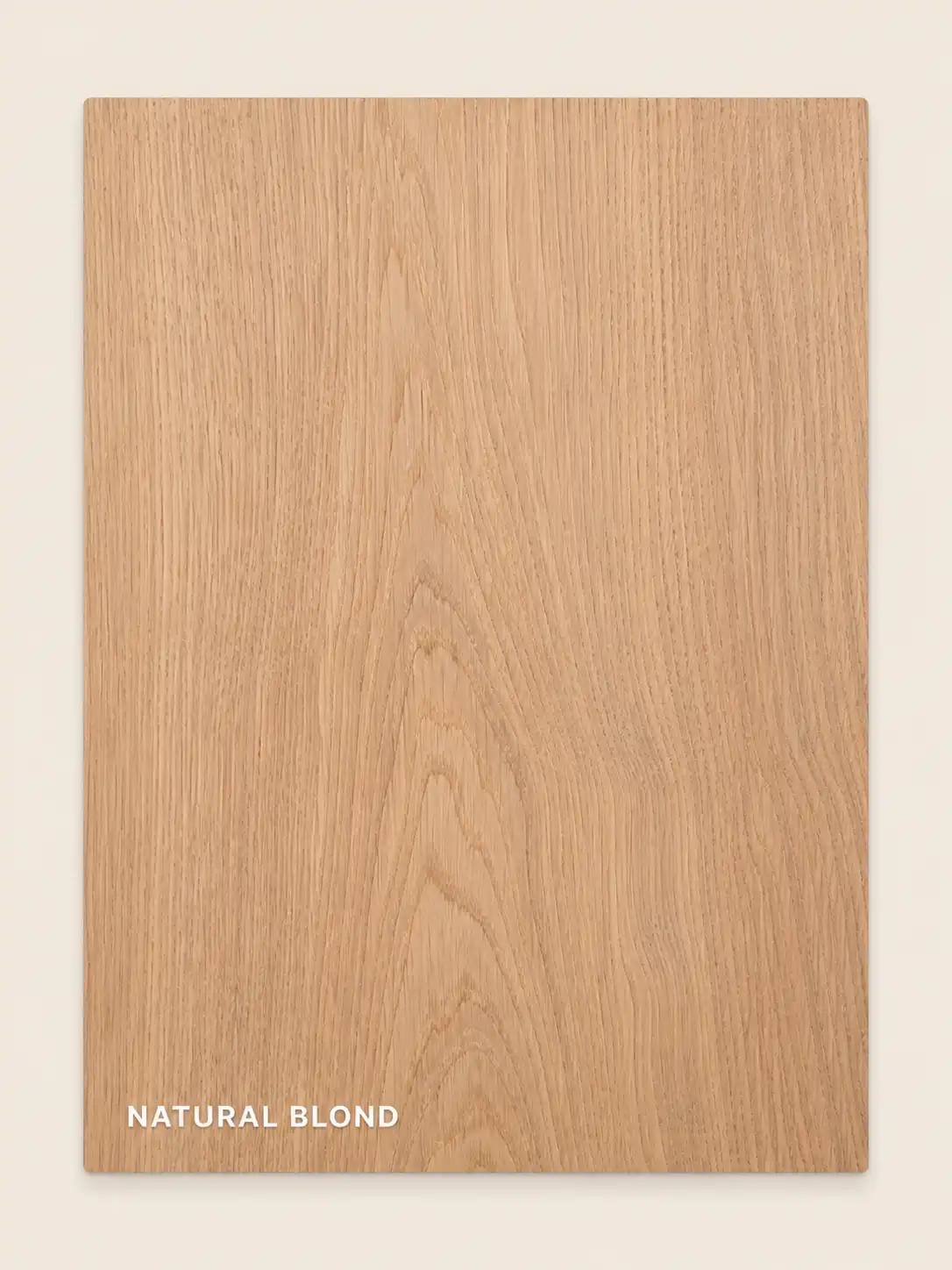
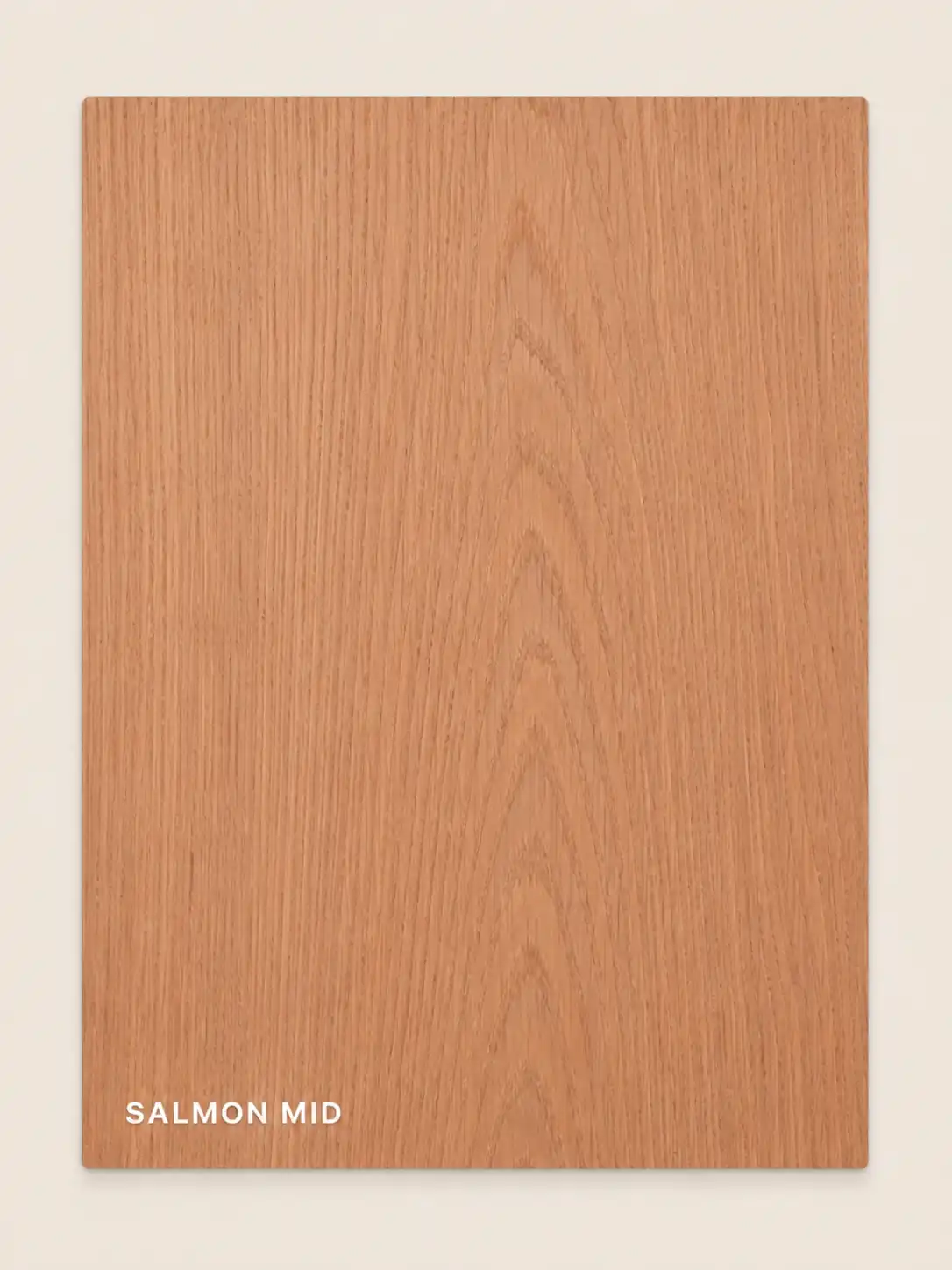
Where the two species really separate is what happens underneath a finish. That’s worth seeing rather than reading:
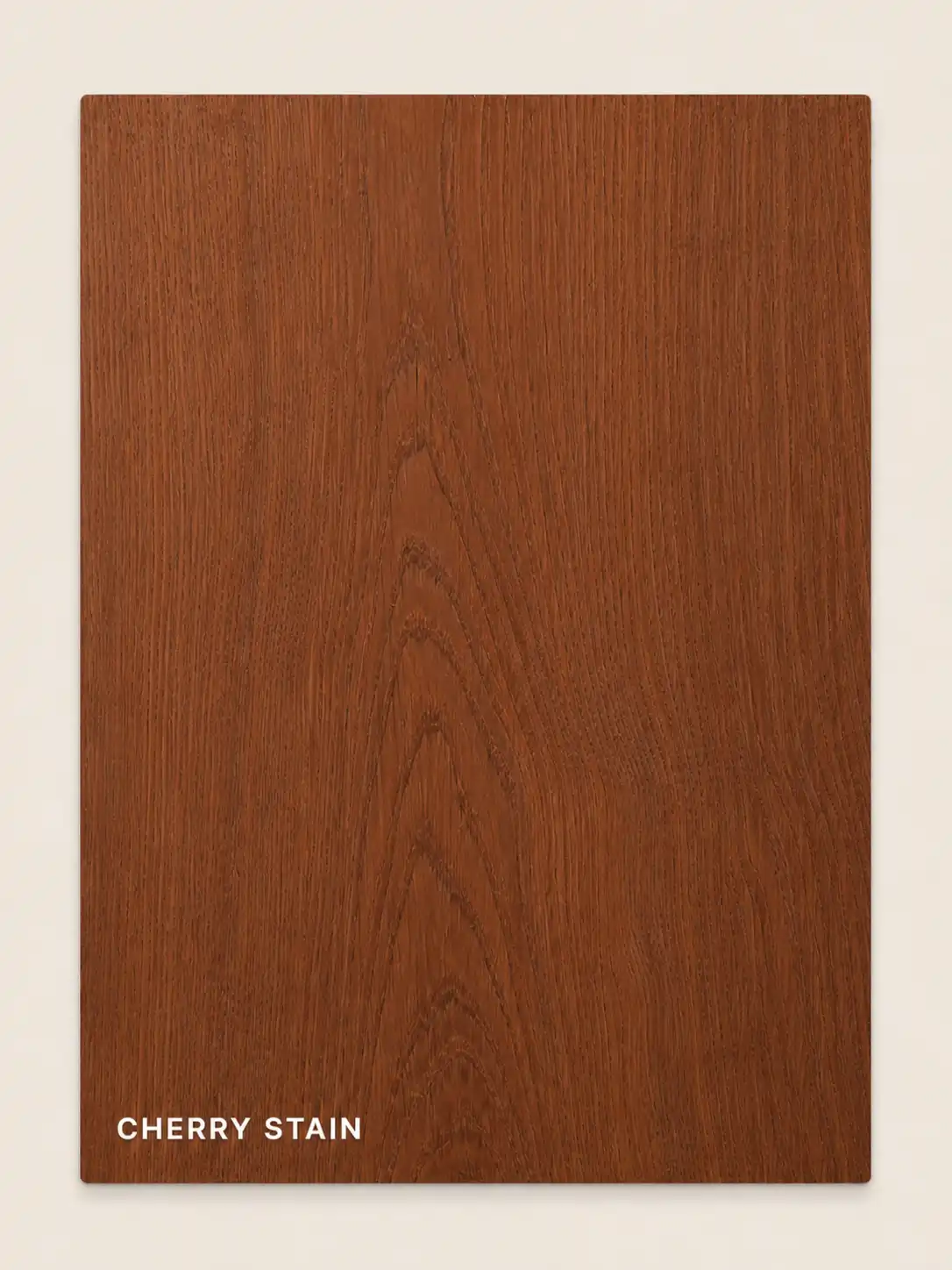
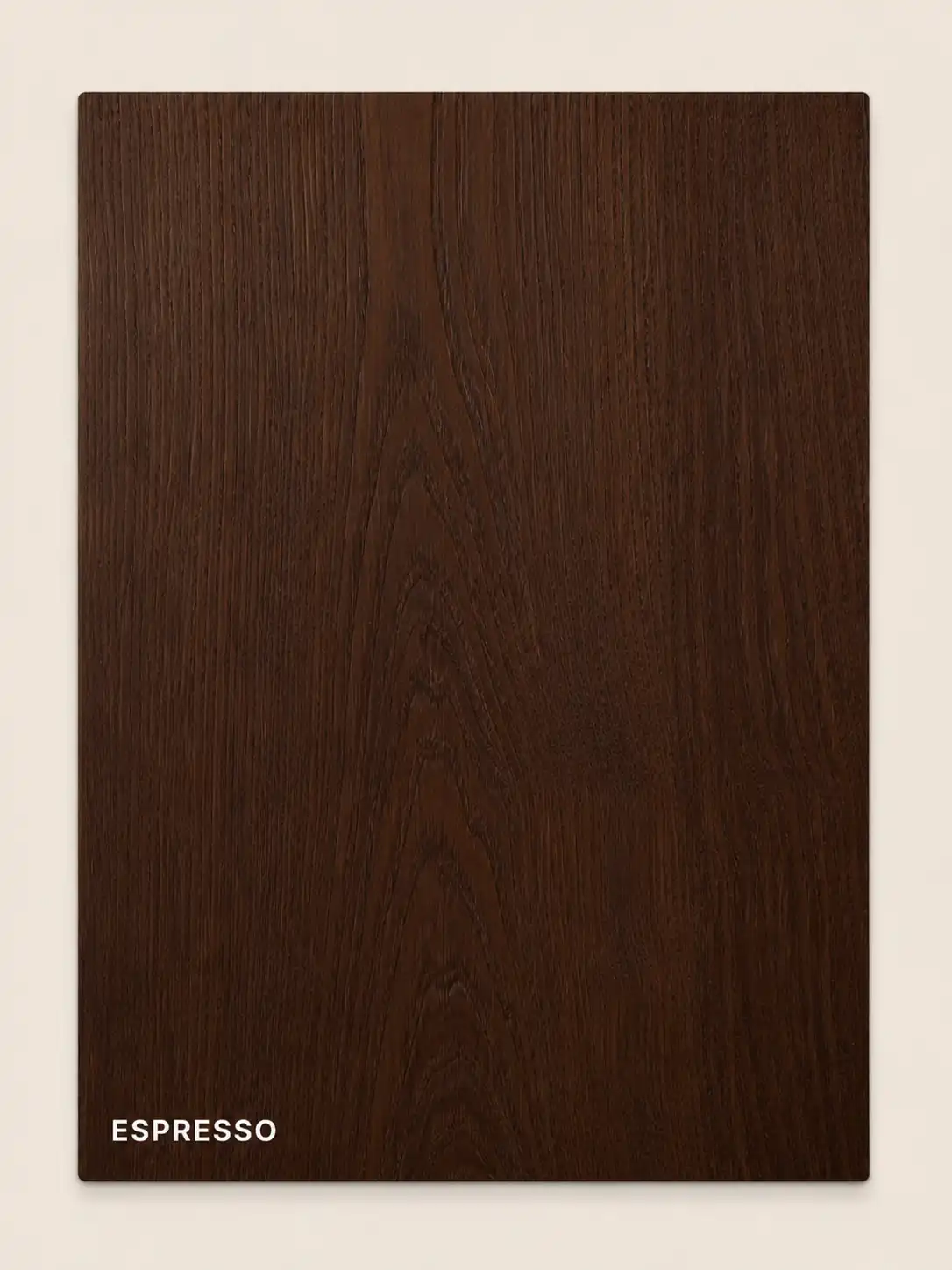
Red Oak — Stain Range
 Natural blond
Salmon mid
Cherry stain
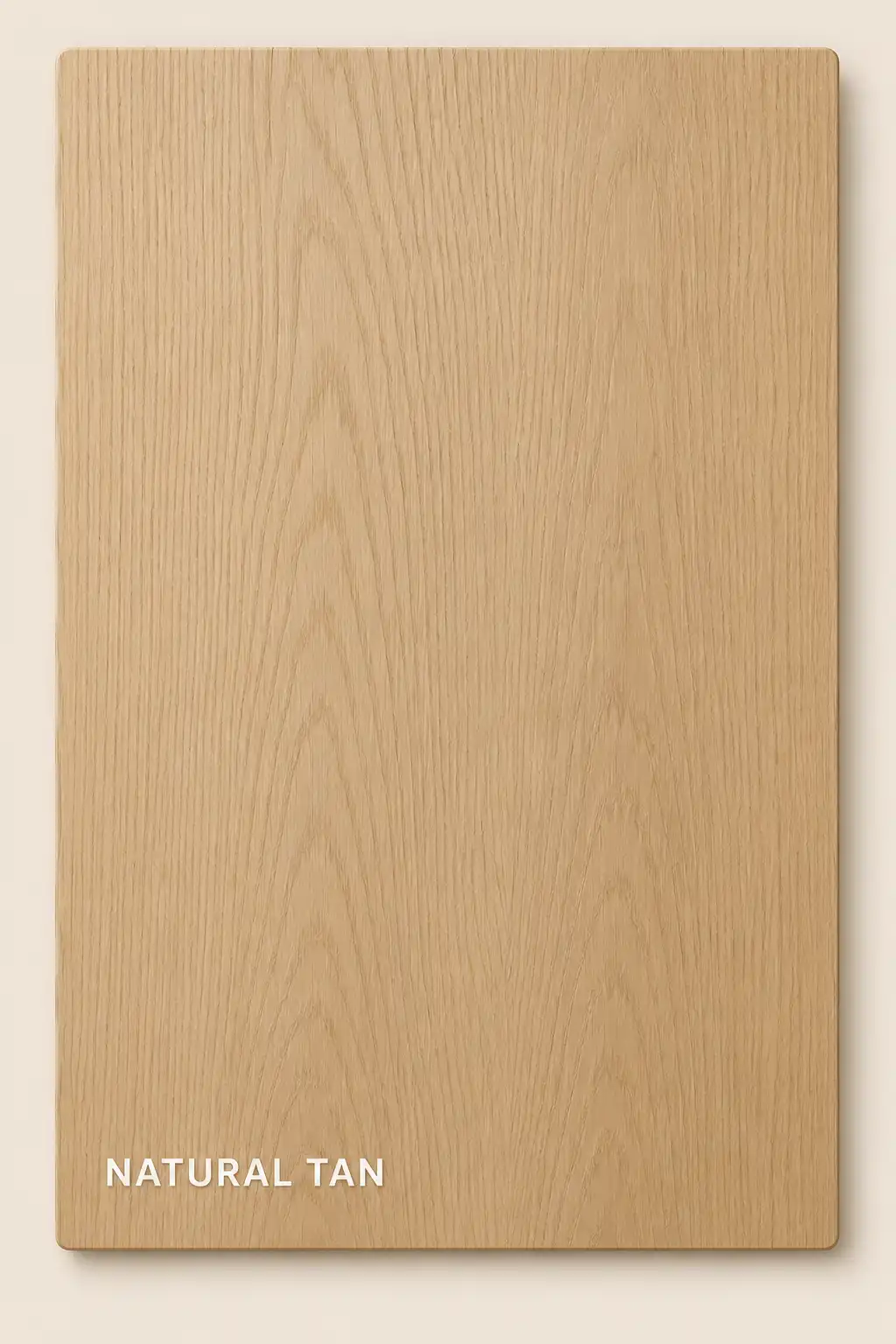
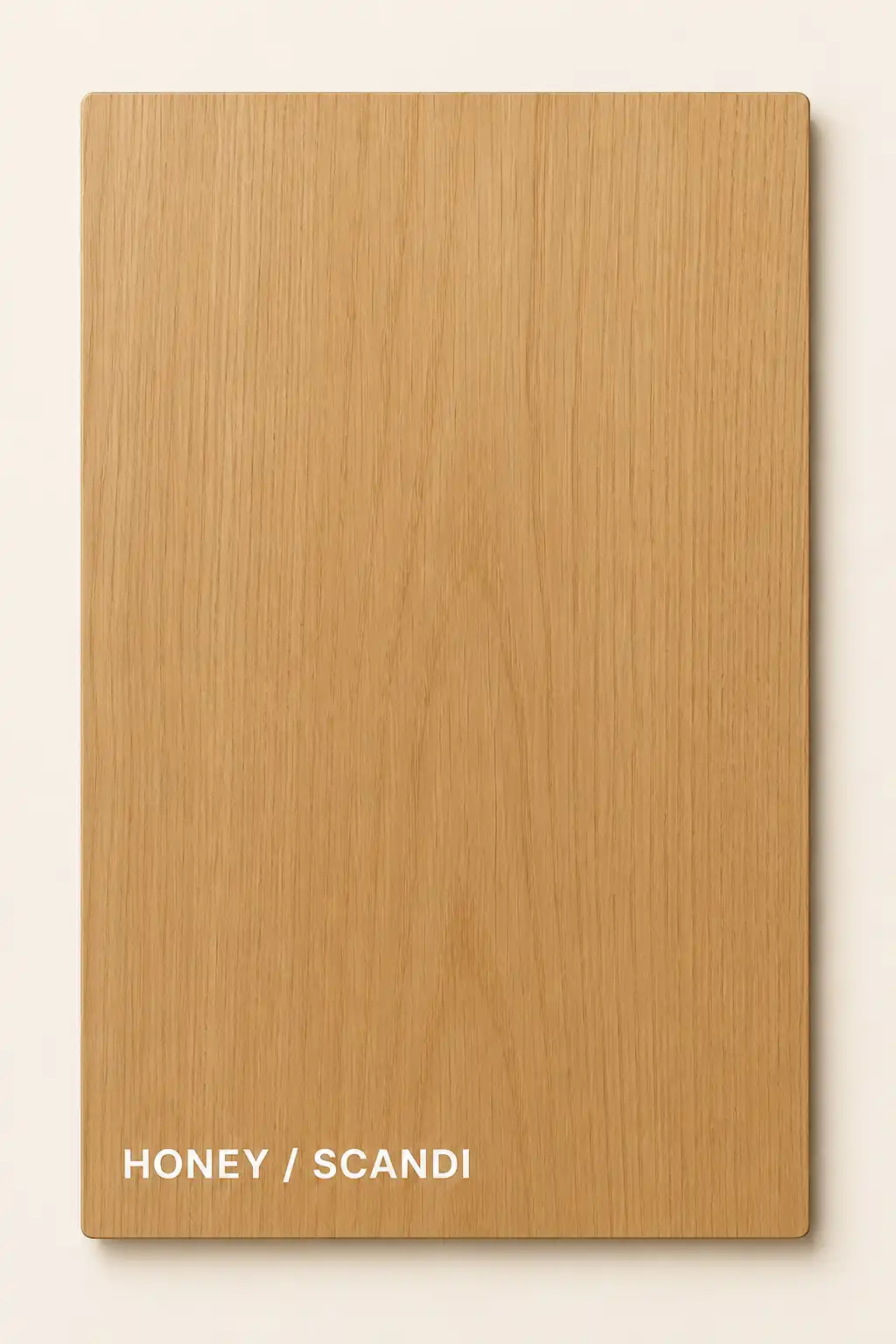
Espresso White Oak — Stain Range
 Natural tan
Honey / Scandi
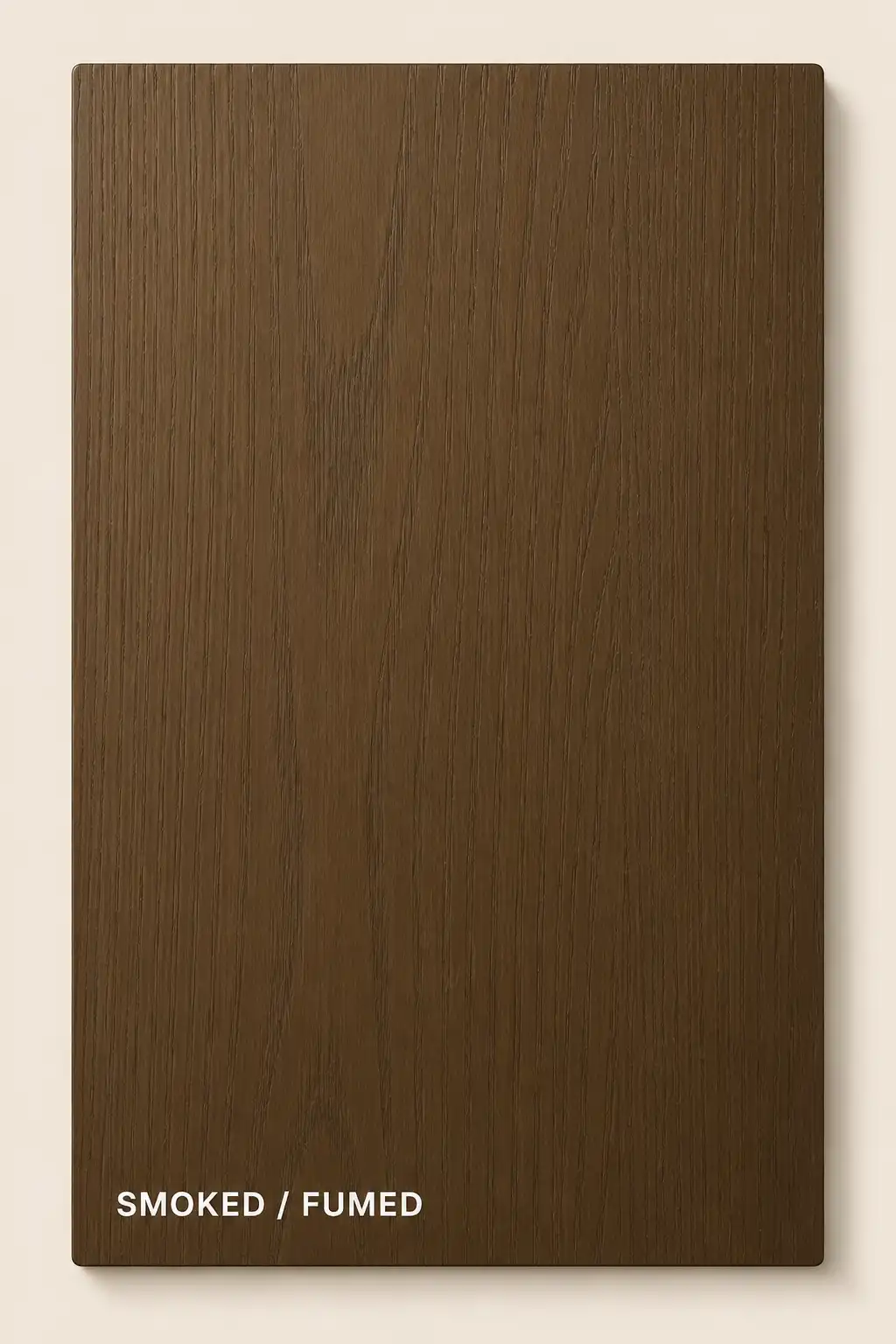
Smoked / fumed
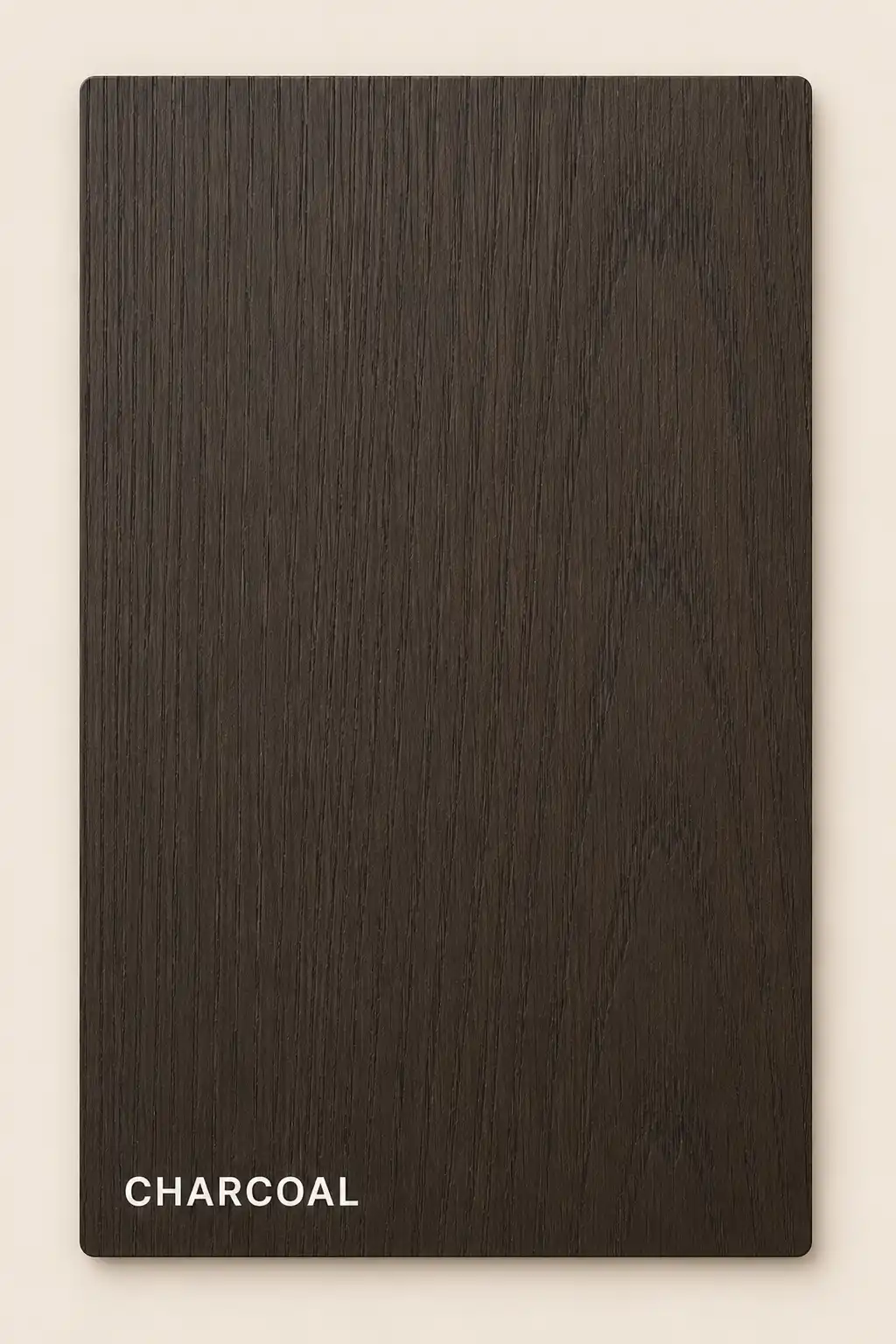
Charcoal
The rule of thumb: any light stain — white, natural, gray, greige, Scandi — tends to reveal red oak’s pink undertones. The same stain on white oak generally reads neutral. Once you go medium-brown or darker, the two species become
visually almost indistinguishable. This is part of why warm tones are coming back: see
why honey, caramel, and natural oak tones are replacing gray in 2026.
What about over time?
Both species photo-darken with UV exposure, but they go different directions. Red oak ambers — it deepens toward orange-brown over five to ten years. White oak deepens toward a warmer caramel but stays in the brown-tan family. If you have a rug or sofa that doesn’t move, expect some color difference between covered and exposed areas after about three years. Rotating furniture annually helps both species age more evenly. A matte or low-sheen finish also makes uneven aging less visible.
04 · Grain & Pore StructureThe reason you can tell them apart blindfolded.
If you ran your finger along an unfinished board of each — really pressed in — you’d feel the difference. Red oak’s surface is dotted with tiny open pores, almost like the wood is faintly textured. White oak feels smoother and tighter because its pores are sealed up with tyloses.
Visually, this translates into one of the most useful rules in the trade:
Red oak has a busier, more dramatic grain pattern with strong zig-zag and cathedral figures. White oak has a calmer, straighter, more linear grain — which is why interior designers tend to reach for it when the brief includes the words “Scandinavian,” “minimal,” or “Belgian.”
Practical consequences
- Red oak hides scratches better. A busy grain camouflages a dog claw mark.
- White oak shows water rings and scuffs sooner — but cleans up better because moisture stays on the surface rather than soaking in.
- Red oak’s open grain stains deeper. Pigment penetrates into the pores. This is why red oak takes dark stain so dramatically.
- White oak’s tight grain reads almost “painted” under matte finishes — a look that’s hard to achieve on red oak without significant grain filler.
- Texture treatments behave differently on each. Wire-brushing, for example, exaggerates white oak’s linearity but can muddy red oak’s busier grain. We cover this trade-off in the positives and negatives of wire-brushed hardwood flooring.
05 · HardnessWhite oak is harder, but it barely matters.
The Janka hardness test measures the force needed to embed an 11.28 mm steel ball halfway into a wood sample. White oak rates 1,360 lbf. Red oak rates 1,290 lbf. That’s roughly a 5% gap.
In a residential setting, the hardness difference is modest. Both species are well-established options for furniture, foot traffic, kids, and pets. What people often miss is how both oaks compare to other species — because that matters for the rest of your decisions.
Janka hardness, in context.
Higher numbers indicate greater resistance to indentation in standardized testing. Both oaks are practical residential flooring species; finish system, maintenance and installation also affect long-term wear.
Brazilian Walnut (Ipe)
3,490 One thing to keep in mind: the finish system can matter more than the species hardness. A factory-finished red oak floor with modern aluminum-oxide UV-cured topcoats can outperform a poorly site-finished white oak one. If you’re weighing the trade-off, we wrote a separate guide on prefinished hardwood vs site-finished that covers it in detail. For long-term performance, the species is one variable; everything you put on top of it is the other.
06 · Moisture & Liquid ResistanceThe tyloses advantage — and its limits.
This is where white oak earns its premium. Inside white oak’s xylem cells are tyloses: balloon-like outgrowths that plug the vessels and physically block liquid from passing through. Red oak has no tyloses. Its vessels stay open, behaving like microscopic drinking straws.
The classic demonstration: blow into one end of a red oak board with the other end dipped in soapy water and bubbles appear at the wet end. Try it on white oak — nothing happens.
For flooring, this means:
- White oak handles kitchens, mudrooms, half-baths, and entries better. Not bulletproof — but materially more forgiving of spills and tracked-in slush.
- White oak is the only oak suitable for historic boat-building, exterior siding, and wine or whiskey barrels. Red oak literally cannot hold liquid against pressure.
- Red oak demands faster cleanup. Standing water on red oak can penetrate within minutes; on white oak you typically have hours.
- Neither species is waterproof, and neither is suitable for full bathrooms or wet zones. For those rooms, engineered construction over the right subfloor, or a different category entirely, is the right specification. We unpack this distinction in detail in our complete guide on whether hardwood flooring is waterproof and in the difference between waterproof and water-resistant flooring.
The honest framing: white oak is meaningfully more spill-tolerant than red oak. It is not waterproof. Any oak floor benefits from prompt spill cleanup, controlled indoor humidity, and a quality topcoat.
07 · Solid vs EngineeredThe other half of the specification.
Most red-oak-vs-white-oak articles get to this last. They should put it first. Whether you choose solid or engineered construction will affect installation method, suitable subfloors, dimensional stability, refinishing potential, and cost — sometimes more than which species you pick.
Solid hardwood
Made from a single piece of either red or white oak, typically ¾” thick. Best for above-grade installations in climate-controlled interiors. Supports multiple sand-and-refinish cycles over its service life (commonly 3–5, sometimes more). The traditional, time-tested format. Our breakdown of why solid hardwood adds resale value covers the long-term value case in detail.
Engineered hardwood
A real oak wear layer (the part you see and refinish) over a layered, cross-grained core. The engineered construction limits how much the floor moves with seasonal humidity swings, which makes it more appropriate for slab-on-grade foundations, basements, and rooms with radiant heat. Engineered is also where the widest planks come from — many 8″+ European-cut floors are engineered white oak. A 4mm+ wear layer is the threshold for being refinishable; thinner wear layers can be screened and recoated. See our complete 2026 expert guide on engineered hardwood for the full breakdown, and our overview of solid vs engineered vs acrylic-impregnated vs reclaimed for the broader category comparison.
Practical guidance: in Southern California, where many homes sit on concrete slabs and humidity stays low, we recommend engineered construction more often than not — for either species.
Slab-foundation installations have their own considerations that often outweigh the red-vs-white-oak question.
Worth noting: National Hardwood’s French Galerie engineered line is one example of how engineered white oak shows up in wide-plank, European-cut form. Read more about how the French Galerie line is built and why we developed it.
08 · Cuts, Grades & Plank WidthsWhat the spec sheet actually means.
Most red-oak-vs-white-oak articles never get to this. They should, because cut, grade, and plank width affect how the floor looks more than the species choice itself.
The three cuts
- Plain-sawn (flat-sawn) — The standard, most affordable cut. Produces dramatic cathedral grain patterns. Best yield per log. Most red oak floors are plain-sawn.
- Rift-sawn — Cut at a 30–60° angle to the growth rings. Produces a clean, straight, linear grain with no cathedrals. Very stable. Common in modern white oak floors.
- Quartersawn — Cut at 60–90° to the growth rings. Reveals white oak’s signature “ray fleck” — silvery, ribbon-like patterns. Extremely stable. The classic Arts & Crafts and Mission floor.
Rift and quartersawn cuts cost more (25–60% premium) because they yield less usable lumber per log. They also reveal far more of white oak’s character than red oak’s. If you’ve seen a particularly clean Scandi-inspired floor on Instagram, it was almost certainly rift & quartered white oak.
Grades, in plain English
Grade describes how much knot, color variation, sapwood, and mineral streak the boards are allowed to show. Higher grades = cleaner, more uniform; lower grades = more character. Our deeper breakdown of wood flooring grades goes through it more thoroughly, but the short version:
- Clear / Select — Minimal knots, color streaks, or mineral deposits. Cleanest, most uniform look. Highest cost.
- #1 Common — Standard grade. Allows small tight knots and mild color variation. The default for most installs. Best value.
- #2 Common / Character — More knots, sapwood, mineral streaks, even small open splits. Rustic, lived-in look. Often cheaper, increasingly fashionable.
- Mill-run — Mixed grades. Cheaper but you’ll cull more on site.
Plank widths — where white oak has the structural advantage
Standard strip flooring is 2¼”–3¼”, and both species are widely available here. Above 5″ the math changes: white oak is routinely milled in 6″, 7″, 8″, 10″, and even 12″ widths because the trees grow large and straight enough to yield long, clear boards. Red oak past 6″ is rare and expensive — the trees and the milling logistics don’t favor it.
If wide-plank is non-negotiable for your design, you are probably buying white oak. European-cut white oak (Croatian, French, German imports) dominates the 8″+ market. For more on how plank width affects how a room reads, see
how 7-inch planks change the perception of space.
09 · What It Actually CostsThe honest framework.
Red oak frequently starts as the more budget-friendly species; white oak typically commands a premium because of demand and the looks it supports. But species name alone is not enough for a useful quote. Three variable categories drive the final number more than red-vs-white:
Variable 01
Material
Solid vs engineered construction, grade, plank width and length, cut, unfinished vs prefinished, texture, and current inventory.
Variable 02
Installation
Subfloor prep, existing-floor removal, nail-down vs glue-down vs floating method, transitions, stairs, delivery, and jobsite conditions.
Variable 03
Finish
Stain development, on-site finishing system, sheen, number of coats, and whether adjoining existing floors are being refinished to match.
As a general guide, in the Los Angeles market a mid-grade solid red oak might land in the $4–$9 per square foot range for material, while a comparable solid white oak might run $5–$12. Engineered wide-plank white oak in European cuts can run $12–$22 per square foot. Installation typically adds $4–$7 per square foot depending on complexity. These ranges are wide on purpose — your actual quote depends on every variable above.
If you’re looking for value, our guide on saving on wholesale hardwood flooring without sacrificing quality covers how to think about it strategically. And if you’re weighing the long-term financial case, we’ve written separately on why hardwood is a great long-term investment for your home.
10 · Staining & FinishingWhat each species lets you get away with.
This is the conversation we have most often in our Van Nuys showroom. Customers walk in with a Pinterest board and we translate it back into the right species + cut + finish combination. Here’s the cheat sheet:
| If your reference is… | Red Oak verdict | White Oak verdict |
|---|
| Natural, light, no stain (“Scandi”) | Reads pink. Will fight you. | Perfect fit. The default. |
|---|
| Greige / cool gray | Difficult — pink plus gray can read lavender. | Best species for this look. |
|---|
| Warm honey / golden oak | Excellent. Classic look. | Works, slightly cooler than red oak version. |
|---|
| Medium walnut / chestnut | Excellent. | Excellent. |
|---|
| Dark espresso / charcoal | Excellent — pink fully concealed. | Excellent. |
|---|
| Fumed / smoked (ammonia) | Limited reaction. | Reacts dramatically — tobacco to near-black. |
|---|
| White-wash / limed | Difficult — pink fights the white. | The species this finish was invented for. |
|---|
| Hardwax oils (Rubio, Bona, Loba) | Tonal options limited by undertones. | Full range — raw, bleached, reactive. |
|---|
One thing competitors don’t say plainly: if you want a light or natural floor, white oak isn’t just preferred — it’s nearly required. Trying to stain red oak white with a conventional pigmented stain almost always produces something pink-tinged and “off.” Specialty bleach treatments exist but they’re labor-intensive and rarely worth the savings versus simply buying white oak.
On the broader trend question — what stain directions are actually working in 2026 — our 2026 hardwood flooring trends roundup covers what we’re seeing from designers and homeowners this year, and a broader piece on what’s currently trending in wood flooring goes deeper on color, plank, and finish movements.
11 · Matching Existing FloorsWhat to bring to the showroom.
Homeowners often compare oak species not because they’re choosing in a vacuum, but because a new room must connect to flooring already in place. A “close enough” sample at the store can look wrong once it meets an aged floor in your home. Existing flooring may have an ambered finish, sun exposure, a different grade, or a different cut of the same species. Our broader guide on choosing the right hardwood for your home’s style covers the design side of this question.
Bring the right clues
A
A material sample
A spare plank, a section of removable threshold, or the underside of a floor register provides the clearest reference for species, grain, and existing finish — better than any photograph.
B
Room context
Photos in daylight, plus a cabinet sample, stair newel, or trim piece, help us decide whether an exact match or an intentional contrast will look better.
C
Project details
Existing board width, approximate floor age, the rooms being connected, and whether you plan to refinish the existing flooring as part of the project.
When an exact match isn’t possible — and it often isn’t, particularly when older floors have ambered significantly with age — a professional may recommend refinishing the connected areas together, or creating a deliberate transition (a threshold piece, a direction change, a stair landing) rather than accepting a near-match that looks accidental. We supply moulding and trim, stairs and stair parts, and stains and finishes so an oak selection can be considered across more than just the floor plane.
12 · California & Dry-Climate ConsiderationsWhat L.A. installers know.
Most red-oak-vs-white-oak articles are written for the Eastern US, where summer humidity routinely hits 70–80%. Southern California is the opposite — interior relative humidity often sits at 25–35% year-round, with brief winter spikes during rainy weeks. This matters more than you’d think.
What changes in a dry climate
- Wood moves toward equilibrium. A board kiln-dried to 7% moisture content in Pennsylvania will shed water for weeks in a dry L.A. living room until it stabilizes around 5–6%. Without proper acclimation, you’ll see gapping between boards within months. Our installation prep checklist covers exactly what to do before delivery.
- White oak’s slightly higher tangential movement (10.5%) makes it marginally more prone to dry-climate gapping than red oak (8.6%) — though both species perform very well when properly acclimated and when winter humidity is managed.
- Engineered construction outperforms solid in dry climates. Cross-laminated cores limit movement to a fraction of solid stock. For homes built on slabs — common in much of LA — engineered is usually the right answer regardless of species.
- Radiant heat is more common in California new builds than people realize — and engineered white oak (with the right adhesive) is the standard above-radiant choice. Solid red oak over radiant is generally not recommended. We’ve written separately on radiant flooring and what to specify.
- Summer brings its own care considerations. Our summer-care guide covers the AC, sunlight, and humidity choices that matter in the dry season.
None of this should scare you away from either species. It just means installation quality matters more than the choice between the two oaks. A well-acclimated, properly installed red oak floor will outperform a rushed white oak installation every time. The five most common installation mistakes are worth reviewing before any project starts.
13 · Maintenance & RefinishingThe long game.
Solid hardwood floors of either species can typically be refinished 3–5 times during their service life. Engineered hardwood can be refinished 1–3 times depending on the thickness of the wear layer (look for 4mm+ if refinishing matters to you). Our complete maintenance guide covers day-to-day care in detail.
Day-to-day cleaning
- Both species — Sweep or vacuum (soft brush) weekly. Damp-mop only — never wet. Use a pH-neutral hardwood cleaner. Avoid vinegar, ammonia, steam mops, oil soaps, and anything sold as “polish.”
- Red oak — Be quicker with spills. The open grain wicks moisture toward the subfloor.
- White oak — More forgiving with spills, but tracked-in dirt shows more readily on light-stained floors.
The refinishing cadence
A residential floor with reasonable care needs a full refinish (sand + restain + reseal) every 12–25 years, depending on traffic. A “screen and recoat” (lighter scuff + new topcoat, no stain change) every 5–8 years can dramatically extend the time before a full refinish. Both oaks behave the same way under the sander.
What differs: red oak refinishes back to its salmon-pink default. White oak refinishes back to its tan default. If you stained a red oak floor “natural” 15 years ago and refinished it natural today, you’ll get the same pink. Setting the right expectation matters more than the species.
14 · The Decision MatrixWhich one is for you.
Forget the spec sheet for a moment. Most customers actually decide based on lifestyle and aesthetic. Here are the honest tiebreakers:
Choose Red Oak if…
The warmer, more traditional, more budget-friendly choice.
- You’re matching an older home or existing red oak trim, doors, or stairs
- Your design direction is traditional, Craftsman, Mid-Century, or transitional
- You’re staining medium-to-dark — the species disappears anyway
- You’re working within a tight budget without compromising on real hardwood
- You want scratches and dings to hide naturally in a busy grain
- You prefer warmer, more inviting tones
- You’re patching, expanding, or refinishing an existing red oak floor
- You live somewhere with significant humidity swings (slightly lower movement helps)
Choose White Oak if…
The cooler, harder, more resale-friendly choice.
- Your reference photos are modern, Scandi, minimal, Belgian, or contemporary
- You want a light, natural, gray, or white-washed finish
- You want wide planks (anything wider than 5–6″)
- You have a kitchen, mudroom, or entry where spill tolerance matters
- You’re considering rift & quartered cuts for a tight, linear grain
- You’re optimizing for current resale taste
- You want fumed, smoked, or reactive finishes (white oak reacts dramatically)
- You’re installing over radiant heat (engineered white oak is the standard)
The honest middle ground: if you’re staining medium-brown or darker, you don’t need wider than 5″ planks, and you’re not in a wet zone — red oak gives you 90% of the look for less money. The decision flips entirely for anything light, wide, or near water.
15 · Mixing Red & White Oak in One HomeIt works, with rules.
This question comes up almost weekly. A customer has existing red oak upstairs and wants white oak in a new addition. Or they’re keeping a red oak staircase but want a new white oak kitchen floor. Yes, this can work. Yes, it can look great. No, you can’t just butt the two species together without a plan.
- Stain both to the same color. Once you go medium-brown or darker, the species become nearly indistinguishable. Simplest path.
- Separate them at a threshold or transition piece. A T-molding, a stone threshold, or a clean change of plank direction sells the move as deliberate rather than accidental.
- Use different cuts in different rooms. Red oak in the bedrooms (plain-sawn, traditional), white oak in the open kitchen-living (rift-sawn, modern). Both stained similarly. Looks intentional.
- Don’t blend in the same plank field. Random red and white boards next to each other read as unfinished. Don’t do this even on character grade.
16 · How to Tell Them ApartFour tests, in increasing certainty.
Walk into an older house and the seller often doesn’t know what oak is on the floor. Here are the four ways to figure it out — listed from easiest to most definitive.
Look at the color and grain.
Strip a small inconspicuous area back to bare wood — a closet corner works. Pink or salmon undertones with a busy, dramatic grain suggests red oak. Cooler tan, beige, or olive-gray with a calmer, more linear grain suggests white oak.
~70% accuracyInspect the end grain.
On a cut end of a board, look at the pores under a magnifying glass — or even your phone camera at max zoom. Red oak shows visible open pores, like tiny straws. White oak’s pores look glazed and plugged (those are the tyloses). The difference is often visible even without magnification.
~90% accuracyMeasure the rays.
On a quartersawn board, look at the “ray fleck” — the silvery flame-like figures running across the grain. White oak rays are long, typically ¾” to 1½”. Red oak rays are short, typically ¼” or less. Both species have rays; white oak’s are dramatically larger.
~95% accuracyThe sodium nitrite test.
Mix 1 cup of water with 4 teaspoons of sodium nitrite (sold cheaply online — label it clearly, it is dangerous if ingested). Apply a drop to a sanded area of unfinished wood. Wait 10–15 minutes. White oak’s heartwood turns deep indigo to nearly black. Red oak shows only a faint color shift. This is the lab-grade test the trade uses to settle arguments.
~100% accuracyPro tip: bring a small sample to our Van Nuys showroom and we’ll identify it for free. We do this several times a week for homeowners and contractors trying to match an existing floor.