Choosing the right flooring can completely transform your home but with so many options available, it’s easy to feel overwhelmed. One option that continues to dominate modern homes in 2026 is engineered hardwood flooring. It combines the timeless beauty of real wood with advanced construction for durability and versatility.
If you’re wondering whether it’s worth it, how it works, or how it compares to traditional wood this guide covers everything in expert-level detail.
Price Disclaimer
All pricing information mentioned in this article is from National Hardwood are for general informational purposes only and reflects average estimates as of 2026. Actual costs of engineered hardwood flooring may vary significantly based on factors such as location, material quality, brand, labor charges, and market conditions. We recommend obtaining multiple quotes from local suppliers or contractors to get accurate and up-to-date pricing for your specific project.
What is Engineered Hardwood Flooring? (Quick Answer)
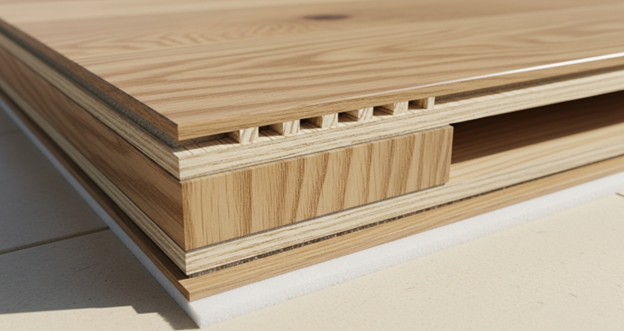
Engineered hardwood flooring is a type of real wood flooring made from a thin layer of natural hardwood bonded over multiple layers of plywood or high-density fiberboard (HDF).
Unlike solid hardwood, it’s designed to resist moisture and temperature changes, making it suitable for areas where traditional wood might fail—like basements and kitchens.
In simple terms:
It looks like real hardwood because it is real hardwood on top—but it’s built for better performance underneath.
What is Engineered Hardwood Flooring Made Of? (Core Structure Explained)
What is Engineered Hardwood Flooring Layer Construction?
Engineered hardwood flooring is built in layers, each serving a specific purpose:
- Top Wear Layer: Real hardwood (oak, maple, walnut) that gives the floor its natural appearance
- Core Layers: Multiple layers of plywood or HDF arranged in cross-grain patterns
- Backing Layer: Stabilizes the plank and prevents warping
This layered design is what gives engineered wood its strength and stability.
Materials Used in Engineered Hardwood Flooring
- Wood Veneers: Popular species include oak, maple, walnut, and hickory
- Core Materials:
- Plywood (more durable and moisture-resistant)
- HDF (denser but less moisture-tolerant)
- Finishes & Adhesives: UV-cured finishes and industrial adhesives enhance durability
How Thickness Impacts Durability & Lifespan
Thickness directly affects performance:
- Wear Layer Thickness:
- Thin (1–2mm): Minimal refinishing
- Thick (4–6mm): Can be refinished multiple times
- Total Thickness:
Typically ranges from 10mm to 20mm thicker planks offer better stability and longevity
How Does Engineered Hardwood Flooring Work?
Engineered hardwood flooring works through its cross-layer construction, where each layer is placed perpendicular to the next.
This design:
- Minimizes expansion and contraction
- Improves moisture resistance
- Enhances structural stability
Result: It performs well in both humid and dry environments unlike solid hardwood, which can warp or crack.
Types of Engineered Hardwood Flooring
Based on Core Construction
- Plywood Core: Best for durability and moisture resistance
- HDF Core: Budget-friendly but less moisture-resistant
Based on Installation Type
- Click-lock (Floating): Easy DIY installation
- Glue-down: Strong and stable for concrete subfloors
- Nail-down: Traditional method for wood subfloors
Based on Surface Finish
- Pre-finished: Ready to install, factory-coated
- Site-finished: Sanded and finished after installation
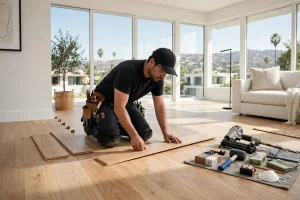
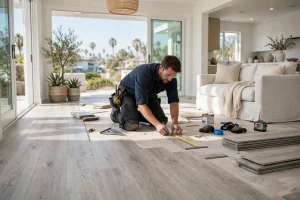
Step-by-Step Guide: How Engineered Hardwood Flooring is Installed
Tools & Materials Required
- Underlayment
- Adhesive or nails
- Spacers
- Saw (circular or miter)
- Measuring tape
Step 1: Subfloor Preparation
Ensure the subfloor is clean, dry, and level. Any unevenness can cause long-term issues.
Step 2: Acclimation Process
Let the flooring sit in the room for 48–72 hours to adjust to temperature and humidity.
Step 3: Layout Planning
Plan plank direction (usually parallel to the longest wall) for the best visual effect.
Step 4: Installation Method (Click / Glue / Nail)
Choose the method based on subfloor type:
- Floating for DIY
- Glue-down for concrete
- Nail-down for wood
Step 5: Finishing & Inspection
Check alignment, clean the surface, and inspect for gaps or defects.
Engineered Hardwood Flooring vs Solid Hardwood
| Feature | Engineered Hardwood | Solid Hardwood |
| Composition | Multi-layer | Single wood piece |
| Moisture Resistance | High | Low |
| Installation Areas | Basements, kitchens | Dry areas only |
| Refinishing | Limited | Multiple times |
| Cost | Moderate | Expensive |
| Stability | High | Medium |
Advantages of Engineered Hardwood Flooring
Why Homeowners Prefer Engineered Hardwood Flooring
- Superior moisture resistance
- More affordable than solid hardwood
- Faster, easier installation
- Compatible with underfloor heating systems
Long-Term Value & ROI
- Offers durability at a lower cost
- Enhances home resale value
- Requires less maintenance over time
Disadvantages of Engineered Hardwood Flooring
Limitations You Should Know
- Limited refinishing depending on wear layer
- Quality varies significantly between brands
- Low-quality options may delaminate over time
Where Can You Install Engineered Hardwood Flooring?
Engineered hardwood is versatile and can be installed in:
- Living rooms
- Bedrooms
- Basements
- Kitchens (with proper sealing)
Avoid: Bathrooms or areas with constant water exposure.
Engineered Hardwood Flooring Cost Breakdown (2026 Guide)
Material Costs per Square Foot
- Budget: $3–$6
- Mid-range: $6–$10
- Premium: $10–$15+
Installation Costs
- $3–$8 per sq. ft depending on method and complexity
Maintenance Costs Over Time
- Minimal compared to solid hardwood
- Occasional refinishing (if applicable)
Maintenance & Care Tips for Engineered Hardwood Flooring
Daily Cleaning Routine
- Sweep or vacuum regularly
- Use a damp (not wet) mop
- Avoid harsh chemicals
Long-Term Maintenance Tips
- Refinish when wear layer allows
- Use rugs in high-traffic areas
How to Prevent Damage (Moisture, Scratches, Heat)
- Clean spills immediately
- Use furniture pads
- Avoid excessive sunlight exposure
How Long Does Engineered Hardwood Flooring Last?
- Average lifespan: 20–50 years
- Depends on: Wear layer thickness, usage, and maintenance
Replace when:
- Deep scratches reach core layers
- Delamination occurs
- Structural integrity weakens
How to Choose the Best Engineered Hardwood Flooring (Expert Tips)
What Thickness Should You Choose?
- Ideal: 12mm–18mm with a 3mm+ wear layer
Best Wood Species for Durability
- Oak (most popular)
- Hickory (very durable)
- Maple (smooth finish)
Finish Types to Consider
- Matte for modern look
- Glossy for traditional appeal
Budget vs Quality Decision Guide
Invest more in wear layer and core quality not just appearance.
Common Mistakes to Avoid When Buying Engineered Hardwood Flooring
- Choosing a thin wear layer
- Ignoring subfloor condition
- Buying low-quality core materials
- Skipping acclimation before installation
FAQs About Engineered Hardwood Flooring
What is engineered hardwood flooring and is it real wood?
Yes, it is real wood on the surface, supported by engineered layers underneath.
Is engineered hardwood flooring waterproof?
No, but it is highly water-resistant compared to solid hardwood.
How many times can engineered hardwood be refinished?
Usually 1–3 times depending on wear layer thickness.
Is engineered hardwood better than laminate flooring?
Yes, it offers real wood aesthetics and higher resale value.
Can engineered hardwood flooring be used in kitchens?
Yes, with proper sealing and moisture control.
Does engineered hardwood increase home value?
Absolutely,it’s considered a premium flooring option.
How do you clean engineered hardwood flooring?
Use a damp mop, avoid excess water, and clean regularly.
What thickness is best for engineered hardwood flooring?
12mm–18mm with a thick wear layer is ideal.
Conclusion: Is Engineered Hardwood Flooring the Right Choice for You?
Engineered hardwood flooring strikes the perfect balance between beauty, durability, and practicality.
Pros:
- Moisture resistance
- Easy installation
- Cost-effective
Cons:
- Limited refinishing
- Quality variation
Best for:
Homeowners who want the elegance of real wood without the limitations of solid hardwood.
Final Verdict:
If you want a flooring solution that performs well in modern homes especially in variable climates engineered hardwood flooring is one of the smartest investments you can make in 2026.