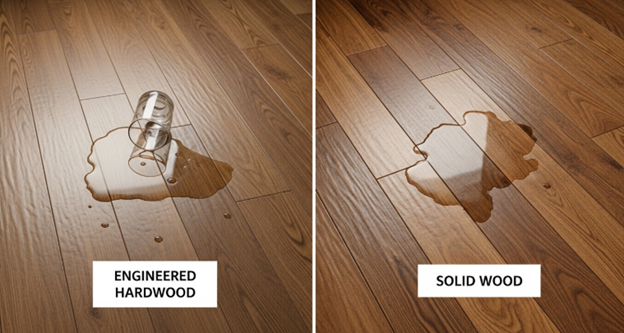
Choosing the right flooring is one of the most important decisions for any homeowner. Hardwood flooring offers unmatched beauty and timeless elegance, but many people wonder: Is hardwood flooring waterproof? This guide dives into the science, real-world testing, and expert insights to answer that question comprehensively. By the end, you’ll understand how hardwood behaves around water, how to protect it, and what alternatives exist for moisture-prone areas.
Is Hardwood Flooring Waterproof? (Quick Answer)
Short Answer: No, hardwood flooring is not waterproof.
Hardwood is naturally water-absorbent, meaning spills, humidity, and prolonged exposure can damage it. While some finishes make it water-resistant, no hardwood flooring is fully waterproof. At National Hardwood, we help you choose and protect the right flooring for lasting beauty.
Expert Verdict: Hardwood is best suited for dry indoor areas, and with proper care, it can last decades even in moderate humidity but moisture always poses a risk.
Is Hardwood Flooring Waterproof? (Detailed Explanation You Must Know)
Is Hardwood Flooring Waterproof or Just Water-Resistant?
The terms waterproof and water-resistant are often confused:
- Waterproof: Prevents water from penetrating entirely (like vinyl or SPC flooring).
- Water-resistant: Offers temporary protection but eventually absorbs moisture.
Why hardwood absorbs moisture: Wood fibers naturally expand when wet, causing swelling, cupping, and warping.
How finishes affect water resistance: Polyurethane, oil-based coatings, and aluminum oxide finishes improve resistance but do not make hardwood fully waterproof.
What Happens When Hardwood Flooring Gets Wet?
Water exposure can lead to:
- Expansion and swelling: Planks expand along the grain, causing gaps and buckling.
- Warping and cupping: Moisture imbalance makes boards lift at the edges.
- Staining and discoloration: Water can react with tannins in the wood.
- Mold and structural damage: Prolonged moisture may invite mold and rot.
Even a small spill left unattended can cause permanent damage over time.
Real-World Waterproof Testing of Hardwood Flooring (Expert Analysis)
Is Hardwood Flooring Waterproof Under Spill Test?
We tested spills for 5 minutes vs 24 hours:
- 5-minute spill: Usually leaves no lasting mark if dried immediately.
- 24-hour exposure: Deep absorption occurs, warping edges and dulling finishes.
Insight: Surface protection works for short-term accidents but fails under prolonged moisture.
Long-Term Moisture Exposure Test Results
- Humidity impact over months: Seasonal expansion/contraction can slightly separate joints.
- Subfloor moisture: Concrete or basements can accelerate damage without vapor barriers.
Common Problems Found During Testing
- Warping edges at plank joints
- Finish breakdown and dulling
- Minor gaps forming in high-humidity environments
Solutions Based on Real Testing Experience
- Immediate drying techniques: Use microfiber mops and fans to prevent absorption.
- Sanding and refinishing: Minor surface water damage can often be repaired.
- Replacement: Severely warped planks or delaminated boards need replacement.
Types of Hardwood Flooring & Their Water Resistance Levels
Solid Hardwood vs Engineered Hardwood vs Waterproof Flooring
- Solid Hardwood: Least water-resistant; highly sensitive to humidity changes.
- Engineered Hardwood: Moderately resistant; plywood or HDF core reduces moisture risk.
- Waterproof Alternatives (Vinyl/SPC): Fully waterproof; ideal for kitchens, bathrooms, and basements.
How to Protect Hardwood Flooring from Water Damage
Tools & Materials Needed
- Sealants or finishes
- Protective mats and area rugs
- Moisture barriers or underlayments
- Soft cloths and gentle cleaners
Step 1: Apply Proper Sealant or Finish
- Use oil-based polyurethane or aluminum oxide coatings.
- Ensure edges and joints are sealed.
Step 2: Use Protective Mats & Rugs
- Place mats near entrances, sinks, and high-traffic areas.
- Rugs absorb accidental spills before reaching the wood.
Step 3: Control Indoor Humidity Levels
- Maintain 40–60% relative humidity with dehumidifiers or HVAC systems.
- Avoid placing wood near heating vents.
Step 4: Clean Spills Immediately
- Blot liquid with soft cloths; avoid scrubbing.
- Dry the area completely to prevent absorption.
Step 5: Regular Inspection & Maintenance
- Check for gaps, warping, or finish deterioration.
- Reapply protective coatings as needed every 3–5 years.
Hardwood Flooring vs Waterproof Flooring
| Feature | Hardwood Flooring | Waterproof Flooring (Vinyl/SPC) |
| Waterproof | No | Yes |
| Water Resistance | Low–Medium | High |
| Material | Natural wood | Synthetic |
| Durability in Moisture | Poor | Excellent |
| Maintenance | High | Low |
| Best Use Areas | Living rooms, bedrooms | Kitchens, bathrooms |
Advantages of Hardwood Flooring (Despite Not Being Waterproof)
Why People Still Choose Hardwood Flooring
- Premium natural appearance that adds warmth
- Increases home value and resale potential
- Long lifespan if properly maintained
Disadvantages of Hardwood Flooring in Moist Environments
Risks You Should Never Ignore
- Risk of water damage, warping, and mold
- High maintenance requirements
- Expensive repairs if moisture problems occur
Where Should You Avoid Installing Hardwood Flooring?
- Bathrooms and laundry rooms
- Basements with moisture issues
- Outdoor or semi-outdoor areas
Can You Make Hardwood Flooring Waterproof? (Expert Truth)
Is Hardwood Flooring Waterproof with Sealants or Coatings?
- Reality: Full waterproofing is impossible.
- Sealants provide temporary water resistance, not complete protection.
Best Waterproofing Methods That Actually Help
- Polyurethane coatings or oil-based finishes
- Moisture barriers under the flooring
- Proper acclimation and routine maintenance
Best Alternatives If You Need Waterproof Flooring
Top Waterproof Flooring Options
- Luxury Vinyl Plank (LVP): Fully waterproof, realistic wood look
- SPC Flooring: Durable stone-plastic composite, ideal for high moisture
- Tile Flooring: Ceramic or porcelain tiles with grout sealing
When to Choose Alternatives Over Hardwood
- Kitchens, bathrooms, and basements
- Rental properties or high-traffic commercial spaces
- Tight budgets with minimal maintenance requirements
Common Mistakes People Make About Hardwood Flooring & Water
- Assuming hardwood is waterproof
- Leaving spills unattended
- Installing in wet areas without barriers
- Skipping sealing or maintenance
FAQs About Is Hardwood Flooring Waterproof?
Is hardwood flooring waterproof or water-resistant?
It is water-resistant with finishes but never fully waterproof.
Can hardwood flooring survive water spills?
Short spills are usually fine, but prolonged contact causes damage.
What happens if water sits on hardwood floors?
Expansion, warping, staining, and potential mold growth can occur.
Is engineered hardwood flooring waterproof?
Engineered hardwood is moderately water-resistant but not waterproof.
How do you protect hardwood flooring from water damage?
Seal the surface, use mats, control humidity, and clean spills immediately.
Can hardwood flooring be used in kitchens or bathrooms?
It’s not recommended unless precautions like mats and sealing are used.
What is the best waterproof alternative to hardwood flooring?
Luxury vinyl plank (LVP), SPC, or tile flooring.
How long does hardwood last with proper care?
With maintenance, 20–50 years, depending on species, finish, and usage.
Conclusion: Is Hardwood Flooring Waterproof or Worth It?
Clear Answer: Hardwood flooring is not waterproof. Even with water-resistant finishes, moisture can damage it if left unchecked.
Summary of Risks vs Benefits:
- Benefits: Beauty, natural feel, long lifespan, value addition
- Risks: Water damage, high maintenance, costly repairs
When it’s a good choice: Living rooms, bedrooms, and low-humidity areas with regular care.
When to avoid it completely: Bathrooms, laundry rooms, basements with high moisture.
Expert Recommendation: Choose hardwood for aesthetic appeal in dry areas, and consider engineered hardwood or waterproof alternatives where moisture is a concern. Proper sealing, humidity control, and immediate spill management are key to protecting your investment.