Buying the perfect hardwood flooring is only half the battle; the installation process determines whether your floor will last a lifetime or fail within months. At National Hardwood, we have seen beautiful planks ruined by simple technical errors. To ensure your investment stays flawless, here are the top five installation mistakes you must avoid.
1. Skipping the Acclimation Period
The most common mistake is installing wood planks immediately after delivery. Hardwood is a living, breathing material that expands and contracts based on its environment.
- The Error: Installing wood that hasn’t adjusted to the home’s humidity and temperature.
- The Consequence: If the wood is too dry, it will swell and buckle once installed. If it is too damp, it will shrink and leave large gaps between planks.
- The Fix: Allow your wood to sit in the room where it will be installed for at least 3 to 7 days before starting the job.
2. Ignoring Subfloor Preparation
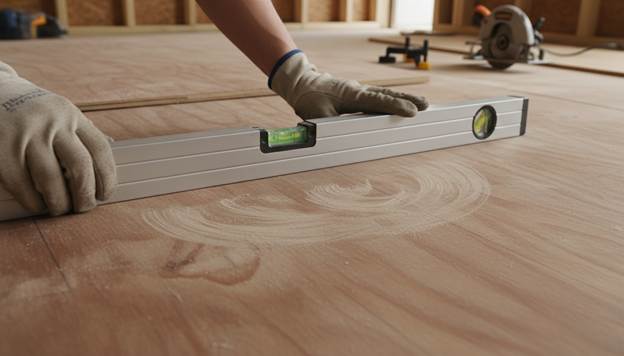
A floor is only as good as what lies beneath it. Many installers overlook the condition of the subfloor in their rush to get the planks down.
- The Error: Installing over a subfloor that is uneven, dirty, or structurally weak.
- The Consequence: An uneven subfloor leads to “hollow spots,” squeaking, and eventually, cracked joints or planks.
- The Fix: Ensure the subfloor is perfectly flat, dry, and clean. Use a leveling compound if necessary and always check for moisture levels in the subfloor before proceeding.
3. Neglecting Moisture Testing
In Southern California, moisture can be a silent killer for hardwood. Even if a floor looks dry, the concrete or wood subfloor might hold hidden moisture.
- The Error: Failing to use a professional moisture meter on both the hardwood and the subfloor.
- The Consequence: High moisture levels lead to “cupping” (where the edges of the planks are higher than the center) or mold growth beneath the surface.
- The Fix: Always use a moisture meter to ensure the readings are within the manufacturer’s recommended range before installation begins.
4. Forgetting Expansion Gaps
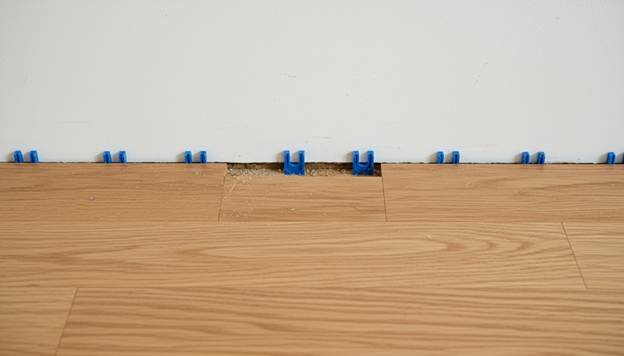
Wood needs room to breathe. One of the biggest technical errors is installing the floor too tight against the walls.
- The Error: Failing to leave a small gap (usually 1/2 inch) around the perimeter of the room.
- The Consequence: When the weather changes and the wood naturally expands, it will have nowhere to go but up, causing the entire floor to buckle or lift.
- The Fix: Use spacers during installation to maintain a consistent expansion gap. This gap is easily hidden later by your baseboards and custom molding from National Hardwood.
5. Poor Nailing or Gluing Patterns
Whether you are using a nail-down or glue-down method, the pattern and frequency of the attachment matter.
- The Error: Using too few nails or an inconsistent glue spread.
- The Consequence: Planks that are not secured properly will shift, create gaps, and produce loud “popping” or squeaking sounds when walked on.
- The Fix: Follow the industry standard for nail spacing (usually every 6 to 8 inches) and use high-quality flooring adhesives. Ensure the glue has 100% contact with both the subfloor and the plank.
Conclusion
Hardwood installation is a science that requires patience and precision. By avoiding these five common mistakes, you ensure that your floor remains a stunning and stable feature of your home for decades. At National Hardwood, we don’t just provide the wood—we provide the expertise. If you want a professional, worry-free installation, visit our Van Nuys showroom or consult with our technical team today.