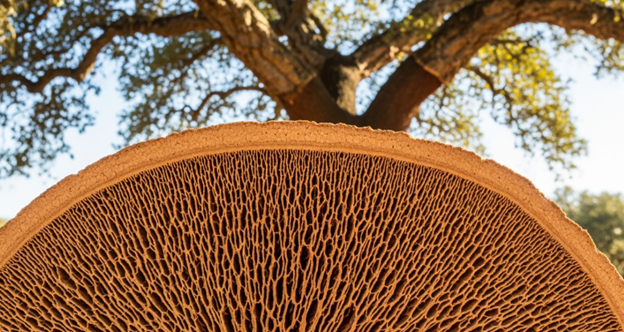
Cork is one of the most unique natural materials used in flooring, insulation, bottle stoppers, wall tiles, and many eco-friendly products. Many people see cork every day but don’t actually know what cork is made of, where it comes from, or how it is produced.
This guide explains everything in detail, from the cork oak tree to the manufacturing process, cork types, uses, advantages, and environmental benefits. If you want the most complete explanation of cork material, this guide covers it all.
Short Answer – What Is Cork Made Of?
Cork is made from the bark of the cork oak tree (Quercus suber). The bark is harvested without cutting down the tree and naturally regrows over time. Cork consists of suberin, lignin, cellulose, natural waxes, and millions of air-filled cells, which make it lightweight, waterproof, flexible, and insulating. Cork is commonly used in wine stoppers, flooring, insulation, bulletin boards, wall tiles, and eco-friendly products. For high-quality cork flooring and other sustainable cork solutions, National Hardwood offers a wide range of premium options trusted by professionals.
What Is Cork Made Of? (Detailed Explanation)
To fully understand cork, you need to look at its structure at the microscopic level and why it behaves differently from wood or plastic.
What Is Cork Made Of at the Cellular Level
Cork is made of millions of tiny sealed cells filled with air. These cells give cork its unique properties. The main components of cork include:
- Suberin – A natural waterproof substance that makes cork resistant to moisture.
- Lignin – Provides structure and rigidity.
- Cellulose – Adds fiber strength and flexibility.
- Air pockets – Make cork lightweight and insulating.
- Natural waxes and tannins – Provide durability and resistance to decay.
Because cork contains so many air-filled cells, it can compress and return to its original shape, which is why it is perfect for wine bottle stoppers.
Why Cork Has Unique Properties
Cork is popular because it has several natural advantages:
- Elastic and compressible
- Fire resistant
- Water resistant
- Sound absorbing
- Thermal insulating
- Lightweight but durable
- Resistant to mold and pests
Very few natural materials combine all these properties in one material, which is why cork is used in so many industries.
Where Cork Comes From
The Cork Oak Tree Explained
Cork comes from the cork oak tree, which mainly grows in Mediterranean countries such as Portugal, Spain, Italy, and Morocco. Portugal produces the majority of the world’s cork.
Important facts about cork oak trees:
- Trees can live 150–200 years
- First harvest happens after about 20–25 years
- Bark is harvested every 9–12 years
- Trees are not cut down during harvesting
- Cork harvesting is environmentally sustainable
This makes cork one of the most renewable natural materials in the world.
How Cork Is Harvested Without Cutting Trees
Cork harvesting is done by carefully removing the outer bark from the tree using special tools. The inner layer remains intact, allowing the bark to regrow.
The process works like this:
- Outer bark is stripped by hand
- Tree regenerates new bark
- Bark thickens over time
- Harvest repeats every 9–12 years
This makes cork harvesting environmentally friendly and sustainable.
How Cork Is Made From Tree to Product
The cork production process involves several stages from tree harvesting to final products.
Step 1 – Cork Bark Harvesting
Workers carefully remove the outer bark from cork oak trees without damaging the tree.
Step 2 – Resting and Drying the Bark
The harvested cork bark is stacked outdoors and left to dry for several months to stabilize the material.
Step 3 – Boiling and Flattening Cork Sheets
The cork is boiled in water to:
- Remove impurities
- Make cork more flexible
- Flatten the cork sheets
Step 4 – Cutting Cork into Sheets or Stoppers
Large cork sheets are cut into:
- Wine cork stoppers
- Cork sheets
- Flooring tiles
- Wall panels
Step 5 – Processing Cork Granules
Leftover cork pieces are ground into granules used to make agglomerated cork products.
Step 6 – Manufacturing Cork Products
Cork granules are pressed and molded into:
- Flooring tiles
- Insulation boards
- Cork boards
- Gaskets
- Wall tiles
Step 7 – Quality Sorting and Packaging
Cork products are sorted by quality and packaged for shipping and manufacturing use.
Types of Cork Materials
There are several different types of cork depending on how it is processed.
Natural Cork
Made from solid cork bark and used mainly for wine bottle stoppers.
Agglomerated Cork
Made from cork granules glued together and commonly used in flooring and cork boards.
Expanded Cork
Heated cork granules that expand and bind together without glue, used for insulation.
Rubber Cork Composite
A mixture of cork and rubber used for gaskets and industrial applications.
Cork Leather
Thin cork sheets attached to fabric backing used for bags, wallets, and upholstery.
Types of Cork Materials
| Cork Type | Made From | Best Uses | Durability | Cost |
| Natural Cork | Solid bark | Wine stoppers | High | High |
| Agglomerated Cork | Cork granules | Flooring | Medium | Medium |
| Expanded Cork | Heated cork granules | Insulation | High | Medium |
| Rubber Cork | Cork + rubber | Gaskets | Very High | Medium |
| Cork Leather | Cork fabric | Bags & wallets | Medium | High |
Common Uses of Cork Material
Cork is used in many industries because of its unique properties.
Wine Corks
The most famous use of cork is wine bottle stoppers because cork can compress and expand to seal bottles tightly.
Cork Flooring
Cork flooring is comfortable, warm, sound-absorbing, and eco-friendly.
Cork Boards
Used for bulletin boards and notice boards because pins can easily be inserted and removed.
Wall Tiles
Cork wall tiles provide sound insulation and decorative finishes.
Sound Insulation
Cork is used in recording studios, offices, and apartments to reduce noise.
Bottle Stoppers
Used for wine, olive oil, and specialty bottles.
Coasters and Mats
Cork is heat resistant and water resistant, making it perfect for coasters.
Furniture and Decor
Used in modern furniture, wall panels, and interior design.
People Also Ask – Related Questions About Cork
Here are common questions people search about cork:
- Is cork natural or synthetic?
- Is cork biodegradable?
- Why is cork used for wine bottles?
- Is cork waterproof?
- Is cork eco-friendly?
- How long does cork last?
- Can cork be recycled?
- Is cork better than plastic?
These questions are important because cork is often compared to plastic and synthetic materials.
Advantages and Disadvantages of Cork
Advantages of Cork Material
Cork has many benefits:
- Sustainable and renewable
- Lightweight
- Waterproof
- Fire resistant
- Renewable resource
- Sound insulation
- Comfortable flooring
- Eco-friendly material
- Resistant to mold and pests
Disadvantages of Cork Material
There are also some disadvantages:
- Can dent under heavy furniture
- Can fade in direct sunlight
- Needs sealing for flooring
- Higher cost than some materials
- Can scratch if not sealed
FAQs – What Is Cork Made Of?
What is cork made of from trees?
Cork is made from the bark of the cork oak tree and consists of suberin, lignin, cellulose, waxes, and air-filled cells.
Is cork made of wood?
Cork is not wood; it is bark tissue harvested from the cork oak tree.
How is cork harvested?
Workers remove the outer bark from cork oak trees every 9–12 years without cutting down the tree.
Is cork environmentally friendly?
Yes, cork is one of the most sustainable natural materials because trees are not cut down during harvesting.
Why is cork used in wine bottles?
Cork is compressible and expands to create an airtight seal, making it perfect for wine storage.
Can cork be recycled?
Yes, cork can be recycled and reused in flooring, insulation, and cork boards.
How long does cork last?
Cork products can last 20–40 years depending on use and maintenance.
Is cork waterproof?
Cork is naturally water resistant because of suberin, but flooring cork usually needs sealing.
Conclusion – Understanding What Cork Is Made Of
Cork is made from the bark of the cork oak tree and is one of the most sustainable and environmentally friendly materials in the world. Its unique cellular structure filled with air makes it lightweight, flexible, waterproof, and insulating.
Cork is used in many products including flooring, insulation, wine stoppers, wall tiles, and eco-friendly products. Because cork bark regrows after harvesting, it is a renewable resource and a great alternative to plastic and synthetic materials.
Understanding what cork is made of helps explain why this natural material has been used for centuries and continues to be popular in modern construction, flooring, insulation, and sustainable product manufacturing.