Building an outdoor deck in Southern California means picking a wood that can take steady sun, dry heat, and years of use without falling apart. Two hardwoods rise to the top of that conversation again and again, which are ipe and teak. Both are dense, both last for decades, and both cost more than pressure-treated pine. The question is which one holds up better under the specific conditions of a Southern California summer. Here is how the two compare where it counts.
What Southern California Heat Does to a Deck
Before comparing the woods, it helps to know what they are fighting against. Southern California decks face months of direct sun, high surface temperatures, and long dry stretches with very little rain. That combination dries wood out, fades color, and can cause cheaper boards to crack, cup, and splinter. Coastal areas add salt air, and inland areas add wide temperature swings between day and night. A deck wood here needs to handle heat and dryness without breaking down.
Ipe Decking
Ipe, sometimes called Brazilian walnut, is one of the densest woods used for decking anywhere in the world.
Strength & Durability
Ipe is very hard, roughly three times harder than cedar and far denser than most decking woods. It resists rot, insects, and decay on its own, without chemical treatment. An ipe deck can last forty years or more with basic care, which is why it shows up on boardwalks and public piers that take heavy use.
Heat & Sun Performance
That density is a real advantage under the California sun. Ipe holds its shape in the heat and resists the warping and cracking that trouble softer woods. It carries the same fire rating as concrete or steel, which matters in fire-prone parts of the state. The one catch is that dark, dense wood absorbs heat, so an ipe deck can feel warm underfoot on the hottest afternoons.
Maintenance
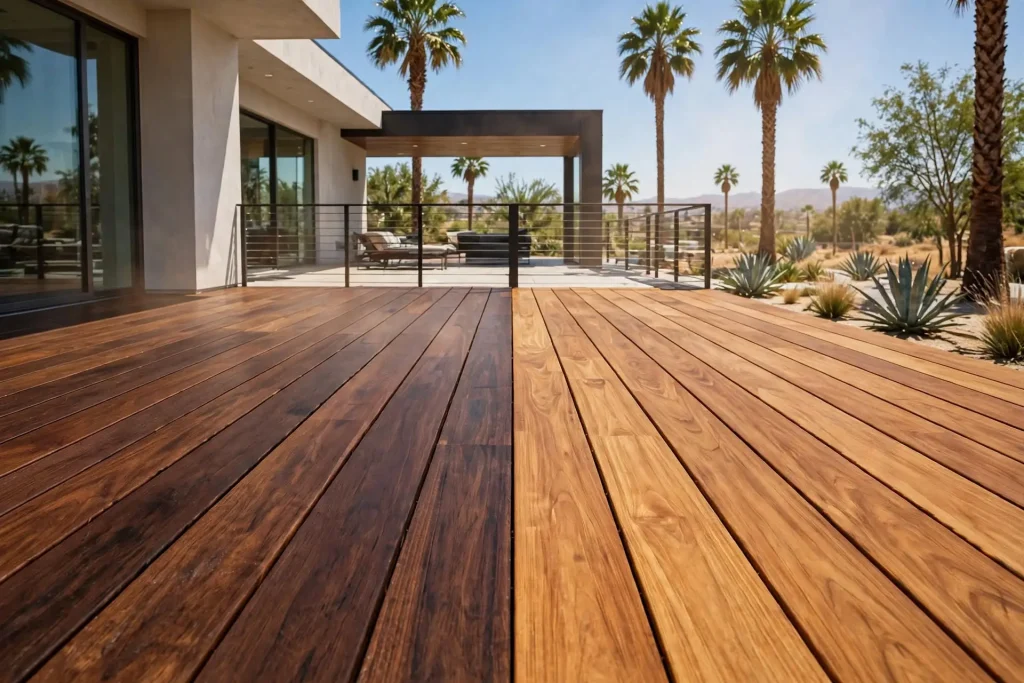
Left alone, ipe weathers to a silver-gray color. To keep its deep brown tone, you apply a UV-protecting oil once a year. Beyond that, it asks for little more than occasional cleaning.
Teak Decking
Teak has been the standard for boat decks and outdoor furniture for centuries, valued for how it handles water and sun.
Strength & Durability
Teak is strong and stable, though slightly softer than ipe. Its standout feature is a high natural oil content that makes it resist water, rot, and insects on its own. That oil is the reason teak has survived on ships for generations. A teak deck can last several decades when cared for.
Heat & Sun Performance
Teak handles heat well and stays more stable than most woods as temperatures swing. Its lighter color absorbs less heat than ipe, so it tends to feel cooler underfoot on a hot day. The natural oils also help it resist the drying and cracking that Southern California sun causes in lesser woods.
Maintenance & Cost
Teak weathers to a soft gray unless you oil it to hold the golden color. The bigger issue is supply and price. Genuine teak has become expensive and harder to source, and it often costs even more than ipe. Buyers also have to watch for lower-grade teak that lacks the oil content of the real thing.
Ipe vs Teak: Head to Head
Placed side by side, the two woods trade wins depending on what you value most.
Durability
Ipe takes this category. It is harder, denser, and generally lasts longer under heavy use and harsh sun. Teak is durable, but ipe stands in a class of its own for raw toughness.
Heat Comfort
Teak wins here. Its lighter color and natural oils keep the surface cooler underfoot, which is worth considering for a deck that bakes in full afternoon sun.
Price
This one is close and shifts with the market, but teak often costs more because good teak is harder to find. Ipe gives you extreme durability for a price that usually lands below premium teak.
Which One Wins for Southern California
For most Southern California decks, ipe is the stronger all-around choice. It handles the sun, dryness, and fire risk of the region better than almost any other wood, it lasts for decades, and it usually costs less than genuine teak. Teak still makes sense if you want a lighter deck that stays cooler underfoot and you are willing to pay for it and keep up the oiling.
Either way, quality of supply matters as much as the species. Lower-grade boards of either wood will not perform like the real thing. Working with an ipe wood decking supplier in Los Angeles that sources graded, sustainable material means you actually get the durability the wood is known for, rather than a discount board that fails early.
Getting Your Deck Right
A hardwood deck is a long-term investment, so it pays to choose carefully. Decide what matters most to you, which is likely durability, surface temperature, or budget, and let that guide the pick. Ask about the grade and source of the wood, since a premium species means little if the boards are second-rate. Plan for the yearly oiling if you want to hold the original color, or let the wood gray out naturally if you prefer less upkeep.
It also helps to think about the frame under the boards. A wood as heavy and dense as ipe needs proper joist spacing, hidden fasteners rated for hardwood, and a structure built to carry the weight, so the boards sit flat and last as long as the wood on top. Cutting corners on the framing undoes the value of a premium deck surface, since even the best boards will move and gap over a frame that was not built for them.
Choose the right wood from a good source, install it over a solid frame, and give it basic care, and your deck will stand up to Southern California summers for decades to come.