Maintaining a dense exterior hardwood deck requires an entirely different approach than treating softwoods like cedar or pressure-treated pine. Tropical hardwoods such as ipe wood decking, Cumaru, and Garapa have interlocking grain structures and extreme natural density, often exceeding 3,000 on the Janka hardness scale. Because of this high density, dense hardwoods cannot absorb heavy, film-forming varnishes, solid stains, or standard deck sealers.
Applying traditional paint or film-forming deck sealers will lead to flaking, peeling, and uneven discoloration within months. To preserve the deep, rich natural color of an exotic hardwood deck and protect it from sun exposure, you must apply a deep-penetrating oil finish formulated with trans-oxide ultraviolet pigments every 12 to 24 months.
Below is the step-by-step process used by professional deck builders and refinishers to clean, restore, and oil hardwood decks properly.
The Core Rule: Penetrating Oil vs. Film-Forming Sealers
The most critical mistake homeowners make with tropical hardwoods is treating them with standard exterior polyurethane, spar varnish, or heavy deck stain.
Film-Forming Sealers: Products like polyurethane, acrylic stains, and varnishes form a plastic skin on top of the wood. Because dense hardwoods do not absorb thick liquids, the finish sits entirely on the surface. Within six to nine months of sun exposure and foot traffic, this surface film bubbles, cracks, and peels. Stripping a failed film-forming sealer off an entire deck requires aggressive machine sanding.
Penetrating Hardwood Oils: Formulations like Ipe Oil, Messmers UV Plus for Hardwoods, and Penofin use low-viscosity natural oil carriers (such as tung or linseed oils) blended with fine trans-oxide pigments. These oils seep deep into the microscopic surface pores of the wood fibers, nourishing the lumber from within while blocking ultraviolet rays without forming a sticky surface layer.
Equipment and Supplies You Will Need
Before starting your maintenance routine, gather the proper contractor-grade supplies:
Oxygenated Deck Cleaner: Sodium percarbonate powder mixed with warm water to break down organic dirt, barbecue grease, and gray oxidized wood fibers.
Wood Brightener: Oxalic acid solution to neutralize the cleaner and restore the natural low pH balance of the hardwood.
Stiff-Bristle Deck Brush: Synthetic non-metallic bristle brush mounted on an extension pole. Never use wire brushes, which leave tiny steel particles that cause dark rust spots.
Pressure Washer (Optional): Must be adjusted to low pressure (under 1,000 to 1,200 PSI) with a wide 40-degree fan tip.
Specialized Hardwood Deck Oil: Formulated specifically for exotic hardwoods.
Applicator Pad or Natural Bristle Brush: A lambskin pad, specialized stain pad, or wide china bristle brush.
Cotton Rags: Clean terrycloth towels or cotton rags to wipe away all excess oil.
Water Bucket for Rag Disposal: Essential for preventing the spontaneous combustion of oil-soaked rags.
Step 1: Deep Cleaning and Stripping Surface Oxidation
Even a deck that looks clean has surface dirt, environmental pollutants, and oxidized wood cells that will prevent new oil from penetrating.
Mix and Apply Oxygenated Cleaner
Dissolve sodium percarbonate powder into warm water according to package directions. Do not use chlorine bleach. Chlorine bleach breaks down lignin, damages natural wood fibers, and leaves dense timber looking pale and washed out.
Scrub the Deck Boards
Spray the deck with water first to cool the boards down. Apply the oxygenated cleaning solution evenly across four or five boards at a time. Let the solution dwell for 15 to 20 minutes, keeping the surface damp by misting it with water if necessary. Scrub along the grain with your stiff synthetic brush to loosen gray dead wood cells and embedded grime.
Low-Pressure Rinse
Rinse the entire surface thoroughly with a garden hose or a low-pressure power washer. If using a pressure washer, maintain a distance of at least 12 to 14 inches from the wood face. High pressure will easily gouge softer grain rings, leaving permanent lap marks across dense hardwood boards.
Step 2: Brightening and pH Balancing
Scrubbing with an alkaline cleaner opens the wood grain, but it also darkens the lumber and raises its pH balance. Applying a wood brightener is an essential step that most DIY projects skip.
Why Brightening Matters: A wood brightener containing oxalic acid neutralizes remaining cleaner residues, eliminates tannin stains, and lowers the pH of the wood back to its natural acidic state. This immediately restores the warm, vibrant reddish-brown baseline of woods like Ipe and Cumaru.
Application: Spray or roll the diluted brightener across the damp deck boards. Let it sit for 5 to 10 minutes. You will see the wood lighten and return to its natural rich hue almost instantly. Rinse the deck thoroughly with clean water until all foaming stops.
Step 3: Moisture Check and Drying Time
Applying oil to damp hardwood is a guaranteed way to fail. If water droplets occupy the microscopic pores of the wood, the oil cannot sink in. The oil will pool on the surface, dry into an uneven tacky gloss, and attract airborne dust.
Check Dryness: Allow the deck to dry completely for at least 48 to 72 hours under warm, dry weather conditions.
Moisture Content Rule: The wood moisture level must be 15 percent or lower before applying oil finish. You can verify this using an inexpensive pin-style wood moisture meter pushed into the board face.
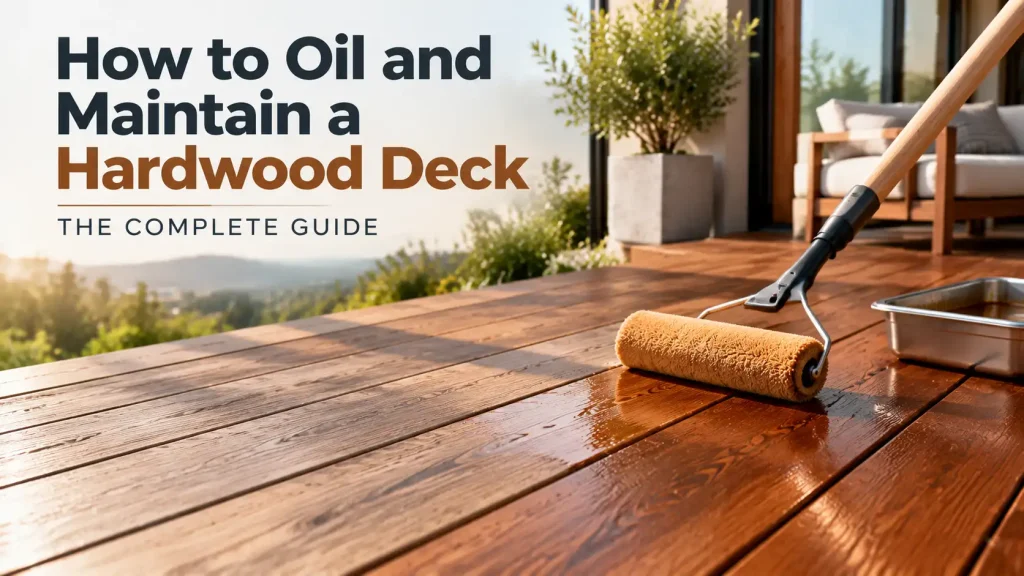
Step 4: Applying Penetrating Hardwood Deck Oil
Once the deck is completely dry, pick a clear day with temperatures between 55 and 85 degrees Fahrenheit. Never apply oil in the heat of midday sun, as direct sun will cause the oil carriers to flash dry before they penetrate the grain.
1. Work in Long Runs
Start at an inside corner or along the house wall, working along the full length of two or three boards from end to end. This prevents overlap marks in the middle of your deck.
2. Apply a Thin, Even Coat
Dip your applicator pad or natural bristle brush into the oil and spread it in smooth strokes along the direction of the grain. Remember that dense hardwoods accept only a limited volume of liquid. A single thin coat is almost always sufficient.
3. The 20-Minute Wipe Down Rule
This is the single most critical step in maintaining a hardwood deck: After letting the oil sit on the boards for 15 to 20 minutes, take clean, dry cotton rags and wipe the boards completely dry. Remove all excess, unabsorbed oil from the surface.
When you finish wiping, the surface should look rich and hydrated, but it should feel completely dry to the touch, not slippery or wet. If you leave excess oil on the boards, it will cure into a sticky, glossy film that turns black from trapped airborne dirt within weeks.
4. Rag Safety Warning
Natural drying oils release heat as they cure through oxidation. Any rags or pads soaked in hardwood oil can spontaneously catch fire if left piled in a trash can. Immediately place all used rags into a metal bucket filled with water and soap, seal the container, and dispose of them according to local hazardous material regulations.
Maintenance Schedule: The Southern California Climate Factor
Deck maintenance schedules depend largely on your local climate and sun exposure. In Southern California, coastal areas face marine layer moisture and salt air, while inland valleys endure intense heat, low humidity, and hot seasonal Santa Ana winds.
Full Sun Decks: Decks with direct, unshaded southern or western exposure usually require a light clean and re-oiling once every 12 months to prevent surface graying.
Covered Patios and Shaded Decks: Areas protected under rooflines, pergolas, or mature trees often maintain their color for 18 to 24 months before needing a maintenance coat.
The Water Drop Test: To check if your hardwood deck needs attention, splash a few drops of water onto high-traffic areas. If the water beads up cleanly, the oil protection is intact. If the water soaks into the wood within a minute and leaves a dark wet spot, it is time for a fresh coat of oil.
Preserving Color vs. Allowing Natural Silver Patina
Every hardwood deck owner must make a simple aesthetic decision: maintain the timber’s original tone or let it weather naturally.
Keeping the Warm Natural Wood Color
If you love the amber and walnut tones of freshly installed hardwood, commit to the 12- to 18-month oiling schedule detailed above. Regular oiling restores lost moisture to surface wood cells, minimizes surface checking (fine hair-like seasoning cracks), and protects the timber against long-term sun bleaching.
Embracing the Natural Silver Gray Patina
Dense tropical hardwoods like Ipe do not require oil to remain rot-proof. Because they are packed with natural internal resins and dense fibers, they will easily last 40 to 50 years without rotting, even if you never apply a drop of finish. Left completely un-oiled, the sun will bleach the surface lignin, turning the wood a uniform, silvery driftwood gray.
Even if you choose the weathered look, you should still scrub the boards annually with an oxygenated cleaner to remove tree sap, pollen, and airborne grime that can make the surface slippery when wet. If you change your mind later, you can always clean and brighten the wood to bring back its original color before oiling.
Frequently Asked Questions
Can I pressure wash my hardwood deck instead of scrubbing it?
Use extreme caution with pressure washers on dense hardwoods. Keep the pressure below 1,000 to 1,200 PSI and use a wide 40-degree fan nozzle held at least a foot away from the wood. Using high pressure or a narrow pencil tip will tear the wood grain and leave visible lap marks that require extensive sanding to fix.
Why is my newly oiled deck sticky?
A sticky surface means too much oil was applied or the excess was not wiped off within 20 minutes of application. Dense hardwoods cannot absorb excess liquid, so the remaining oil hardens on the surface into a tacky film. You can remove light stickiness by scrubbing the boards with mineral spirits on clean rags. Severe sticky buildup may require stripping and re-cleaning.
Do I need to sand my hardwood deck before oiling it?
Light spot-sanding with 80-grit sandpaper is only necessary if the deck has rough patches, raised grain, or surface stains. For routine yearly maintenance, an oxygenated deck cleaner and an oxalic acid brightener clean the pores thoroughly without requiring whole-deck sanding.
Can I use motor oil, mineral oil, or vegetable oil on my deck?
No. Household cooking oils and mineral oils never dry properly; they stay wet, turn rancid, and attract mold, dirt, and insects. Always use an exterior penetrating finish specifically formulated for outdoor architectural hardwoods with active ultraviolet blockers.
To explore outdoor hardwood samples, professional deck maintenance products, and custom millwork, visit the National Hardwood Flooring and Moulding showroom at 14959 Delano St, Van Nuys, CA 91411, or contact our team to select materials for your next outdoor decking project.