Choosing the right finish for your hardwood floors defines not only how your home looks, but also how you will live on, clean, and maintain your floors for decades. For modern residential interiors, the debate centers on two distinct finish philosophies: traditional polyurethane versus European hardwax oil.
Polyurethane creates a transparent plastic film that sits over the wood, sealing the surface under a protective wear layer. Hardwax oil, by contrast, penetrates deep into the wood pores while bonding micro-waxes to the surface fibers, preserving the authentic, raw texture of the grain.
Both systems offer distinct performance advantages. Selecting the right finish requires balancing scuff resistance against scratch repairability, sheen preferences, and ongoing maintenance expectations.
Quick Comparison: Hardwax Oil vs. Polyurethane
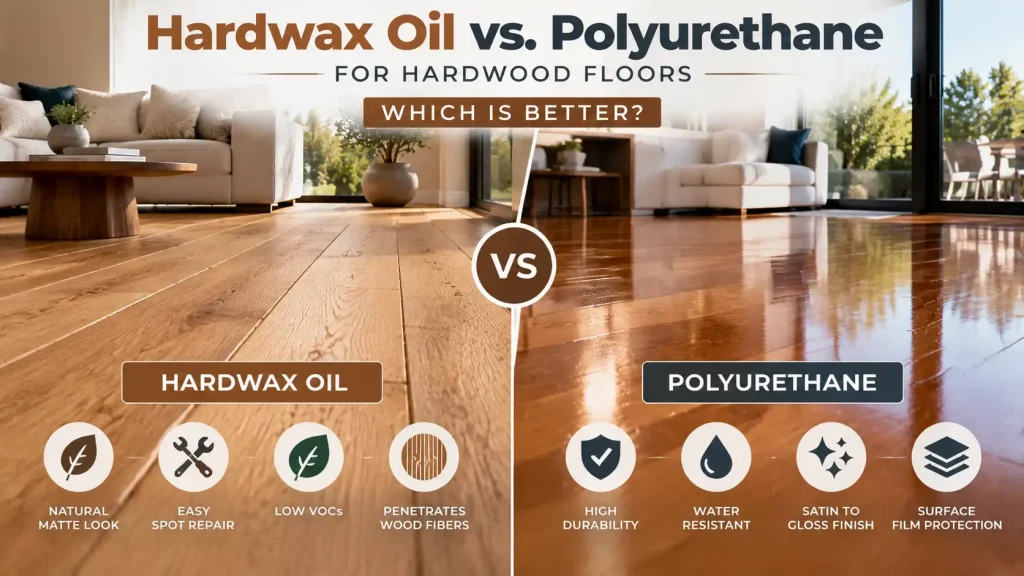
Hardwax Oil (Rubio Monocoat, Osmo, Pallmann)
Protection Mechanism: Penetrating vegetable oils bond to wood fibers; natural carnauba/beeswax hardens at the surface
Appearance and Sheen: Ultra-matte, zero-gloss organic look; retains natural open-pore wood texture
Scratch Behavior: Scratches blend into the grain; easy to spot-repair without sanding the whole room
Water and Liquid Resistance: Moderate; standing spills must be wiped up promptly to prevent water marks
Re-Coat and Sanding Cycle: Never requires complete sanding if routinely refreshed with maintenance oil
VOC Levels and Off-Gassing: Extremely low to zero VOCs; non-toxic, plant-based, virtually odorless
Best Suited For: European white oak, wire-brushed textures, busy households with pets, modern organic interiors
Traditional Polyurethane (Water-Based and Oil-Based)
Protection Mechanism: Builds a continuous acrylic or urethane plastic film on top of the timber
Appearance and Sheen: Satin, semi-gloss, or gloss; smooth, sealed, encapsulated surface
Scratch Behavior: Scratches show as white lines in the plastic film; cannot be spot-repaired invisibly
Water and Liquid Resistance: High; forms a non-porous moisture barrier that repels standing liquids
Re-Coat and Sanding Cycle: Requires screening and recoating every 5 to 8 years, or full sanding every 15 to 20 years
VOC Levels and Off-Gassing: Moderate to high depending on formula (water-based is significantly lower than oil-based)
Best Suited For: High-spill areas like kitchens, smooth-milled maple or exotic woods, homeowners wanting zero routine waxing
How Each Finish Protects the Wood
The fundamental difference between hardwax oil and polyurethane lies in where the protective barrier sits.
How Polyurethane Works (Topical Barrier Protection)
Polyurethane is a synthetic resin that cures into an impermeable plastic coating over the lumber. Whether you choose water-based or oil-based polyurethane, the finish does not integrate into the cell walls of the wood. Instead, it forms a clear protective shield on top.
When you walk across a polyurethane-finished floor, your feet never touch the actual wood fibers. You are walking on a layer of cured plastic resin. This continuous barrier provides excellent defense against water droplets, pet accidents, and coffee spills, keeping liquids from touching the raw timber underneath.
How Hardwax Oil Works (Molecular Fiber Integration)
Hardwax oil originates from European woodworking traditions and combines cold-pressed plant oils (such as linseed, sunflower, or soybean oil) with purified natural waxes (such as carnauba and beeswax).
When applied, the low-viscosity oils seep into the open cellular structure of the timber, molecularly bonding with the cellulose fibers. The specialized waxes remain on the upper surface, curing into a breathable, water-repellent wear layer. Because it does not form a surface film, the natural open grain remains exposed to the touch.
Aesthetic Differences: The Organic Texture vs. The Sealed Look
Floor finish determines how light reflects across your rooms and how the timber feels beneath bare feet.
The Hardwax Oil Look: Organic and Tactile
Hardwax oils produce an ultra-matte, non-reflective finish that highlights the authentic character of the lumber.
It enriches natural grain contrast without giving the floor an artificial plastic sheen.
Because the grain remains open, you can physically feel the grain structure and wire-brushing underfoot.
It is the standard finish for modern European white oak floors, as well as character grades featuring knots and natural color variation.
The Polyurethane Look: Smooth and Clean
Polyurethane delivers a uniform, smooth surface that levels out minor grain texture.
It is available in multiple sheen levels, from matte and satin to semi-gloss and high-gloss.
It provides a clean, polished aesthetic that complements closed-grain species like maple, birch, and exotic woods.
The cured film reflects ambient room light, which can brighten dark hallways and north-facing rooms.
Scratch Resistance and Daily Wear Realities
Every hardwood floor will eventually experience pet claws, dropped utensils, and grit tracked in from shoes. How each finish reacts to physical abrasion is completely different.
The Polyurethane Scratch Dilemma
Polyurethane is exceptionally hard and resists dulling from routine foot traffic. However, when a heavy object or a large dog claw gouges the floor, it scratches the transparent plastic film.
These scratches typically appear as cloudy white lines across the floor because light refracts through the fractured surface film.
Polyurethane cannot be spot-repaired. You cannot sand or brush finish over a single scratch without leaving a visible halo or lap line.
The only way to remove scratch marks from a polyurethane floor is to buff the entire room (screen and recoat) or sand the floor down to raw timber.
The Hardwax Oil Spot-Repair Advantage
Hardwax oil has no plastic film to fracture.
When a scratch occurs, it indents the wood fiber directly, making the mark blend naturally into the existing grain pattern.
Hardwax oil offers effortless spot-repairability. If an area becomes scuffed or worn, you simply clean the spot, apply a drop of maintenance oil with a soft cotton rag, and buff it dry. The fresh oil molecularly bonds with the exposed fibers, making the scratch disappear in minutes without touching the rest of the room.
Liquid Spills, Stains, and Chemical Resistance
How each finish handles household spills is a major deciding factor for kitchens, dining rooms, and powder rooms.
Polyurethane is Non-Porous: Spilled red wine, vinegar, or pet urine sitting on a polyurethane finish will not penetrate the film, provided the puddle is wiped up within a reasonable window. This makes polyurethane an ideal choice for high-spill kitchen areas and busy mudrooms.
Hardwax Oil is Breathable and Micro-Porous: While cured hardwax oils repel water droplets, they are not completely impervious to standing liquids. If red wine, citrus juice, or pet urine sits uncleaned on a hardwax oiled floor for several hours, the liquid can bypass the surface waxes and leave a dark chemical ring in the timber fibers below. Spills must be wiped up promptly.
VOC Content, Indoor Air Quality, and Environmental Impact
Indoor air quality and chemical off-gassing are increasingly important considerations for modern interior renovations.
Hardwax Oils: Products like Rubio Monocoat contain zero percent Volatile Organic Compounds (VOCs). They are formulated from natural plant oils and waxes, contain no toxic solvents or formaldehyde, and produce virtually zero chemical odor. Homeowners can comfortably occupy the home immediately after application.
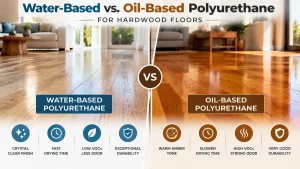
Water-Based Polyurethane: Modern water-based polyurethanes (such as Bona Traffic HD) have low VOC levels that meet strict California indoor air quality standards. They cure quickly and release only mild odors for 24 to 48 hours.
Oil-Based Polyurethane: Traditional oil-based polyurethane contains high levels of petroleum solvents and toxic mineral spirits. They off-gas intense chemical fumes for days, release high VOC concentrations, and require homeowners to vacate the property during the curing process.
Long-Term Maintenance: The Lifetime Cost Comparison
Understanding how each finish is maintained over a 20-year lifespan reveals major differences in maintenance routines and long-term costs.
Polyurethane: Low Routine Maintenance, High Refinishing Hassle
Daily Care: Sweep regularly and clean with a pH-neutral hardwood spray cleaner. Requires zero waxing or buffing.
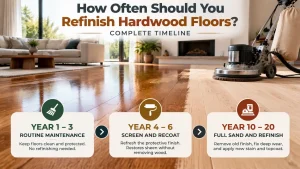
The 5- to 8-Year Mark: High-traffic pathways near doorways and kitchen islands will wear through the clear coat. You must move all furniture out of the room to have a contractor screen and apply a fresh topcoat across the entire floor.
The 15- to 20-Year Mark: The floor must be completely sanded down to raw wood, removing a layer of your hardwood wear layer.
Hardwax Oil: Active Routine Care, Never Needs Sanding
Daily Care: Clean with specialized, vegetable-oil-based soaps (such as Rubio Surface Care) that gently hydrate the wax layer while removing surface dirt. Never use harsh household degreasers or vinegar, which strip away the natural waxes.
The 12- to 24-Month Mark: High-traffic walkways can be revitalized by wiping on a light coat of liquid renewing wax or maintenance oil. The process takes less than an hour and does not require vacating the house or moving large furniture.
The Long-Term Benefit: Because you continually replenish the protective oils and waxes, the floor never needs to be sanded down to bare wood. The original wear layer of your wood is preserved indefinitely.
Summary: Which Finish Should You Choose?
Choose Hardwax Oil if:
You love the matte, natural look and open-grain tactile feel of European white oak.
You have children or pets and want the ability to touch up scratches and scuffs without calling a flooring contractor.
You prefer an eco-friendly, zero-VOC product that is safe for immediate occupancy.
You have textured, hand-scraped, or wire-brushed hardwood flooring where a thick plastic coat would hide the authentic craftsmanship.
You want to avoid ever having to sand your floors down to raw wood in the future.
Choose Polyurethane if:
You are installing floors in a kitchen, dining room, or powder room where liquid spills and food splatters happen regularly.
You prefer a sleek, smooth, sealed surface available in classic satin or semi-gloss sheens.
You want completely hands-off maintenance for the first 5 to 7 years with zero routine re-oiling or waxing.
You are finishing tight-grained domestic species like maple, hickory, or exotic hardwoods like brazilian cherry flooring, which absorb hardwax oils less uniformly than oak.
Frequently Asked Questions
Can you put polyurethane over a hardwax oil finish?
No, not directly. Polyurethane will not adhere to wax or oil residues. If you want to switch from hardwax oil to polyurethane in the future, the floor must be completely sanded down to clean, raw timber to remove all oil-saturated wood fibers before applying a polyurethane primer.
Is hardwax oil hard to keep clean?
No, but it requires the correct cleaning products. You cannot use multi-surface household cleaners, ammonia, bleach, or acidic vinegar solutions, as they break down the protective waxes. Clean regularly using manufacturer-recommended, pH-neutral plant soaps that gently nourish the finish.
Does hardwax oil make wood floors slippery?
No. In fact, hardwax oil finishes generally offer better traction and slip resistance than high-gloss or semi-gloss polyurethanes because the micro-waxes cure to a smooth, non-slick matte surface that leaves the natural wood grain exposed.
Will dog claws ruin a hardwax oil floor?
Hardwax oil handles pets very well. While large dogs can indent any wood species, pet claws do not create the white, fractured scratch marks typical of polyurethane films. Any minor scuffs or marks can be wiped away using a small amount of maintenance oil on a cloth.
To compare real-world wood boards finished with both hardwax oils and high-durability polyurethanes, visit the National Hardwood Flooring and Moulding showroom at 14959 Delano St, Van Nuys, CA 91411, or contact our flooring specialists to explore curated hardwood flooring collections tailored to your lifestyle.