SPC flooring has been showing up in a lot of renovation conversations lately, and most of the interest centers on one thing — how it holds up in rooms where water is a daily factor. Kitchens, laundry rooms, bathrooms, mudrooms — these are the spaces where traditional hardwood starts to struggle, and where homeowners have historically had to make compromises on the flooring they actually want.
SPC, which stands for stone plastic composite, takes a different approach to the waterproof flooring category than standard vinyl. The two get compared often because they look similar in finished form, but the core construction is different in ways that matter in high-moisture environments.
What SPC Actually Is
Standard luxury vinyl plank, often called LVP, is built around a flexible vinyl core. It is lightweight and somewhat comfortable underfoot, and it handles moisture reasonably well. SPC is built around a core that combines limestone powder, polyvinyl chloride, and stabilizers. The result is a rigid board that does not flex, does not expand significantly with temperature or humidity changes, and does not absorb water at the core level.
That rigidity is what makes SPC interesting for problem rooms. Regular vinyl can expand and contract as temperatures change, which causes gaps and warping over time in spaces that see significant temperature swings. The rigid core in SPC resists that movement, which means the floor stays more stable through seasonal changes and the day-to-day humidity fluctuations in a kitchen or laundry room.
The Wear Layer Difference
Both SPC and standard vinyl use a wear layer on top, which is the part that actually faces foot traffic and moisture exposure. Wear layer thickness is measured in mils. For residential use, a 12-mil wear layer is a solid starting point. For spaces with heavy use — laundry rooms with constant foot traffic, kitchens that see spills regularly — a 20-mil wear layer adds meaningful durability.
The wear layer protects the decorative layer underneath from scratches, stains, and moisture penetration. A thicker wear layer extends the life of the floor in demanding conditions, which is why it tends to show up in SPC products marketed toward high-traffic and high-moisture areas.
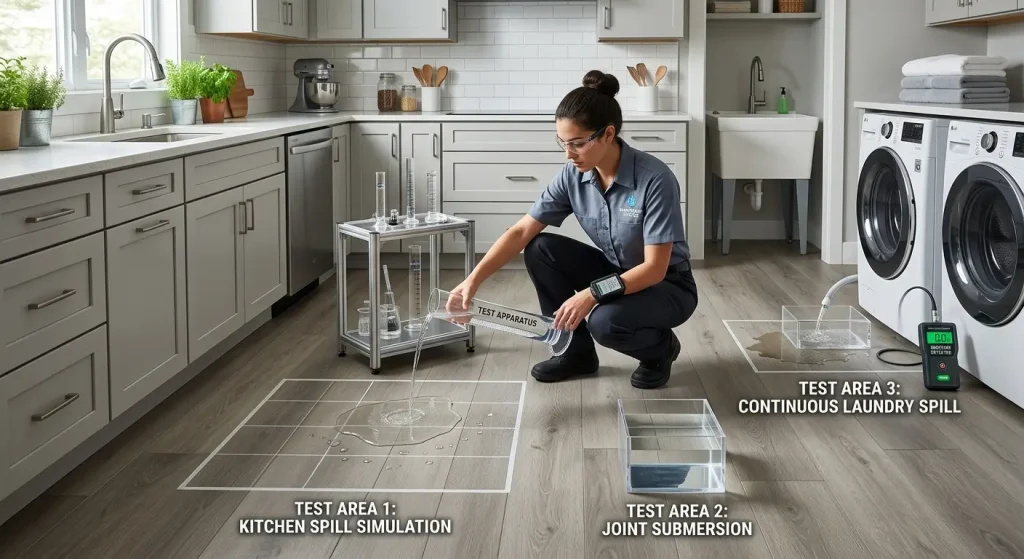
How Kitchens Actually Test Flooring
A kitchen puts flooring through a lot. There are spills, steam from cooking, temperature changes from appliances, and foot traffic that does not stop. Hardwood flooring has well-documented issues in kitchens because wood absorbs moisture and can cup, warp, or develop gaps at the seams. Engineered hardwood handles moisture better, but even that has limits in rooms where water hits the floor regularly.
SPC addresses the moisture issue at the core level. Because the core does not absorb water, spills that sit on the surface for a period of time do not cause the kind of damage they would on a wood-based product. The flooring does not swell, and the joints do not open up from repeated moisture exposure.
The Laundry Room Factor
Laundry rooms are arguably harder on flooring than kitchens. Washer overflow events are common, humidity levels stay high from regular dryer use, and the floor deals with vibration from machines running through multiple cycles. Traditional hardwood is almost never recommended for laundry rooms, and even some vinyl products struggle with persistent humidity.
SPC in a laundry room performs well because the core does not respond to humidity the way wood-based products do. The floor needs to handle an overflow event without lifting or buckling, and SPC is built to do exactly that. The key is making sure the installation is done correctly — the subfloor should be flat and free of moisture issues before SPC goes down.
What SPC Does Not Do
It is worth being straightforward about the limits of SPC. The flooring is waterproof at the surface and at the core, but moisture that gets underneath the floor through the subfloor is a different issue. If there is a moisture problem in the concrete slab or the subfloor structure, SPC is not going to solve that. A moisture test before installation is a good step, particularly in laundry rooms or kitchen areas with a history of water issues.
SPC is also a harder product underfoot than standard vinyl. The rigidity that makes it stable also means it does not have the slight give that LVP provides. For some people, that is a noticeable difference during long periods of standing. An underlayment helps, and many SPC products come with an attached underlayment pad already on the back of each board.
Color & Style Availability in 2026
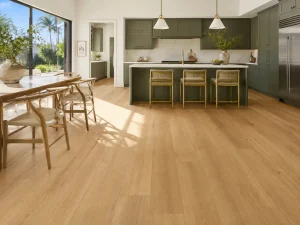
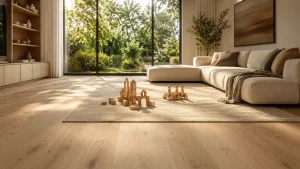
The styling options for SPC have expanded considerably. The wood-look category now covers realistic grain patterns in oak, hickory, and walnut tones, and the color range has moved past the gray-dominant palette that characterized early LVP and SPC products. In 2026, warmer tones — honey, natural oak, and light brown finishes — are showing up more in SPC collections, which makes it easier to use in spaces where it connects visually to adjacent rooms with wood flooring.
The click-lock installation system on most SPC products makes it accessible for contractor and DIY installation alike. The boards float over the subfloor, which means no glue in most applications and a faster installation process than glue-down products.
Choosing Between SPC & Standard Vinyl
For a dry bedroom or living room, standard vinyl works well and costs less than SPC. But for kitchens, laundry rooms, bathrooms, and mudrooms, the extra investment in SPC makes sense. The stability, the rigidity, and the performance in moisture-heavy conditions make it a better fit for those specific spaces. Over the life of the floor, avoiding replacements from water damage usually offsets the difference in upfront cost.