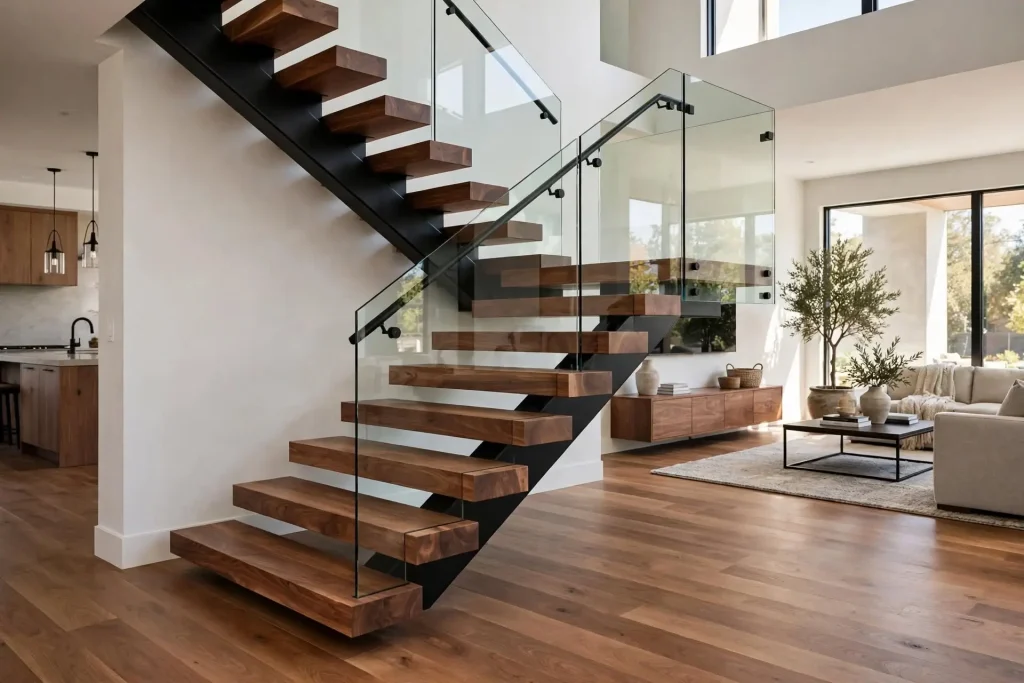
Floating staircases have become one of the most requested features in modern home design, and it is easy to see why. The open treads and hidden supports make a stairway look like it is drifting in midair, which draws the eye the moment someone walks in. The detail that separates a great floating staircase from an average one is how well the wood treads relate to the flooring around them. When the treads and floors work together, the whole space feels planned. When they clash, the stairs look like an afterthought. Here is how to get the match right.
Why the Match Between Treads & Floors Matters
A floating staircase sits in the open, usually in an entry or a main living area where the floor is fully visible. Because there are no risers to break up the view, your eye travels straight from the floor to the treads and back again. If the two woods do not agree, that disagreement is the first thing people notice.
Matching the treads to the floor does more than look tidy. It makes a room feel larger and more connected, because the wood carries a consistent tone from the ground up through the stairs. That continuity is the effect most homeowners are after when they choose floating stairs in the first place.
Start with Your Flooring
The floor is almost always in place before the stairs go in, and it covers far more surface area, so it should lead the decision. Choose your treads to suit the floor rather than trying to force the floor to match the stairs later.
Identify the Species
First, find out exactly what wood your floor is. Oak, walnut, maple, and hickory all take stain differently and carry their own grain patterns. Knowing the species tells you what you are trying to match and which tread woods will cooperate with it.
Note the Finish & Tone
Next, look at the finish and undertone of your floor. A warm, honey-toned oak calls for a different tread choice than a cool, gray-washed plank. Matching the undertone matters more than matching the exact shade, since two woods in the same tone family will always look right together even when their colors differ a little.
Matching Custom Wood Treads to Your Floor
Once you know your floor, you have two solid directions to take the treads. Both look good when done on purpose.
Going for an Exact Match
The cleanest look comes from treads cut and stained to match the floor as closely as possible. The stairs read as a continuation of the floor, and the whole area feels like one surface flowing upward. This approach works best in homes that want a calm, unified feel.
Going for Contrast
The other option is to make the treads a shade or two darker than the floor. Darker treads against a lighter floor give the staircase presence and let it stand out as a feature. This look feels bolder and more modern, and it keeps the stairs from disappearing into the floor.
Choosing the Right Wood for Floating Treads
Looks are only half the job. Floating treads carry real weight with no riser beneath them, so the wood has to be strong enough for the task.
Strength Comes First
Dense hardwoods like oak, maple, and walnut hold up well as floating treads because they resist bending and wear. Softer woods can flex or dent over time, which you do not want on a stair that carries daily traffic.
Thickness & Span
Floating treads are usually thicker than standard flooring, often two inches or more, so they stay rigid across an open span. The longer the tread, the thicker and denser the wood needs to be. A good fabricator will size the treads to the span so they feel solid underfoot.
Getting Custom Treads Made Right
The best way to match treads to a floor is to have them custom made from the same species and finished to order. Stock treads rarely match an existing floor exactly, which is why so many homeowners searching for custom floating stair treads in Los Angeles end up going the custom route. A shop that mills its own treads can match the species, cut them to the right thickness, and finish them to sit alongside your floor. Bringing in a sample of your flooring lets the maker match the stain and sheen before anything is cut, which saves you from a mismatch after installation.
Finishing Touches That Tie It Together
Small details pull the look together. Use the same finish sheen on the treads as on the floor, since a glossy tread next to a matte floor breaks the effect even when the color matches. Keep the railing and hardware in a tone that suits both, so nothing fights for attention. If your floor has a visible grain direction, running the tread grain the same way keeps everything consistent.
Lighting helps too. A floating staircase often has lighting built under the treads, and warm light brings out the wood tone while cool light can wash it out. Choose a light that flatters the wood you picked.
Bringing It All Together
A floating staircase is a real centerpiece, and the wood treads are what make or break the look. Start with your floor, learn its species and undertone, and choose treads that either match it closely or contrast with it on purpose. Pick a dense hardwood thick enough to carry the span, have the treads custom made and finished to suit your floor, and keep the finish sheen consistent throughout.
Get those pieces right, and your floating stairs will look like they were always meant to be there, rising out of the floor as one clean, connected surface.