Beautiful real wood can work in a home full of spills, toys, snacks and growing children — when the product, finish and care plan are selected thoughtfully.
Children experience a home from the floor up. They crawl, play, drop toys, push chairs and occasionally turn snack time into a cleanup project. For parents who love the natural warmth of wood, the question is not whether a floor will ever show signs of family life. The better question is which wood floor will handle daily use gracefully and remain easy to care for over time.
National Hardwood Flooring & Moulding has served Southern California homeowners, contractors and designers since 1984. From its Van Nuys showroom, the team supplies solid hardwood, engineered hardwood and installation materials for residential projects. This guide explains the features families should compare before choosing a kid-friendly wood floor.
Why Families Choose Wood Flooring
Wood flooring offers an enduring look that can move from nursery to playroom to family living space without feeling dated. Unlike wall-to-wall soft flooring, a sealed wood surface is easy to sweep and spot-clean after crumbs, sticky spills and tracked-in dirt.
Simple Everyday Cleanup
A properly finished wood floor gives families a smooth surface for regular sweeping, vacuuming and prompt spill cleanup. That matters in dining spaces, living rooms and bedrooms where messes are part of normal routines.
Renewal Potential
Real wood may offer repair or renewal options as it wears. Solid hardwood can often be sanded and refinished multiple times. Engineered hardwood may also be renewable, depending on the thickness of its real-wood wear layer and the manufacturer’s guidance.
A Design Choice That Grows With the Home
A quality wood floor works with changing furniture, paint colors and room uses. Families can add washable rugs during early play years, then simplify the space later without replacing the entire floor.
What Makes a Wood Floor Kid-Friendly?
Kid-friendly does not mean dent-proof, stain-proof or maintenance-free. It means selecting a flooring system that suits the household: a wood species appropriate for traffic, a finish that is practical to maintain, an installation plan suited to the room, and reliable product documentation.
- Durability for daily traffic: Consider how bedrooms, kitchens, play spaces and entries will be used.
- A forgiving appearance: Low-sheen finishes and character-rich textures can make normal day-to-day wear less noticeable.
- A clear cleaning plan: Choose a finish with approved care products and easy-to-follow maintenance guidance.
- Product-specific indoor air information: Request documentation for the flooring, finish, adhesive and underlayment being considered.
Indoor Air Quality Questions to Ask Before Purchase
For engineered flooring or other products containing regulated composite-wood components, ask for applicable TSCA Title VI documentation and any relevant California compliance information. Where available for the exact product, FloorScore or UL GREENGUARD Gold certifications can provide additional information about VOC emissions. For site-applied finishes and adhesives, ask about cure time, ventilation and product documentation before installation.
Choosing Wood Species for Active Family Spaces
Wood species vary in appearance and dent resistance. The Janka scale is commonly used to compare a wood’s resistance to indentation. It is useful when planning for dropped toys and furniture movement, but it does not predict scratch resistance, stain resistance or moisture performance. Finish, sheen, texture and maintenance also matter.
| Species | Approx. Janka Rating | Family-Home Planning Note |
| Hickory | 1,820 | Very hard domestic option with pronounced color and grain variation that can visually soften signs of everyday use. |
| Hard Maple | 1,450 | Firm, clean-looking wood; select the finish carefully because a smoother appearance may reveal marks more readily. |
| White Oak | 1,360 | Versatile, popular choice with attractive grain and broad finish options for family living spaces. |
| Red Oak | 1,290 | Traditional choice with visible grain and broad design flexibility. |
| American Walnut | 1,010 | Softer, warm-toned wood that may suit bedrooms or lower-impact rooms when character is the priority. |
A family with active play areas may prioritize a harder domestic wood such as hickory or a versatile species such as white oak. A quieter bedroom can allow greater freedom to choose a softer wood for its visual character. Always compare actual samples, finish systems and manufacturer specifications before deciding.
Solid Hardwood or Engineered Hardwood?
National Hardwood supplies both solid hardwood and engineered hardwood, and each can work in a family home when used in the right setting.
Solid Hardwood
Solid hardwood is milled from a single piece of wood and is commonly chosen for living areas, bedrooms and dining spaces. Its key long-term advantage is that it may be sanded and refinished multiple times, depending on its condition and installation.
Engineered Hardwood
Engineered hardwood features a real wood top layer over a stable core. It is often considered in rooms where moisture or humidity changes require additional planning, including kitchens and some remodel situations. Its refinishability depends on wear-layer thickness, product construction and manufacturer instructions.
How to Decide
- Ask which construction is suitable for the subfloor, room and installation method.
- For engineered products, review wear-layer specifications and applicable emissions documentation.
- For kitchens or high-use areas, discuss spill exposure and maintenance expectations before selecting a product.
- Compare real samples in the finish and plank width you expect to install.
The Finish and Texture Can Make Daily Life Easier
A family floor is experienced on the surface. The finish helps protect the wood, while sheen and texture influence how everyday footprints, scuffs and small marks appear.
Sheen Level
- Matte or ultra-matte finishes reflect less light and can help small marks appear less obvious in busy rooms.
- Satin finishes offer a subtle glow while remaining practical for many living spaces.
- Higher-gloss finishes reflect more light, which may make dust, footprints and surface marks easier to see.
Surface Texture
- Wire-brushed flooring has visible grain texture that can make routine scuffs less visually prominent.
- Hand-scraped or distressed looks incorporate intentional character, which can suit active family spaces.
- Smooth floors provide a clean contemporary look, but may show everyday wear more clearly depending on color and sheen.
Prefinished or Site-Finished?
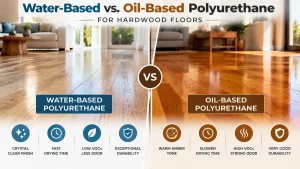
Prefinished flooring arrives with its finish already applied and avoids the onsite curing period associated with site-applied finishes. Site-finished flooring offers design flexibility, but families should ask about finish type, ventilation needs, cure times and when rooms can safely return to normal use. Where indoor-air concerns are a priority, request product-specific documentation rather than relying on broad claims.
Create Soft, Practical Zones Without Giving Up Wood
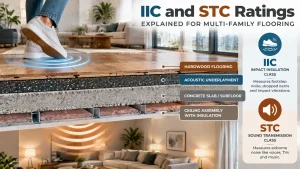
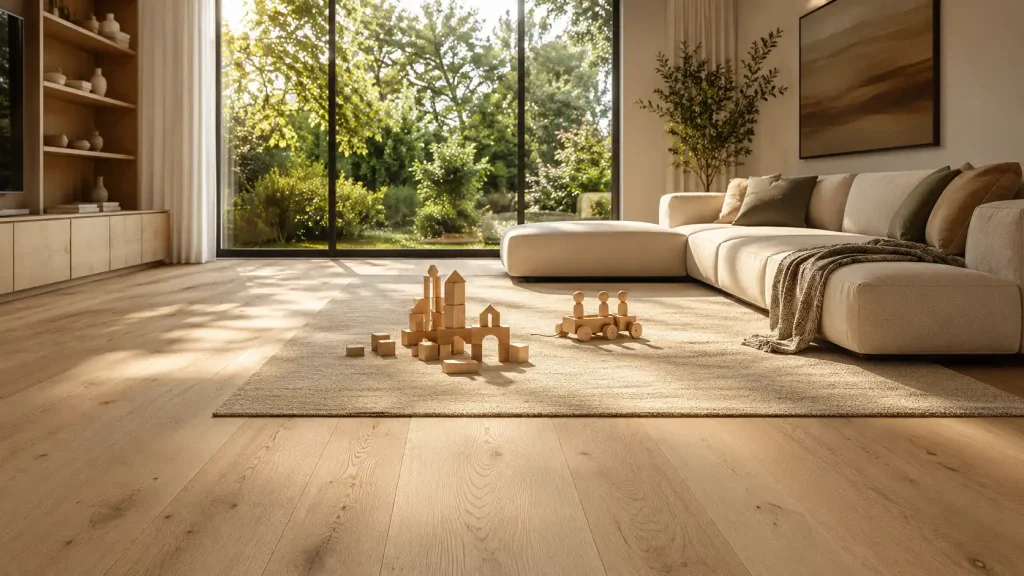
Wood is a firm surface, so play-focused rooms benefit from thoughtful layering. A washable area rug can define a comfortable space for crawling, reading or blocks while leaving the surrounding wood easy to clean. An appropriate underlayment may also help manage sound transmission, depending on the flooring system and installation requirements.
- Use washable, low-pile rugs in primary play zones and dining areas where spills are likely.
- Choose a rug pad confirmed compatible with the specific floor finish; some backings may discolor or mark certain finishes.
- Ask the flooring professional whether an underlayment, such as Portuguese cork underlayment, is appropriate for the selected product and installation method. Cork can also help dampen footstep sound in busy family rooms.
- Treat rugs as a comfort layer, not a substitute for supervision or child safety planning.
Room-by-Room Kid-Friendly Flooring Planning
Nursery
Prioritize easy cleaning, documented product information and a calm design. A low-sheen wood floor with a washable area rug can support tummy-time and play while keeping the permanent surface simple to maintain. Ask about prefinished products and any relevant emissions documentation for flooring and installation materials.
Playroom
In rooms where toys, craft supplies and furniture movement are common, consider a harder species, a low-sheen finish and a texture that is visually forgiving. Add a washable rug for seated play and use furniture pads on toy storage, tables and chairs.
Kitchen and Dining Area
The practical priority is spill response. Select a product appropriate for the room and keep a dry or slightly damp cloth nearby for spills. A washable runner or high-chair mat that is compatible with the finish can make snack cleanup easier.
Bedrooms
Bedrooms generally see less heavy impact, so families can place more emphasis on color, warmth and design continuity. A soft bedside rug can add comfort without covering the entire wood floor.
Stairs and Hallways
Busy transition areas require careful planning. Ask about stair parts, runners or other properly installed solutions intended to provide a practical walking surface for the household. Hallways benefit from finishes and species selected for repeated traffic.
Cleaning Common Kid Messes on Wood Floors
The safest cleanup approach is usually the simplest: act promptly and use products approved for the specific floor finish. Harsh household chemicals, abrasive tools and excessive moisture can create more damage than the original mess.
| Mess | Family-Friendly First Step |
| Juice, milk or sticky drinks | Blot or wipe promptly with a dry or slightly damp cloth, then dry the area. Use an approved wood-floor cleaner for remaining residue. |
| Crumbs, glitter or tracked-in grit | Sweep, dust mop or vacuum using a bare-floor setting to reduce abrasive grit underfoot. |
| Crayon, marker, slime or putty | Do not experiment with solvents or scraping tools. Check the finish manufacturer’s cleaning guidance or ask a flooring professional before treating stubborn residue. |
| Pet accidents in a family home | Blot moisture immediately and use only a cleaner compatible with the specific wood-floor finish. See our pet-friendly hardwood flooring guide for more detail. |
A Realistic Maintenance Routine for a Busy Household
A wood floor does not require a complicated routine, but it does reward consistent care. The National Wood Flooring Association recommends routine dry cleaning, prompt spill cleanup and cleaners made for the floor’s finish. For more detail, see our guide on hardwood floor maintenance.
Daily or As Needed
- Clean spills immediately with a dry or slightly damp cloth, then dry the area.
- Remove grit in entries, kitchens and eating areas before it is tracked across the floor.
Weekly
- Sweep, dust mop or vacuum with a bare-floor setting or appropriate attachment.
- Use a cleaner made specifically for the installed floor finish when cleaning is needed.
- Avoid wet mops and steam mops, which can damage finish and wood over time.
Periodically
- Check felt pads beneath chairs, stools and movable toy furniture.
- Inspect beneath rugs for trapped moisture or grit and confirm rug-pad compatibility.
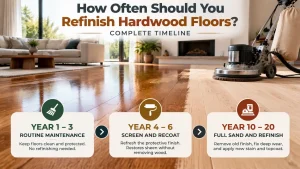
- When high-traffic areas begin showing visible wear, ask a wood-flooring professional whether a maintenance coat or repair is appropriate.
- Follow the flooring and finish manufacturer’s recommendations for indoor conditions and humidity control.
Kid-Friendly Flooring Priorities by Life Stage
| Life Stage | Planning Priority |
| Babies and Crawlers | Choose easy-clean flooring, request product documentation relevant to indoor emissions, and create washable rug zones for floor play. |
| Toddlers | Focus on practical cleanup, low-sheen appearance and comfortable play zones where children spend the most time. |
| Preschool and Elementary Years | Plan for chair movement, art projects and toy storage with felt pads, washable rugs and a consistent cleanup routine. |
| Older Children and Teens | Maintain high-traffic areas and evaluate whether touch-ups or professional maintenance can renew visible wear. |
Comparing Wood With Other Family Flooring Options
There is no single surface that fits every household. Carpet may feel softer, resilient flooring may offer different moisture performance, and real wood offers authentic material character with potential renewal options. Rather than relying on a single label such as ‘kid-friendly,’ compare the factors that matter in the specific room.
| Question to Compare | Why It Matters for Families |
| How will spills be handled? | Kitchens, dining areas and entries require a realistic cleanup plan. |
| Can worn areas be repaired or renewed? | Long-term maintenance may matter more than first-day appearance. |
| What product documentation is available? | Ask about flooring, finish, adhesive and underlayment information for the exact products selected. |
| How will softness and sound be managed? | Rugs and appropriate installation materials can help create comfortable family zones. |
| What will suit the home in ten years? | Choose a surface and design that remains appealing as children grow. |
Planning a Budget Without Guesswork
Flooring cost varies with species, grade, plank width, finish, installation method, subfloor preparation and current product availability. Instead of publishing fixed price ranges that may not match the project, a family can get a more useful estimate by bringing room dimensions, inspiration photos and lifestyle priorities to a flooring consultation.
- Ask for product pricing and current availability for the preferred species and finish.
- Discuss solid versus engineered construction for each room.
- Confirm installation materials, transition pieces, stair components and any subfloor work needed.
- Request care instructions and warranty information before choosing the final product.
A Note for Southern California Family Homes
Southern California homes can experience different interior conditions based on location, season and climate control. An installer should evaluate the space, subfloor and installation method before flooring is selected. Engineered and solid hardwood are both available from National Hardwood, and the right choice depends on the room, the product specifications and the installation plan.
Frequently Asked Questions
Is wood flooring a practical choice for homes with babies and toddlers?
Yes. Many families choose wood because it is easy to sweep and spot-clean, and because real wood offers lasting design appeal. Select a product and finish suited to the room, use comfortable rug zones for floor play, and request product-specific documentation for indoor-air concerns.
What wood species work well in active family rooms?
Hickory, white oak, hard maple and red oak are common options to compare. Janka hardness helps compare resistance to dents, while finish, color and texture influence how everyday wear is seen.
Will toys scratch a wood floor?
Any finished surface can show wear over time. Low-sheen finishes, character-rich textures, furniture pads and prompt removal of grit can help a floor age more gracefully. Repair options depend on the floor construction and finish.
Should a family choose solid or engineered hardwood?
Both can suit a family home. Solid hardwood may offer greater long-term refinishing potential, while engineered hardwood is often considered where installation conditions or moisture planning require additional stability. Review the actual product specifications for each room.
How should crayon, marker or slime be removed from wood flooring?
Start with the care guidance for the installed finish. Avoid solvents, abrasive tools or excessive moisture unless specifically approved by the manufacturer or a flooring professional.
What should parents ask about indoor emissions?
Ask whether applicable engineered or composite-wood components have TSCA Title VI documentation, and whether FloorScore or UL GREENGUARD Gold certification is available for the exact flooring, adhesive or underlayment products under consideration.
Can wood flooring be installed in a nursery renovation?
Yes, with appropriate planning. Families should compare prefinished and site-finished options, review installation materials, ask about ventilation and cure time where applicable, and schedule the project around room use.
Plan a Family-Friendly Wood Floor With National Hardwood
A family-ready floor balances authentic design, daily practicality and realistic care. National Hardwood Flooring & Moulding has served Southern California since 1984 and supplies solid hardwood, engineered hardwood and installation materials from its Van Nuys showroom.
Visit our Van Nuys showroom to compare wood samples, finish options and project materials in person. Bring photos, room measurements and the details that matter most to your household, from play areas and dining spaces to stairs and long-term maintenance goals.
National Hardwood Flooring & Moulding | 14959 Delano St, Van Nuys, CA 91411 | (818) 988-9663