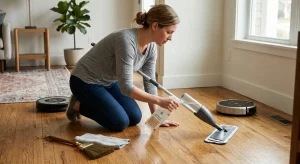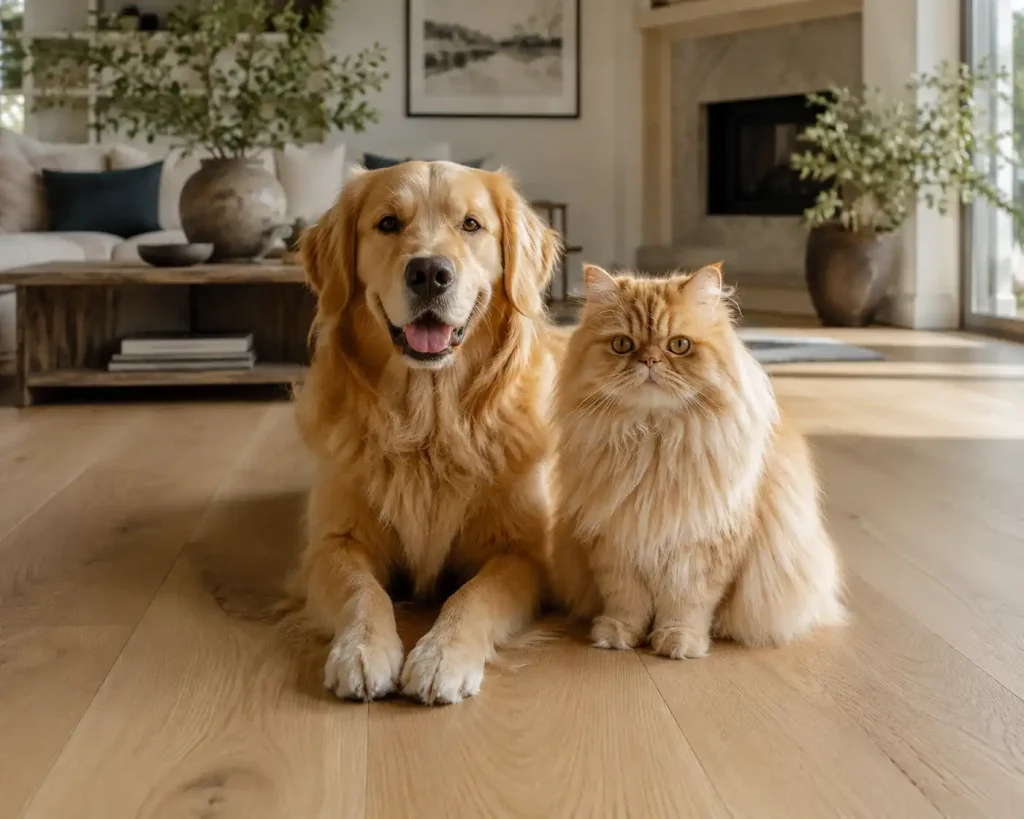
Hardwood floors and pets can live in harmony, despite what your neighbor with the chewed-up oak planks might tell you. The trick is knowing what to choose, what to avoid, and how to set up your home so paws, claws, and the occasional accident never become a long-term problem. This guide goes beyond the marketing of any single product line and walks you through every decision a real pet owner needs to make, from species selection and finish type to layout planning, maintenance routines, and what to do when scratches eventually happen.
At National Hardwood Flooring & Moulding, we have been helping homeowners, designers, and contractors across Southern California design floors for pet-filled homes for over 50 years. Below is the playbook we share with every client who walks into our Van Nuys showroom with a dog leash in one hand and a Pinterest board in the other.
Can Hardwood Flooring Really Work With Pets?
The short answer is yes, with the right choices. The myth that hardwood and pets do not mix usually comes from one of three sources: a soft wood species installed in the wrong room, a glossy finish that turns every nail mark into a visible streak, or a household that skipped a few simple maintenance habits. Eliminate those three problems, and hardwood becomes one of the best surfaces a pet owner can choose.
Compared to laminate or vinyl, hardwood is warmer underfoot, quieter under paws, and far better for resale. Unlike tile, it does not punish older pets with joint issues. And unlike carpet, it does not trap dander, pet odor, or accidents that soak into the padding below. The downside of solid hardwood, that it can scratch, is solvable with smart species and finish selection.
The Janka Hardness Scale: Your First Decision
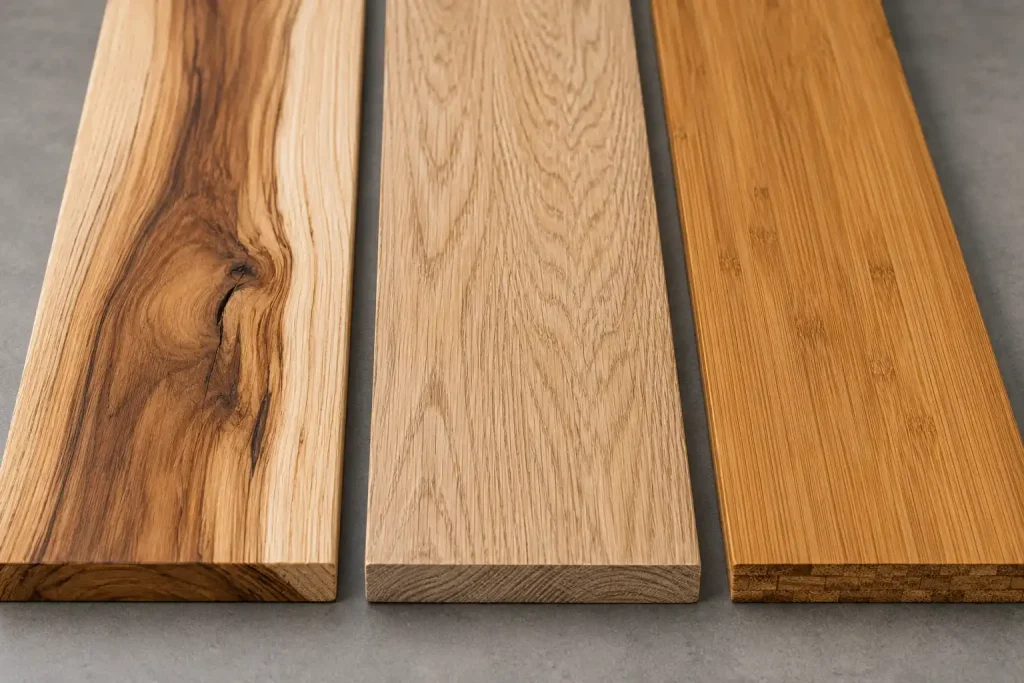
Wood hardness is measured on the Janka scale, which tests how much force it takes to push a steel ball halfway into the wood. The higher the number, the harder the floor. Most flooring guides only mention oak. Pet owners benefit from looking at the full range, especially the harder domestic and exotic species we stock.
| Wood Species | Janka Rating | Best For Pet Households Because… |
| Brazilian Walnut (Ipe) | 3,684 | Exotic, ultra-hard density laughs at large-dog nails |
| Hickory | 1,820 | Strong domestic option with wild grain that hides scratches |
| Hard Maple | 1,450 | Dense and durable, though tight grain shows scratches more |
| White Oak | 1,360 | Classic look, open grain helps disguise minor wear |
| Strand-Woven Bamboo | 3,000+ | Sustainable, harder than most hardwoods, great for active dogs |
| Red Oak | 1,290 | Affordable and refinishable; grain camouflages light damage |
| American Walnut | 1,010 | Beautiful but softer; better in low-traffic pet zones only |
| Pine | 870 | Soft, dents easily, avoid in heavy pet traffic areas |
A common rule of thumb: for households with large or active dogs, aim for 1,300 Janka or higher. For small dogs and cats, anything above 1,000 will perform well as long as you pair it with the right finish. Strand-woven bamboo is worth a serious look for pet families who want sustainability and exceptional hardness in one floor.
Engineered, Solid, Bamboo, or Reclaimed: Which Pet-Friendly Hardwood Is Right?
Solid Hardwood
Solid planks are milled from a single piece of wood, typically 3/4 inch thick. The big advantage for pet owners is refinishability. A solid floor can be sanded and refinished six to ten times over its lifetime, meaning every scratch your golden retriever leaves is technically temporary. Best for bedrooms, dining rooms, and main living areas above grade.
Engineered Hardwood
Engineered planks layer a real hardwood veneer over a stable plywood core. They handle humidity swings better than solid wood, which matters in California homes that move between dry winters and humid summer kitchens. Most modern engineered planks have a thick enough wear layer to be refinished one to three times. Engineered is generally the smarter choice for kitchens, basements, and anywhere your pet’s water bowl lives.
Strand-Woven Bamboo
Bamboo is technically a grass, but strand-woven bamboo is denser than most hardwoods and significantly more eco-friendly. It is harvested in five to seven years versus the decades hardwoods need. For pet owners who care about sustainability, this is one of the best-kept secrets in flooring.
Reclaimed Hardwood
Reclaimed wood from old barns and factories already comes with character, patina, and weathered marks. That is a feature, not a bug, when you have pets. A few new scratches blend invisibly into hundred-year-old wear. It is also the most sustainable choice on the market because nothing new is being cut.
The Finish Is What Actually Hides the Scratches
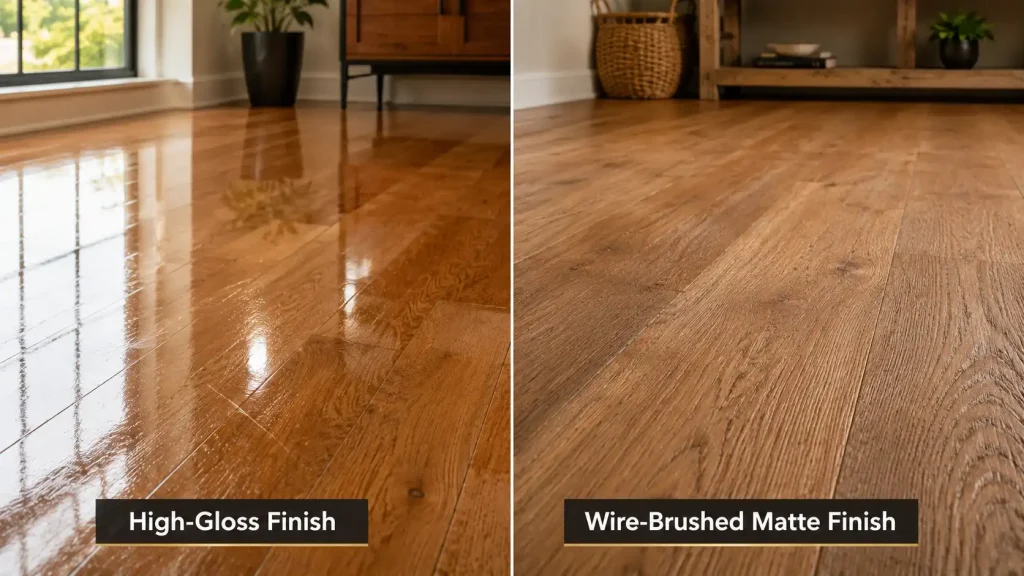
This is the section most flooring articles skip, and it is arguably more important than species choice. The finish, which is the protective coating on top of the wood, determines how visible a scratch will be when it happens.
Sheen Level
- Matte (1 to 10 percent sheen): The undisputed best choice for pet households. Light bounces in all directions, so scratches become almost invisible. Modern matte finishes are just as durable as glossy ones.
- Satin (25 to 35 percent sheen): A good compromise. Hides minor wear while still offering subtle warmth.
- Semi-gloss and gloss: Avoid in pet homes. Every nail mark, paw print, and dust mote shows.
Texture
- Wire-brushed: Steel brushes remove the soft grain between hard grain lines, leaving subtle texture that hides scratches and adds traction for pet paws.
- Hand-scraped: Deliberate dents and waves built into the surface mean your dog’s contribution looks intentional.
- Distressed: Pre-aged with knots, wormholes, and saw marks. New damage disappears into the existing character.
- Smooth: The most formal look, but the least forgiving. Use only in low-pet-traffic rooms.
Finish Chemistry
Aluminum-oxide finishes are factory-applied to most prefinished hardwoods and offer the toughest scratch resistance available. Site-finished floors with oil-based polyurethane look stunning but are softer and require more careful pet management. For pet owners, prefinished planks with a multi-coat aluminum-oxide layer are usually the right call. If you prefer the look of an oil-rubbed natural finish, you can still get it; just plan for more frequent maintenance.
Low-VOC and Pet-Safe Options
Pets spend more time with their noses on the floor than anyone in the household. Look for finishes certified by GREENGUARD Gold or FloorScore, and ask about water-based polyurethanes that off-gas less than traditional oil-based products. We carry a range of low-VOC options at our Van Nuys showroom.
Color and Grain Strategy: Hide Hair, Hide Scratches
The color you choose changes how much daily maintenance you will actually do. Very dark floors and very light floors are the highest-maintenance options in pet homes because they show every speck of light or dark hair, respectively.
- Medium-toned browns and warm tans: The sweet spot. Hair from black labs, golden retrievers, gray cats, and white huskies all become less visible.
- Mixed grain patterns like hickory or character-grade oak: The visual chaos camouflages scratches better than uniform select-grade wood.
- Wider planks (6 to 9 inches): Fewer seams mean fewer places for hair and crumbs to collect. They also make spaces feel calmer and more modern.
- Beveled or eased edges: Slight grooves between planks hide minor unevenness from settling and wear.
Designing Pet Zones Into Your Home
Even the toughest floor benefits from smart layout. Think of your home as having zones with different pet-impact levels and adjust accordingly.
Entryways and Mudrooms
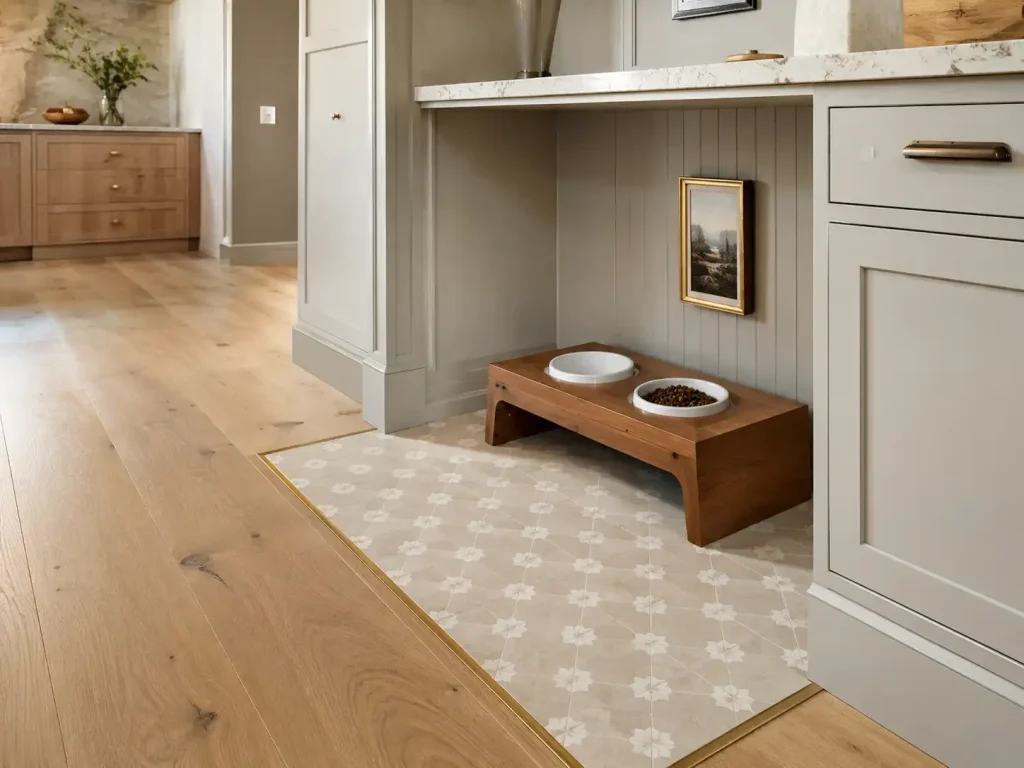
This is where wet paws meet your flooring first. Place a quality entry mat both outside and inside the door, deep enough that all four paws hit it. For homes with daily muddy walks, consider tile or stone in the entry transitioning to hardwood. We design plenty of mixed-material thresholds in our custom work.
Food and Water Stations
Move bowls off of hardwood whenever possible. A silicone mat or a small section of tile under the feeding area prevents the slow water damage that comes from daily splashes and condensation. If you must place bowls on hardwood, check for moisture buildup weekly.
Sleeping Areas and Favorite Spots
Pets pick favorite napping spots, and those spots see thousands of micro-movements over a year. A washable area rug with a non-slip pad protects the floor and gives your pet better traction. Avoid rubber-backed mats that can discolor the finish over time; choose felt-backed or natural fiber rugs instead.
Stairs
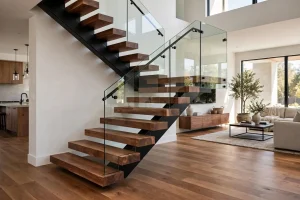
Hardwood stairs are gorgeous but slippery for older or large dogs. We custom-build stair runners and treads with subtle texture that keeps the look while adding grip. This is one of the most common upgrades pet families ask us about.
A Realistic Maintenance Routine
Daily
- Wipe up any accident immediately. Urine is acidic and will damage finish if left to sit.
- Sweep or microfiber-mop high-traffic areas. Pet hair acts like sandpaper when ground into the finish.
Weekly
- Vacuum with a soft-brush attachment. Avoid beater bars, which can dent softer woods.
- Damp-mop with a hardwood-safe cleaner. Never use vinegar, ammonia, or steam mops, which strip finish and warp planks.
Monthly
- Inspect high-impact zones for early scratches and address them with a touch-up pen before they spread.
- Check humidity levels. Hardwood is happiest between 35 and 55 percent relative humidity. In dry Southern California winters, a humidifier protects your floors as much as it protects your pets.
Annually
- Apply a maintenance coat of polyurethane in heaviest-traffic areas. This adds years to the time between full refinishes.
- Schedule a professional deep clean to remove buildup that home cleaning misses.
Pet Care That Protects Your Floors
Nail Maintenance
Untrimmed nails are the single biggest cause of hardwood damage in pet homes. Trim or grind your dog’s nails every two to four weeks. The classic test: if you can hear nails clicking on the floor, they are too long. Cats can wear small nail caps if scratching becomes a problem, and most adapt to them within a few days.
Paw Hygiene
Keep a small towel by the door for muddy days. The dirt and grit pets track in is essentially fine sandpaper against your finish. A quick paw wipe before they walk through the house dramatically extends finish life.
Accident Cleanup Protocol
- Blot, do not rub, with paper towels or a clean cloth.
- Clean with a wood-safe enzymatic cleaner that breaks down odor at the source.
- Dry the spot completely. Standing moisture is the real enemy, not the accident itself.
- If you notice a dark stain or warping after cleanup, call a flooring professional sooner rather than later. Early intervention often saves planks.
Special Considerations by Pet Type
Puppies
Puppies are essentially scratch machines with charm. During the first year, consider area rugs in primary play zones and accept that some training-related accidents are inevitable. The good news: by year two, the daily damage drops significantly.
Large or Active Dogs
Breeds over fifty pounds need harder species, full stop. Stick to Janka ratings above 1,500. Hickory, strand-woven bamboo, and exotics like Brazilian walnut are the safest picks. Wire-brushed or hand-scraped textures will keep your floors looking new for years longer than smooth finishes.
Cats
Cats rarely scratch hardwood with their claws (they prefer vertical surfaces), but they do introduce other risks: knocked-over water glasses, hairball cleanup, and the occasional excited zoomie session that ends in a slide. Matte finishes hide cat-specific marks like food-bowl splatter exceptionally well.
Multi-Pet Households
Two or more pets means roughly double the wear pattern. Lean toward engineered hardwood with a thick wear layer, wider planks to minimize seams, and a textured finish. This is also where reclaimed wood truly shines, because patina is the point.
Senior Pets
Older pets often lose traction on smooth hardwood, which can worsen joint issues. Wire-brushed textures, strategically placed runners, and toe-grip products from your vet can all help. If a senior pet is struggling, we sometimes recommend transitioning their primary rooms to slightly more textured planks rather than asking the pet to adapt.
When Scratches Happen: Repair and Refinishing
Even the best-laid plans produce the occasional gouge. Here is the repair ladder, from least to most invasive.
Light Scratches (Finish Only)
Use a color-matched touch-up pen or marker for the scratch itself, then apply a thin coat of finish over the area. Most homeowners can do this in under ten minutes.
Moderate Scratches (Into the Wood)
Hardwood wax filler sticks in matching tones can fill the groove. Buff smooth and apply finish. For larger areas, a maintenance coat across the whole room hides the repair.
Deep Gouges and Dents
Water and a hot iron through a damp cloth can often raise compressed fibers back to surface level. For true gouges, plank replacement may be needed, which is why we always recommend keeping a box of extra planks from the original install.
Whole-Floor Refinishing
Every seven to fifteen years, a full sand-and-refinish brings solid hardwood back to brand-new. This is the unique advantage hardwood has over LVP and laminate, which must be entirely replaced when worn. A refinished floor often outlasts a new alternative product by decades.
Hardwood Versus the Alternatives for Pet Owners
| Factor | Hardwood | LVP | Laminate | Tile |
| Scratch resistance | Good with right species + finish | Very good | Excellent | Excellent |
| Water / accident resistance | Moderate (engineered better) | Excellent | Poor at seams | Excellent |
| Refinishable | Yes (huge advantage) | No | No | No |
| Pet comfort underfoot | Warm, quiet | Moderate | Hollow sound | Cold, hard on joints |
| Resale value | High | Moderate | Low | Moderate |
| Lifespan | 50–100+ years | 15–25 years | 10–20 years | 50+ years |
LVP and laminate are tempting because of their water resistance and lower upfront cost, but they cannot be refinished and they age in only one direction: worse. Hardwood, despite needing more care, is the only flooring category that can be restored to like-new condition decades into its life. For pet owners planning to stay in their home long-term, this makes hardwood the better total-cost investment.
Cost Expectations for Pet-Friendly Hardwood
Pet-friendly does not have to mean expensive, but you should budget for quality. Cutting corners on either the floor or the finish almost always costs more later. Here is a realistic range for materials at our Van Nuys showroom:
- Domestic engineered hardwood (oak, hickory): $5 to $11 per square foot installed
- Solid domestic hardwood: $8 to $14 per square foot installed
- Strand-woven bamboo: $6 to $10 per square foot installed
- Exotic species (Brazilian walnut, teak, hard maple): $10 to $18 per square foot installed
- Reclaimed hardwood: $12 to $22 per square foot installed
Installation pricing in Southern California ranges from $4 to $8 per square foot depending on subfloor prep, layout complexity, and removal of existing flooring. Custom designs, herringbone patterns, and inlay work cost more but add real resale value.
A Note for Southern California Homes
Our local climate is forgiving for hardwood, but it has its own quirks. Coastal homes can see humidity swings between dry inland winds and ocean moisture. Inland valleys, including the San Fernando Valley where our showroom sits, get bone-dry winters that can shrink planks if humidity drops below 30 percent. Both engineered hardwood and properly acclimated solid planks handle this well, but it is worth talking with someone who knows local conditions. Climate is one of the reasons we always recommend a free consultation before committing to a species or installation method.
Frequently Asked Questions
Are hardwood floors really worth it if I have a dog?
Yes, especially long-term. The combination of refinishability, resale value, and the warmth pets prefer underfoot makes hardwood a smarter investment than LVP or laminate for households planning to stay in place. The key is choosing the right species and finish from the start.
What is the most pet-friendly hardwood species?
Hickory and strand-woven bamboo offer the best balance of hardness, look, and price. Brazilian walnut is the most durable but costs more. White oak is the most popular all-arounder.
Will my dog’s nails ruin matte-finished hardwood?
They will leave marks over time, but matte finishes hide those marks far better than glossy ones. With regular nail trimming, the visible impact is minimal.
Should I choose engineered or solid hardwood?
If your home is on a slab, in a basement, or in a high-humidity room, engineered hardwood is the safer choice. For above-grade rooms in a stable climate, solid hardwood offers more refinishing options over its lifetime.
How often will I need to refinish?
Most pet homes can go seven to twelve years between full refinishes if they apply a maintenance coat every one to two years in high-traffic zones. Solid hardwood can be refinished six to ten times total; engineered hardwood, one to three times depending on wear-layer thickness.
Can I install hardwood in a kitchen with pets?
Yes, with engineered hardwood and a few precautions: a mat under the water bowl, prompt cleanup of spills, and a quality finish. Modern engineered floors handle kitchen conditions well and are increasingly common in pet-friendly kitchen designs.
What about cats and hardwood?
Cats are generally gentler on hardwood than dogs because they prefer to scratch vertical surfaces. The main considerations are food-bowl spatter, hairball cleanup, and traction during high-speed play. A matte finish with light texture handles all three.
Plan Your Pet-Friendly Floor With National Hardwood
Choosing the right hardwood for a home with pets is part product knowledge, part lifestyle planning, and part design intuition. After 50 years of helping Southern California homeowners pick floors they will love for decades, we have learned that the best decisions happen in person, with samples in hand and pets in mind.
Visit our Van Nuys showroom to walk on the species, finishes, and plank widths discussed in this guide. Bring photos of your space, tell us about your pets, and we will help you build a floor that lasts as long as your love for them.
National Hardwood Flooring & Moulding | 14959 Delano St, Van Nuys, CA 91411 | (866) 439-6555