Cedar siding is not like stucco, brick, vinyl, or fiber cement. It is a natural wood surface that expands, contracts, absorbs moisture, releases vapor, and contains natural tannins that can bleed through the finish if the wrong coating system is used.
That is why choosing the best exterior paint for cedar siding is not only about color. It is about matching the right primer, paint type, sheen, and surface preparation to the way cedar behaves outdoors.
For most homes, the best exterior paint system for cedar siding is a high-quality stain-blocking exterior wood primer followed by premium 100% acrylic latex exterior paint. This combination gives cedar the adhesion, flexibility, weather resistance, and color protection it needs.
If you are still deciding whether cedar siding can be painted, start with the main cedar painting guide before choosing your coating system.
Why Cedar Siding Needs the Right Paint System
Cedar is durable, attractive, and naturally resistant to decay, but it is still a porous wood. It reacts to temperature, humidity, rain, sunlight, and trapped moisture.
The wrong paint system can lead to:
- Peeling paint and blistering
- Cracking and poor adhesion
- Uneven coverage and patchy finishes
- Unsightly yellow or brown tannin stains
- Premature color fading from UV exposure
- Moisture-related coating failure
A cheap or overly rigid paint may not move well with cedar as it expands and contracts. A poor primer may fail to block tannins. And even premium paint can fail if applied over dirty, damp, glossy, or unstable siding.
Before applying any coating, make sure the surface is properly cleaned, scraped, sanded, dried, and primed. If that work is not done yet, review this guide on how to prep cedar siding before painting.
The Best Overall Paint for Cedar Sidin
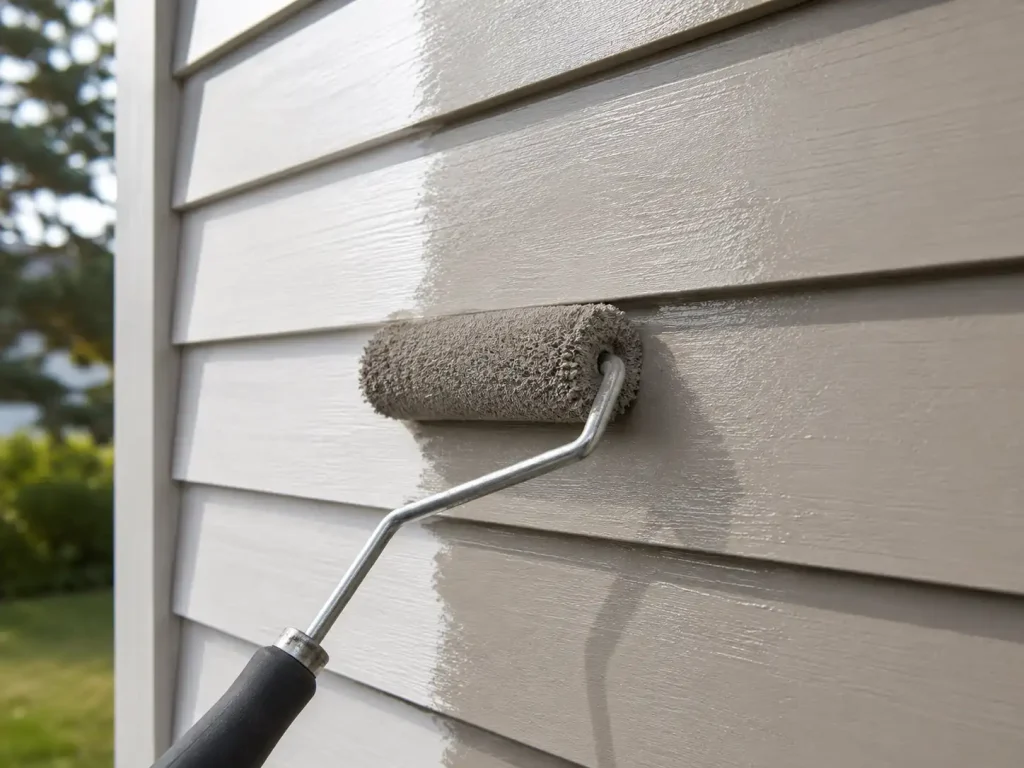
The best overall paint for cedar siding is usually: Premium 100% acrylic latex exterior paint applied over a stain-blocking exterior wood primer.
This system works well because acrylic latex paint has the flexibility needed for exterior wood movement. Cedar expands and contracts with weather changes, so the topcoat needs to move with the siding instead of becoming brittle.
Acrylic latex exterior paint is commonly preferred for cedar siding because it:
- Stays more flexible than many hard coatings
- Resists cracking and peeling when properly applied
- Provides good color retention against intense sunlight
- Handles exterior weather exposure and moisture exceptionally well
- Works flawlessly over properly primed wood
- Allows better breathability than many rigid coatings, letting vapor escape
- Is available in a wide variety of exterior colors and sheens
For most painted cedar siding projects, a premium acrylic latex exterior paint is the safest and most practical topcoat choice.
Why Primer Is More Important Than Many Homeowners Realize
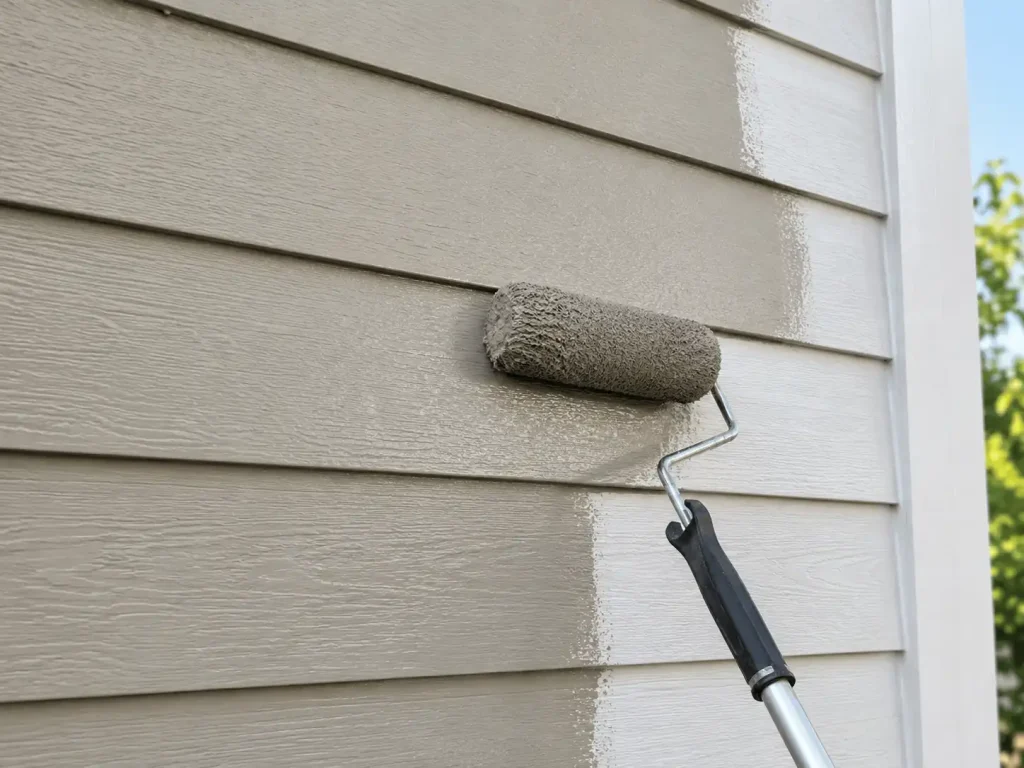
On cedar siding, primer is not optional. It is one of the most important parts of the coating system.
Cedar contains natural tannins, which are water-soluble wood extractives. When bare cedar is coated without the right primer, these tannins can migrate through the paint film and appear as yellow, brown, reddish, or dark stains on the surface.
A proper primer helps:
- Seal bare porous cedar wood pores
- Improve topcoat paint adhesion mechanically
- Aggressively reduce tannin bleed-through
- Create a uniform, even base coat across the walls
- Help the final topcoat cover better with fewer layers
- Drastically reduce early peeling and bubbling risks
- Protect exposed raw wood fibers from degradation
Even if a finish paint label says “paint and primer in one,” bare cedar should always receive a dedicated stain-blocking exterior primer first. If your siding already has yellow, brown, or reddish discoloration, read this guide on how to fix tannin bleed on cedar siding before applying new paint.
Best Primer for Cedar Siding
The best primer for cedar siding is a high-quality exterior wood primer designed for stain blocking, tannin blocking, and bare wood sealing.
Look for labels that explicitly mention:
- Exterior wood protection
- Cedar or redwood applications
- High-hide stain blocking
- Tannin bleed control
- Bare wood sealing and mechanical adhesion
- Compatibility with premium acrylic latex topcoats
There are two common primer options for cedar siding.
Oil-Based Primer vs. Acrylic Primer for Cedar
Oil-Based Primer
Oil-based exterior wood primers are often used on raw, weathered, or tannin-prone cedar because they provide maximum stain blocking and sealing. They are especially useful on bare cedar patches, knots, and areas where tannin bleed has been a recurrent problem.
Oil-based primers may be a good choice when:
- Cedar wood is completely bare or heavily scraped
- Active tannin staining is visible on the surface
- The siding is older, weathered, and highly porous
- The project demands the absolute strongest stain-blocking shield
High-Hide Acrylic Primer
Modern high-quality acrylic primers can also work well when they are specifically designed for exterior wood and tannin blocking. These may be preferred where low odor, faster drying times, water cleanup, or local VOC restrictions are a primary concern.
Acrylic primers may be suitable when:
- The siding is already mostly painted and stable
- Bare wood spots are minimal or limited
- The product is officially rated for heavy tannin blocking
- The substrate surface is clean, dry, and structurally sound
The key is not just choosing “any primer.” The primer must be appropriate for cedar, exterior exposure, and strict tannin control.
Should You Use Oil-Based Paint as the Topcoat?
Oil-based primers can be highly useful on cedar, but oil-based paint is usually not the preferred finish coat for full cedar siding surfaces.
Oil-based topcoats dry significantly harder and become increasingly rigid and brittle over time. Because cedar expands and contracts with atmospheric changes, a rigid finish coat is much more likely to crack, chip, or fail as the wood moves underneath.
For most homes, the far better system is:
- A specialized stain-blocking primer for bare cedar sections.
- Premium acrylic latex exterior paint as the elastic topcoat.
Oil-based topcoats may still be used in highly specific historical restoration situations, but they are not the first choice for modern cedar siding repainting projects.
Can You Use Paint and Primer in One on Cedar?
Paint-and-primer-in-one products can be useful on some previously painted surfaces, but they should never be relied on as the sole primer over bare cedar.
You must use a dedicated, standalone primer when:
- The cedar wood substrate is entirely bare
- Old peeling paint has been aggressively scraped away
- The siding is weathered and graying from sun damage
- Active tannin stains or water rings are visible
- The wood boards have exposed knots or dark streaks
- The existing coating is uneven and chalky
- The surface has been heavily sanded down to the raw grain
A self-priming exterior paint may be acceptable over sound, clean, previously painted cedar. But any bare wood patches should still be spot-primed first with a true stain-blocking primer.
Best Finish Sheen for Cedar Siding
The sheen you choose affects both appearance and maintenance. Cedar siding usually looks best in a finish that is durable but not overly shiny.
Flat or Matte Finish
Flat paint hides surface imperfections, rough grain, and older siding flaws better than shinier finishes. It can be an excellent choice for older cedar siding with visible rustic texture. However, flat paint holds dirt more easily, accumulates mildew faster, and is harder to wash clean.
Best for:
- Older siding with deep textures
- Rough-sawn cedar cladding
- Homes where hiding structural flaws matters
- A low-reflective, traditional exterior appearance
Satin or Low-Sheen Finish
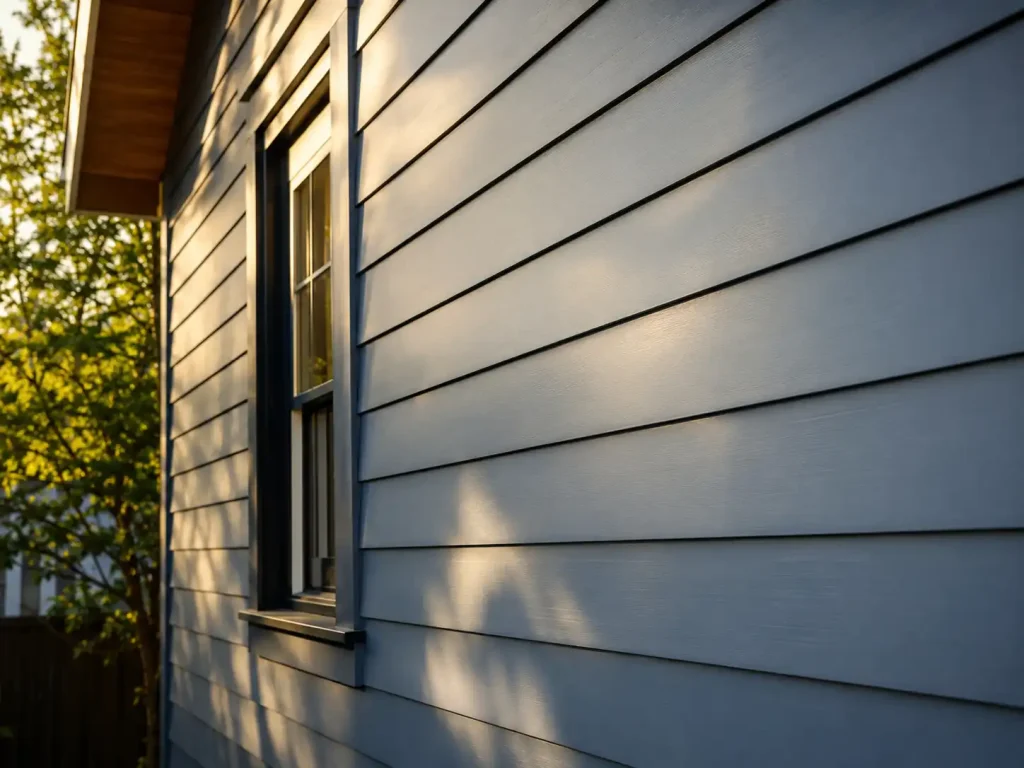
Satin or low-sheen paint is usually the ideal choice for cedar siding. It offers a perfect balance of durability, cleanability, and natural appearance. It is much easier to clean than flat paint but does not highlight every minor imperfection the way semi-gloss can.
Best for:
- The vast majority of cedar siding projects
- Balanced film durability and elegant appearance
- Better washability against wind-driven rain
- A clean, modern look without looking artificial
For most homes, satin or low-sheen exterior acrylic latex paint is the absolute best finish for cedar siding areas.
Semi-Gloss Finish
Semi-gloss paint is highly durable and easy to wash, but its reflective surface will highlight and magnify every dent, crack, knot, grain pattern, and warped board.
For cedar siding setups, semi-gloss is usually better reserved for:
- Window and door trim frames
- Shutters and fascia boards
- Entry doors and accent details
It is generally not the best choice for large cedar siding wall areas.
Best Paint for New Cedar Siding
New cedar siding should be coated before long-term weather exposure damages the surface fibers. But it still needs to be clean, dry, and ready before primer and paint are applied.
For new cedar siding, use:
- A heavy-duty stain-blocking exterior wood primer
- Premium 100% acrylic latex exterior paint
- Two full finish coats for ideal film thickness
- Proper manufacturer-recommended drying times between coats
Do not paint new cedar if it is damp, dirty, or still adjusting to outdoor conditions. Moisture content should be checked before coating, especially if the siding was recently exposed to rain.
Best Paint for Old or Weathered Cedar Siding
Old cedar siding needs more careful preparation than new siding. If old paint is peeling, loose, chalky, or brittle, the new coating will not bond properly unless the failing material is removed.
Before painting old cedar siding, ensure your process includes:
- Scraping away peeling paint aggressively
- Sanding rough paint edges to feather them smooth
- Cleaning accumulated dirt, pollen, and mildew
- Repairing or replacing rotted or broken boards
- Resetting loose or popped nails flush
- Removing and replacing cracked, failed caulk
- Checking internal moisture levels with a meter
- Spot-priming bare wood patches thoroughly
Once the surface substrate is stable, use a stain-blocking primer where needed and a premium acrylic latex topcoat. If your current coating is already failing, read this guide on why paint peels on cedar siding before repainting.
Best Paint for Previously Stained Cedar Siding
Painting over stained cedar is possible, but the process depends heavily on the type of stain and its current condition.
Solid-color stain is usually easier to paint over than transparent, semi-transparent, or oil-heavy stains. If the existing stain is glossy, oily, dirty, or failing, it will require extensive sanding, cleaning, and specialized bonding primers.
Before painting stained cedar siding, make sure:
- The stain coats are completely clean and dry
- The surface is no longer oily, slick, or highly glossy
- All loose, weathered coating has been fully scraped away
- Exposed bare wood is sealed with a stain-blocking primer
- The new paint chemistry is compatible with the existing finish
For the full transition process, see our comprehensive guide: can you paint over stained cedar siding.
Paint vs. Solid-Color Stain for Cedar Siding
Paint is not the only finish option for cedar siding. Solid-color stain can also create a uniform appearance while allowing more of the wood texture to remain visible.
Paint may be better if you want:
- Strong, vibrant color coverage
- A wider variety of custom color options
- A completely uniform, solid painted look
- Better hiding of wood imperfections and knots
- A traditional, classic exterior finish film
Solid-Color Stain may be better if you want:
- More visible natural wood texture and grain lines
- A more rustic or natural appearance
- Easier future maintenance and re-application
- Less surface film buildup over decades
- A finish that wears away gradually over time rather than peeling
Both can work beautifully on cedar siding if applied correctly. The best choice depends on your design goals, maintenance preference, and the current condition of the siding. For a deeper comparison, read our detailed analysis on wood stain vs. paint for cedar siding.
What Color Paint Works Best on Cedar Siding?
Cedar siding can be painted in many exterior colors, but color choice affects both appearance and long-term maintenance.
Light and mid-tone colors are often easier to maintain because they reflect more solar heat and show color fading less aggressively than very dark colors. Dark colors can look incredibly dramatic, modern, and sleek, but they absorb more UV rays, which can heat the wood and show surface movement, micro-cracks, or imperfections more clearly.
Popular cedar siding paint colors include:
- Warm white and classic cream
- Taupe and greige
- Soft gray and charcoal
- Forest green and earthy brown
- Deep blue and natural beige
Choose an exterior color that works harmoniously with the home’s roof lines, trim work, window frames, stonework, landscaping, and overall architectural style.
How Many Coats of Paint Does Cedar Siding Need?
Most cedar siding projects need a standard formula:
- One full coat of standalone primer.
- Two full coats of premium exterior acrylic latex paint.
This can vary depending on the condition of the siding, the severity of the color change, the specific paint product, and how much bare wood is exposed. More coating attention may be needed if the siding is entirely bare, the color change is dramatic, the cedar is exceptionally rough or porous, or active tannin stains are present. Always follow the manufacturer’s coverage, drying, and recoating instructions.
Product Checklist for Cedar Siding Paint Projects
Before buying materials, make sure your coating system includes:
- [ ] Dedicated stain-blocking exterior primer (oil-based preferred for bare wood)
- [ ] Premium 100% acrylic latex exterior paint topcoat
- [ ] Satin or low-sheen finish selected for the main siding panels
- [ ] Semi-gloss finish selected strictly for trim, casing, or accent doors
- [ ] Exterior-grade paintable caulk for sealing joints
- [ ] High-quality synthetic paint brushes (nylon/polyester blends for acrylics)
- [ ] Rollers or sprayer tips suitable for exterior lap siding textures
- [ ] Sandpaper for feathering old paint edges and scuffing glossy spots
- [ ] Digital moisture meter for verifying wood readiness (below 12%)
- [ ] Proper cleaning supplies for eradicating mildew, dirt, and dust
This product system works best when combined with proper prep. Paint quality matters immensely, but surface condition matters just as much.
Common Paint Mistakes to Avoid on Cedar Siding
Avoid these critical pitfalls if you want the paint film to last for a decade or more:
- Painting Bare Cedar Without Primer: This guarantees tannin bleed stains, poor adhesion, and early paint failure.
- Using Interior Paint Outside: Interior coatings lack the UV inhibitors and elasticity required to survive outdoor weather.
- Painting Damp Cedar: Moisture trapped inside timber will expand under the sun, causing blistering, bubbling, or peeling.
- Using Cheap Paint: Budget paints contain fewer high-quality resins and more fillers, causing them to crack or wear out sooner outdoors.
- Choosing the Wrong Sheen: High-gloss or semi-gloss finishes will highlight every dent, warp, and knot in large siding areas. Satin or low-sheen is much safer.
- Ignoring Existing Paint Failure: Applying new paint directly over peeling or bubbling layers will only pull the old coats off faster.
- Relying on Paint-and-Primer-in-One Over Bare Cedar: Self-priming paints do not contain heavy stain-blocking blockades required to seal raw wood tannins.
How Paint Choice Affects Project Cost
Higher-quality paint and primer lines cost more upfront per gallon, but they save significant money over time by reducing early repainting and labor maintenance costs.
Material cost can vary based on:
- The quality tier of the paint manufacturer line
- The type of primer required (oil-based stain blockers vs standard sealers)
- The total number of coats needed for uniform coverage
- The current condition of the siding and amount of bare wood exposed
- Specific tannin-blocking labor requirements
- Siding layout, detail work, and professional labor hours
For a full pricing breakdown, see our complete guide on the cost to paint cedar siding.
Final Recommendation
For most homes, the best exterior paint for cedar siding is a premium 100% acrylic latex exterior paint applied over a proper stain-blocking exterior wood primer.
Use a dedicated primer to seal bare cedar, improve adhesion, and reduce tannin bleed. Then use high-quality acrylic latex paint as the topcoat because it offers the elasticity, breathability, and weather resistance cedar needs outdoors.
The best paint job is not only about buying an expensive product. It depends on the full system: surface prep, moisture control, primer selection, topcoat quality, sheen choices, weather conditions, and proper application techniques. When all of those pieces work together, painted cedar siding will look cleaner, perform better, and protect your home’s exterior for years.
FAQs About the Best Exterior Paint for Cedar Siding
What is the best paint for cedar siding?
The best paint for cedar siding is usually a premium 100% acrylic latex exterior paint applied over a high-quality stain-blocking exterior wood primer.
Does cedar siding need primer before painting?
Yes. Bare, scraped, stained, weathered, or tannin-prone cedar should always be primed before painting. Primer seals the wood pores, improves topcoat adhesion, and stops tannin bleeding.
Can I use latex paint on cedar siding?
Yes. Exterior acrylic latex paint is the industry standard for cedar siding because it stays flexible, handles UV exposure, and allows the wood to breathe when applied over proper primer.
Is oil-based paint good for cedar siding?
Oil-based primers are excellent and highly recommended for stain-blocking raw wood, but oil-based topcoats are not preferred for full siding surfaces because they dry too hard and become brittle over time.
Can I use self-priming paint directly on raw cedar?
It is not recommended. Paint-and-primer-in-one products may work over sound, clean, previously painted surfaces, but raw or bare cedar needs a dedicated stain-blocking primer first.
What sheen is best for cedar siding?
Satin or low-sheen exterior paint is usually best for cedar siding. It offers an ideal balance of durability, weather resistance, and easy cleanability without looking overly glossy.
How many coats of paint does cedar siding need?
Most cedar siding projects require one coat of high-hide primer followed by two full coats of premium exterior paint for ideal film thickness and weather protection.
Should cedar siding be painted or stained?
Both can work beautifully. Paint gives strong, uniform color coverage that hides imperfections, while stain allows more natural wood texture and grain lines to show. The choice depends on your design goals and maintenance style.