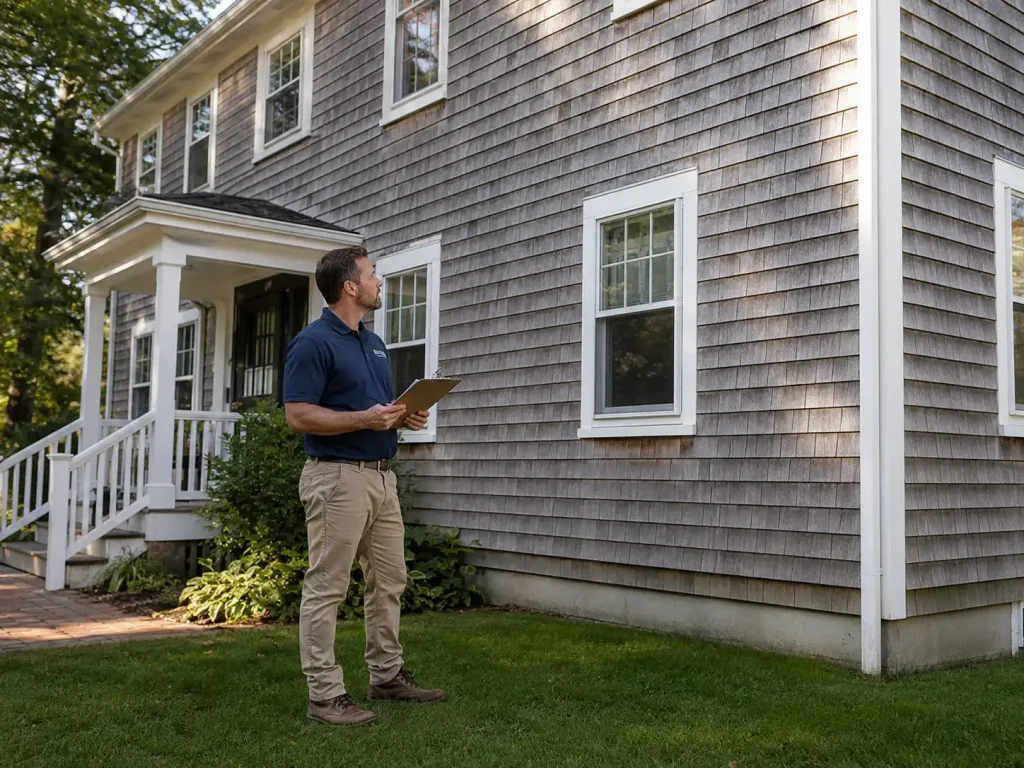
Planning an exterior renovation often starts with one major question: how much does it cost to paint cedar siding?
Cedar wood is a premium exterior cladding material. It has natural warmth, visible grain, and strong curb appeal, but it also requires more careful preparation than many non-wood siding materials. Cedar absorbs moisture, moves with temperature and humidity changes, and can release natural tannins through the finish if the wrong coating system is used.
Because of these unique requirements, painting cedar siding usually costs more than painting simpler surfaces like vinyl or aluminum. The final price depends on home size, siding condition, prep work, primer needs, repairs, labor rates, paint quality, and accessibility.
As a planning range, many cedar siding painting projects can fall between $3,500 and $9,500 for a standard single-family home. On a square-foot basis, professional cedar siding painting often lands around $2.50 to $6.00 per square foot, depending on prep, access, coating system, and local labor rates. Broader siding and exterior painting cost references show similar wide variation depending on conditions and scope.
If you are still deciding whether painting cedar wood siding is the right move, start with the main cedar painting guide first. This article focuses only on pricing and the cost factors that affect a cedar siding repaint.
Average Cost to Paint Cedar Siding
The average cost to paint cedar siding depends heavily on whether the siding is clean and stable or whether it needs major prep and repairs.
| Project Type | Estimated Cost Range |
| Basic cedar siding repaint | $2.50 to $4.00 per sq. ft. |
| Standard repaint with prep and spot primer | $3.50 to $5.50 per sq. ft. |
| Heavy prep, peeling paint, or full priming | $5.00 to $8.00+ per sq. ft. |
| Full restoration with repairs | $7.00+ per sq. ft. |
| DIY material-only cost | $0.75 to $2.50 per sq. ft. |
These are planning estimates, not fixed prices. A one-story home with clean cedar siding may stay near the lower end. A two-story or multi-story home with peeling paint, tannin bleed, old coating buildup, failed caulk, and repairs can cost much more.
Cost Breakdown by Home Size
The total paintable siding area is one of the biggest pricing factors. Contractors usually estimate based on the exterior surface area that needs coating, not just the home’s indoor square footage.
| Paintable Cedar Siding Area | Basic Repaint | Standard Prep + Paint | Heavy Prep / Restoration |
| 1,000 sq. ft. | $2,500 to $4,000 | $3,500 to $5,500 | $5,000 to $8,000+ |
| 1,500 sq. ft. | $3,750 to $6,000 | $5,250 to $8,250 | $7,500 to $12,000+ |
| 2,000 sq. ft. | $5,000 to $8,000 | $7,000 to $11,000 | $10,000 to $16,000+ |
| 2,500 sq. ft. | $6,250 to $10,000 | $8,750 to $13,750 | $12,500 to $20,000+ |
| 3,000 sq. ft. | $7,500 to $12,000 | $10,500 to $16,500 | $15,000 to $24,000+ |
These ranges are higher than very basic exterior painting estimates because cedar often needs more labor for scraping, sanding, priming, and moisture control. General exterior painting cost guides also show that larger homes and more complex projects can vary widely by square footage and conditions.
Cost Per Square Foot: Labor and Materials
When contractors quote cedar siding painting, they may separate the estimate into labor and materials.
Labor Cost
Labor commonly makes up the largest share of the total price.
- Estimated labor range: $1.50 to $4.00+ per sq. ft.
Labor may include washing the siding, scraping loose paint, sanding rough edges, feathering old paint ridges, masking windows and trim, caulking open joints, spot-priming bare cedar, applying primer where needed, applying paint coats, working around ladders, scaffolding, or difficult access, and final cleanup. If the siding is in rough condition, labor costs rise quickly because prep takes much longer than painting.
Material Cost
Materials are usually a smaller part of the total budget than labor, but they still matter.
- Estimated material range: $1.00 to $2.00+ per sq. ft.
Material costs may include stain-blocking exterior primer, premium exterior acrylic latex paint, exterior paintable caulk, sandpaper, masking tape, plastic sheeting, brushes and rollers, cleaning products, and wood filler or repair materials. Cedar should not be treated like a basic repaint surface. The coating system needs to match the wood’s movement, porosity, and tannin risk.
Why Cedar Siding Costs More to Paint
Cedar siding is more expensive to paint than many other siding materials because it is real wood. That means the painter has to deal with moisture, wood movement, natural tannins, old coatings, and exposed fibers.
Cedar siding may require:
- More detailed cleaning workflows
- Intensive hand scraping
- Extensive feather sanding
- Continuous moisture testing
- Specialized tannin-blocking primers
- Dedicated spot priming or full priming phases
- Precision caulking around trim and joints
- Structural carpentry board repairs
- Careful drying time allocations
- Premium-grade exterior paint systems
The actual paint application may be straightforward. The cost usually rises because of everything required before the paint goes on.
Why Material Quality Matters for Your Budget
It can be tempting to save money with cheaper paint. On cedar siding, that shortcut can become expensive later.
Cedar expands and contracts with humidity and temperature changes. If the coating is too rigid, too thin, or poorly bonded, it may crack, peel, or wear out sooner. A stronger paint system may cost more upfront, but it can reduce the risk of early repainting.
For cedar siding, the coating system often includes a dedicated stain-blocking primer for bare cedar, premium exterior acrylic latex paint, proper caulk around trim and joints, the correct sheen selection, and enough coats for full protection. For product line selection details, review our guide on the best exterior paint for cedar siding.
Estimated Material Checklist Costs
If you plan to buy materials yourself or compare a contractor’s estimate, these planning ranges can help.
| Material / Tool Item | Estimated Retail Range |
| Premium stain-blocking primer | $50 to $75 per gallon |
| 100% acrylic latex exterior paint | $60 to $95 per gallon |
| Exterior-grade paintable caulk | $6 to $12 per tube |
| Synthetic paintbrushes | $15 to $30 each |
| Rollers, trays, and covers | $25 to $100+ |
| Sandpaper and sanding blocks | $20 to $100+ |
| Scrapers | $10 to $40 each |
| Exterior wood cleaner | $20 to $50 |
| Oxalic acid wood brightener | $20 to $45 |
| Pin-type moisture meter | $35 to $75 |
| Masking tape and plastic sheeting | $30 to $150+ |
| Ladder or equipment rental | $100 to $500+ |
Material prices vary by region, supplier, product quality, and project size. Premium exterior coatings cost more, but cedar siding is not the place to rely on the cheapest possible products.
How Surface Condition Impacts Labor Cost
The physical condition of the siding affects the final price more than almost anything else. A clean, stable cedar exterior is much easier to paint than a wall with peeling paint, tannin stains, soft boards, mildew, and open joints.
Clean Cedar Siding in Good Condition
This is the least expensive scenario. The project may only need light washing, minor sanding, spot priming, caulk touch-ups, and one or two finish coats.
- Estimated range: $2.50 to $4.00 per sq. ft.
Cedar Siding With Moderate Prep
Moderate prep is common on older homes. This may include more detailed cleaning, scraping small peeling areas, sanding rough sections, replacing cracked caulk, spot-priming bare wood patches, and minor board repairs.
- Estimated range: $3.50 to $5.50 per sq. ft.
Cedar Siding With Peeling Paint
Peeling paint adds significant labor. Loose paint must be scraped, edges must be feather-sanded, bare wood must be primed, and the surface must be stabilized before repainting. If the siding has widespread paint failure, read our breakdown on why paint peels on cedar siding before budgeting for repainting.
- Estimated range: $5.00 to $8.00+ per sq. ft.
Cedar Siding With Tannin Bleed
Tannin bleed appears as yellow, brown, reddish, or tea-colored staining. It may require extra cleaning, wood brightener, drying time, stain-blocking primer, and sometimes multiple primer coats. If your siding has this problem, see how to fix tannin bleed on cedar siding before repainting.
- Estimated range: $4.00 to $7.00+ per sq. ft.
Cedar Siding With Rot or Board Damage
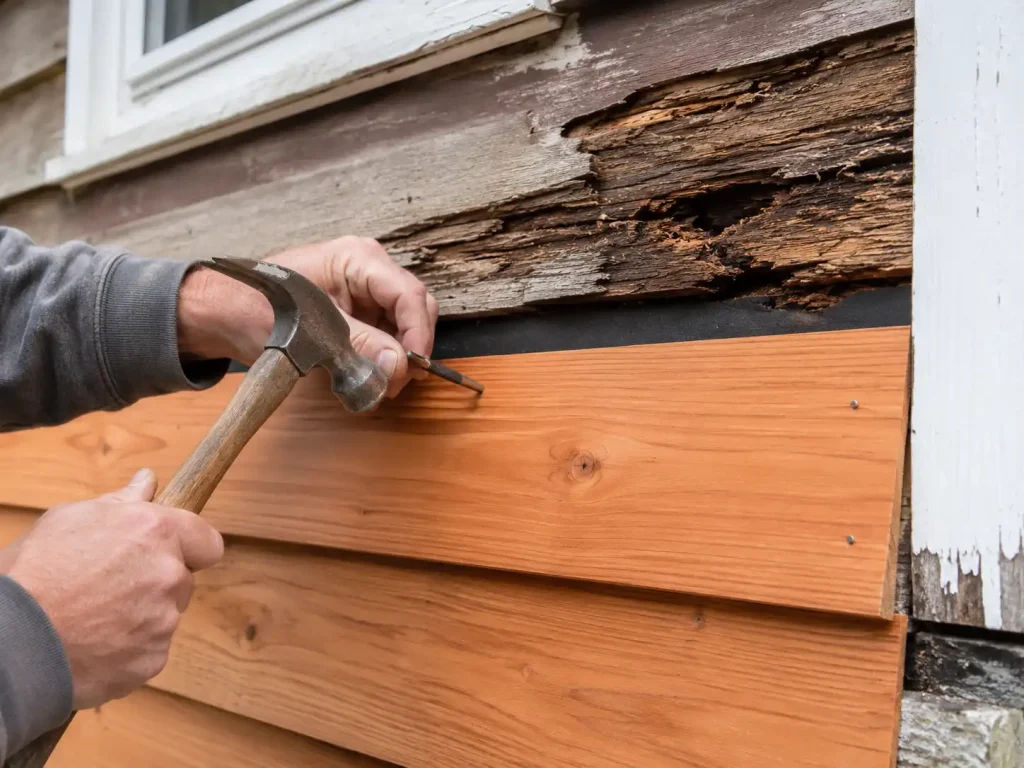
If the cedar is soft, rotten, warped, split, or pulling away from the wall, painting should wait until repairs are complete. Board replacement and carpentry work can significantly increase the total price.
- Estimated range: varies based on repair scope.
The Hidden Price of Prep Work
Prep work is where cedar siding painting can become expensive. A project that looks simple at first may become more involved once the contractor starts scraping, sanding, and inspecting the wood.
Prep work may include removing loose paint, sanding old coating edges, breaking mill glaze on newer boards, cleaning mildew or algae, washing dirt and pollutants, treating tannin stains, testing moisture levels, replacing failed caulk, spot-priming exposed wood, and repairing minor board damage. If your siding needs full prep before painting, follow the full process in how to prep cedar siding before painting.
Added Labor Expenses to Anticipate
Some conditions can add extra cost beyond a basic repaint.
| Extra Work | Possible Added Cost |
| Aggressive paint scraping | $0.50 to $1.50+ per sq. ft. |
| Feather sanding | $0.50 to $1.25+ per sq. ft. |
| Tannin stain treatment | varies by severity |
| Full primer coat | material + labor increase |
| Caulking replacement | varies by linear footage |
| Minor wood patching | varies by damage |
| Board replacement | often priced separately |
| Lead paint precautions | can significantly increase prep cost |
| Scaffolding or lift rental | varies by access and duration |
These extras are why two homes with the same siding square footage can receive very different estimates.
Cost to Paint Over Stained Cedar Siding
Painting over stained cedar siding can cost more than repainting previously painted cedar because the old stain must be evaluated first. Costs may rise if the stain is oily or highly glossy, the layers are uneven, transparent stain has deeply penetrated the wood, the surface needs deep sanding, a full primer coat is needed, or the old finish is completely incompatible with the new paint system.
Solid-color stain is usually easier to paint over than transparent or semi-transparent stain. If your cedar is already stained, the cost may depend heavily on preparation and coating compatibility. For the full process, see can you paint over stained cedar siding.
Paint vs. Solid Stain: Which Costs Less?
If your cedar siding needs a complete finish overhaul, you may also compare paint and solid-color stain. Solid-color stain can look similar to paint from a distance, but it usually allows more wood texture to show.
Paint Cost Pattern
Paint often costs more upfront because it requires more prep, stain-blocking primer, multiple topcoats, detailed caulking, and more labor. But a well-applied paint system may last longer between major refinishing cycles.
Stain Cost Pattern
Stain may cost less upfront if the cedar is in good condition and does not need heavy prep. However, stain usually needs maintenance more often.
Over a long period, the total cost can be closer than homeowners expect. Paint may cost more per project, while stain may require more frequent refreshes. For a full comparison, review our guide on wood stain vs. paint for cedar siding.
Key Factors That Drive the Final Estimate Higher
A professional painting estimate is not based on square footage alone. Several project conditions can raise the price.
- Number of Stories: Two-story and three-story homes usually cost more because they require more ladder work, scaffolding, staging, safety setup, and time. Homewyse’s 2026 calculator shows a higher per-square-foot range for two-story exterior painting than standard exterior painting, which reflects the added complexity of height and access.
- Siding Texture: Rough-sawn cedar can absorb more primer and paint than smooth lap siding. This increases material usage and application time. Rough texture also requires more brushing or back-rolling to work the coating into the grain.
- Trim and Architectural Detail: Homes with detailed trim take longer to paint. Labor increases with window casings, door frames, shutters, fascia boards, exposed rafters, decorative trim, multiple color changes, and detailed transitions.
- Peeling Paint: Peeling paint is one of the biggest cost drivers. A painter cannot simply coat over loose paint and expect the new finish to last. Peeling areas must be scraped, sanded, cleaned, primed, and often repainted in larger sections.
- Tannin Stains: Cedar tannins can bleed through light-colored paint if the wood is not sealed correctly. Treating these stains may require extra cleaning, primer, and drying time.
- Color Change: A major color change may require extra coats. Going from dark to light, or from light to dark, can increase both material and labor.
- Accessibility: Hard-to-reach areas cost more. Examples include steep slopes, narrow side yards, tall walls, dense landscaping, limited ladder access, multi-level architecture, or obstacles near walls.
- Lead Paint Precautions: If the home was built before 1978, the existing paint may contain lead. Lead-safe work practices, containment, cleanup, and testing can add significant cost.
Cost by Scope of Work
| Scope | What It Usually Includes | Cost Level |
| Basic repaint | Wash, minor touch-up, 1 to 2 coats | Lower |
| Standard repaint | Wash, scrape small areas, sand, spot-prime, paint | Moderate |
| Full restoration repaint | Heavy scraping, sanding, repairs, primer, paint | Higher |
| Color change | Primer or extra coats, more detail work | Moderate to high |
| Painted-over-stain project | Cleaning, sanding, primer, compatibility prep | Moderate to high |
| Peeling paint repair | Scraping, sanding, priming, repainting sections | Higher |
Does Cedar Siding Need Primer Before Painting?
Yes. Bare, scraped, sanded, weathered, or stained cedar usually needs primer before painting. Primer adds cost, but it helps prevent bigger problems later.
Primer helps seal bare wood, improve adhesion, reduce uneven absorption, block tannins, create better coverage, and reduce peeling risk. Skipping primer on raw or weathered cedar can lead to early paint failure, especially because bare cedar absorbs paint unevenly and may release tannins through the coating.
How Many Coats Affect the Cost?
Most cedar siding paint projects need one coat of primer on bare or exposed wood followed by two coats of exterior paint. A second coat increases labor and material cost, but it usually improves coverage, color consistency, and durability.
Extra coats may be needed when changing from a dark to light color, covering old stains, painting highly porous rough cedar, coating intense sun-exposed walls, or covering uneven old paint layers.
When Repairs Increase the Budget
Repairs can change the total cost significantly. Painting should not be used to hide structural wood problems. Repairs may include replacing rotten boards, fixing cracked siding, resetting loose nails, replacing failed caulk, repairing trim, fixing water damage, treating mildew, or correcting drainage issues. If repairs are ignored, the new paint may fail quickly.
How to Save Money Without Cutting Important Corners
You can reduce the project cost without sacrificing the quality of the paint job. Smart ways to save include:
- Get multiple detailed estimates from professional contractors.
- Paint before coating failure becomes severe.
- Keep gutters clean and functional.
- Trim landscaping and branches away from siding panels.
- Fix small peeling spots early before they expand.
- Choose a similar color to reduce extra coats.
- Ask exactly what prep work is included in your written estimate.
- Handle light clearing and clean up yourself if appropriate.
- Schedule during a slower season if contractors offer price flexibility.
- Avoid unnecessary color complexity across trimmings.
Do not save money by skipping primer, painting damp cedar, ignoring peeling paint, or using the cheapest coating system. Those shortcuts often increase long-term cost.
Questions to Ask Before Hiring a Painter
Before approving an estimate, ask:
- Does the estimate include thorough cleaning?
- Will loose paint be scraped down to a sound edge?
- Will rough edges be sanded and feathered?
- Will bare cedar patches be primed with a stain blocker?
- How many finish coats are included in this quote?
- Is caulking replacement included?
- Are carpentry repairs included or separate?
- Will wood moisture levels be checked before painting?
- What paint brand or product line type will be used?
- Is lead paint testing needed for this structure?
- Is there a written labor and material warranty?
A clear estimate helps prevent surprise costs later.
Final Cost Takeaway
The cost to paint cedar siding depends on more than square footage. The biggest cost drivers are siding condition, prep work, primer needs, repairs, paint quality, number of stories, and local labor rates.
A clean, well-maintained cedar exterior may be a straightforward repaint. A home with peeling paint, tannin bleed, moisture issues, damaged boards, or difficult access can become a much larger restoration project.
For most homeowners, the smartest budget is not the cheapest estimate. It is the estimate that includes proper cleaning, scraping, sanding, drying, priming, and a quality exterior paint system. Spending more on careful prep and better materials can help your cedar siding look better, last longer, and reduce the chance of expensive repainting problems later.