
Stair treads that match your
floor exactly.
White oak, red oak, walnut, hickory – custom hardwood stair treads fabricated to your dimensions, thickness, and species from our Van Nuys shop. This guide covers every species, tread profile, prefinished vs unfinished, retrofit vs new build, California code, and how to match your existing hardwood floor perfectly.
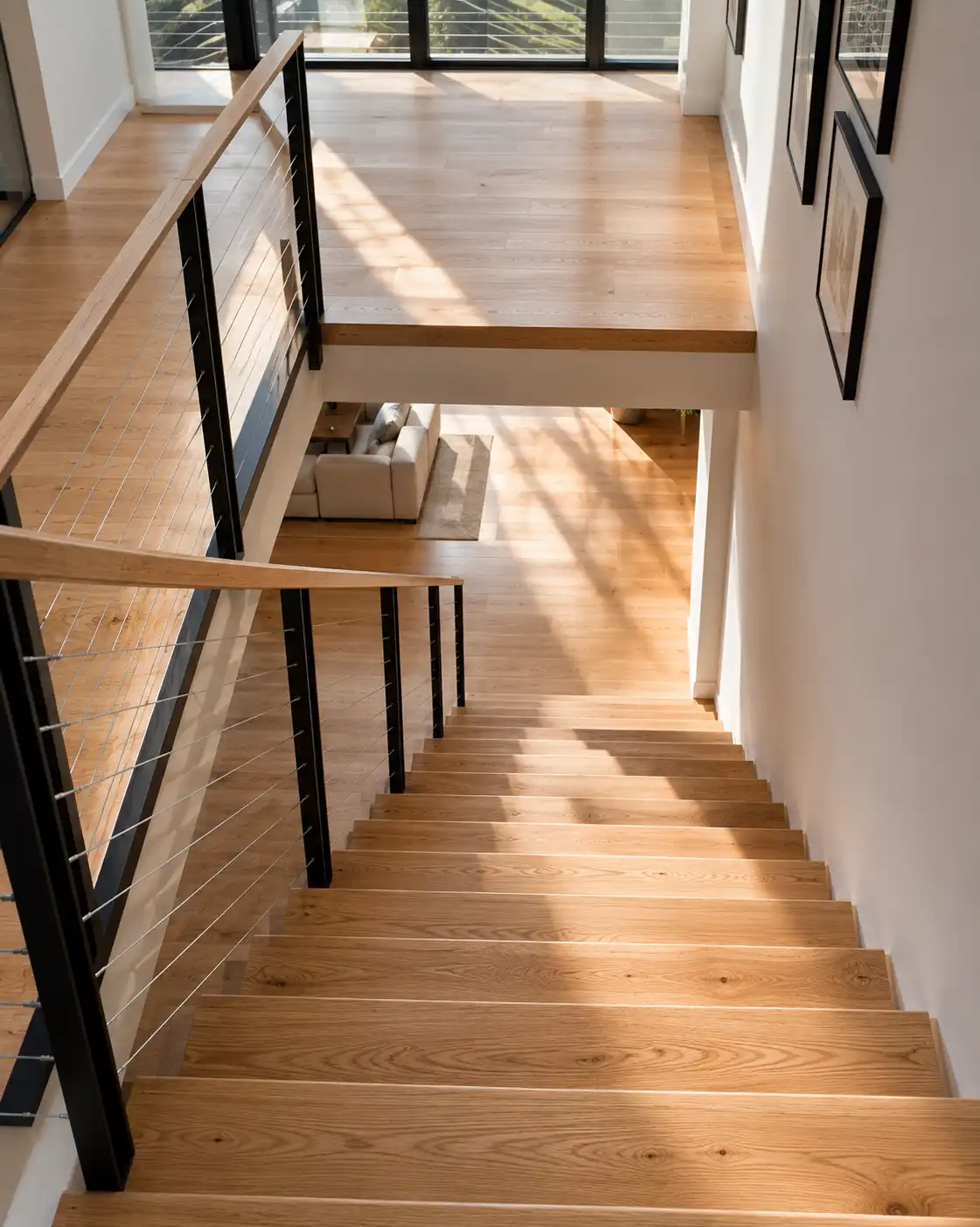
What are hardwood stair treads?
A stair tread is the horizontal board that forms the stepping surface of each stair. It is the part of the staircase your foot lands on with every step. Hardwood stair treads are fabricated from solid hardwood lumber – the same species used for hardwood flooring – and are dimensioned specifically for stair applications: deeper and thicker than standard flooring boards to provide structural integrity and a comfortable, safe stepping surface.
A complete stair assembly consists of treads (the horizontal surfaces), risers (the vertical boards between treads that close the front face of each step), stringers (the diagonal structural boards on each side that support the treads and risers), and nosing (the rounded or profiled front edge of each tread). Hardwood stair treads typically include an integral bullnose nosing profile that overhangs the riser by 3/4 to 1 inch.
Why hardwood specifically: Hardwood treads are the most durable, most visually refined, and most design-flexible choice for interior residential staircases. Hardwood treads can be matched to the hardwood floor at the landing for a seamless transition, stained or finished in any color, and refinished when worn. Carpet over plywood treads cannot be matched to the floor. LVP treads look thin and temporary. Hardwood is the only material that creates the fully designed staircase look most Southern California homeowners want in 2026.
National Hardwood fabricates custom hardwood stair treads in any species, thickness, length, and profile from our Van Nuys shop. We stock hardwood flooring and stair treads in the same species so both can be matched and finished to the same specification from one source. Our in-house mill produces custom thick treads up to 3.5 inches – see our floating stairs guide for floating tread specifications.
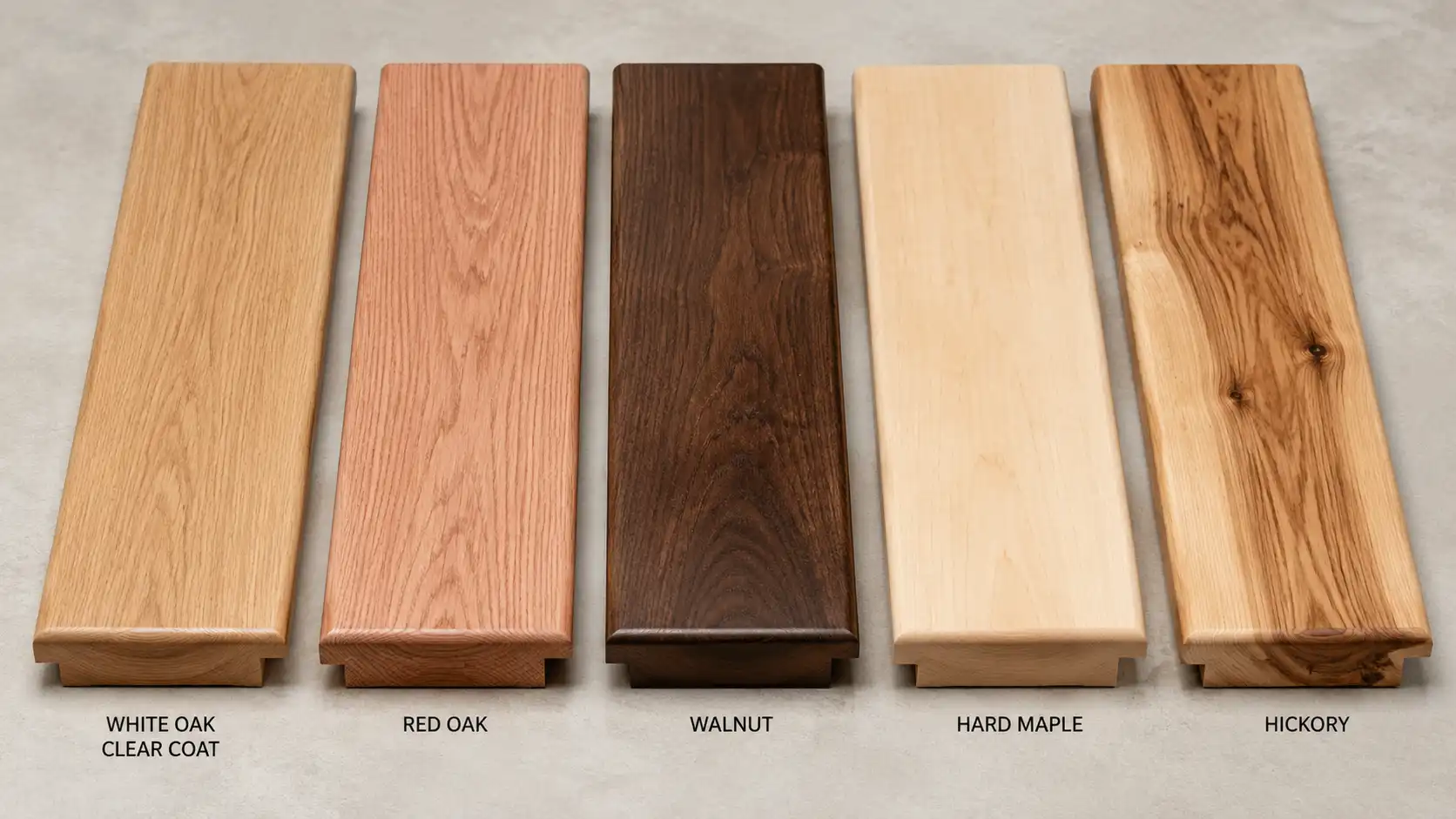
Hardwood stair tread species: the complete comparison
Species selection determines how the treads look when stained or finished, how durable they are under daily foot traffic, and whether they can be matched to the hardwood floor at the landing. Every species below is available in stair tread dimensions at National Hardwood.
Matching floating stair treads to your hardwood floor
The most common design goal in LA floating stair projects is a seamless visual connection between the hardwood floor and the stair treads. When the floor and treads are the same species and finished to the same specification, the staircase reads as an extension of the floor rather than a separate element. Because National Hardwood stocks both hardwood flooring and custom stair treads, we can match both from a single source and finish them to the same color in our showroom.
| Floor Species | Best Tread Match | Landing Nosing | Stain Approach |
|---|---|---|---|
| White oak natural | White oak – natural clear coat | White oak – natural clear coat | No stain – water-based clear finish only |
| White oak warm honey | White oak – matching warm stain | White oak – matching stain | Test stain on tread sample first – match to floor color |
| Red oak medium brown | Red oak – matching stain | Red oak – matching stain | DuraSeal Provincial or Minwax Special Walnut most common match |
| Red oak dark walnut | Red oak – dark stain | Red oak – dark stain | Minwax Dark Walnut or Jacobean – test on tread first |
| Walnut natural | Walnut – natural clear coat | Walnut – natural clear coat | No stain – no tone modification required |
| Engineered white oak | White oak solid or hemlock in matching stain | Hemlock in matching stain | Must test stain on solid tread to match engineered face veneer |
Stair tread profiles: which nosing edge is right?
The nosing profile on the front edge of each tread is both a safety feature and a design choice. The profile determines the visual character of the step edge and must comply with California code requirements for nosing projection and radius.
| Profile Name | Description | Best For | CA Code Notes |
|---|---|---|---|
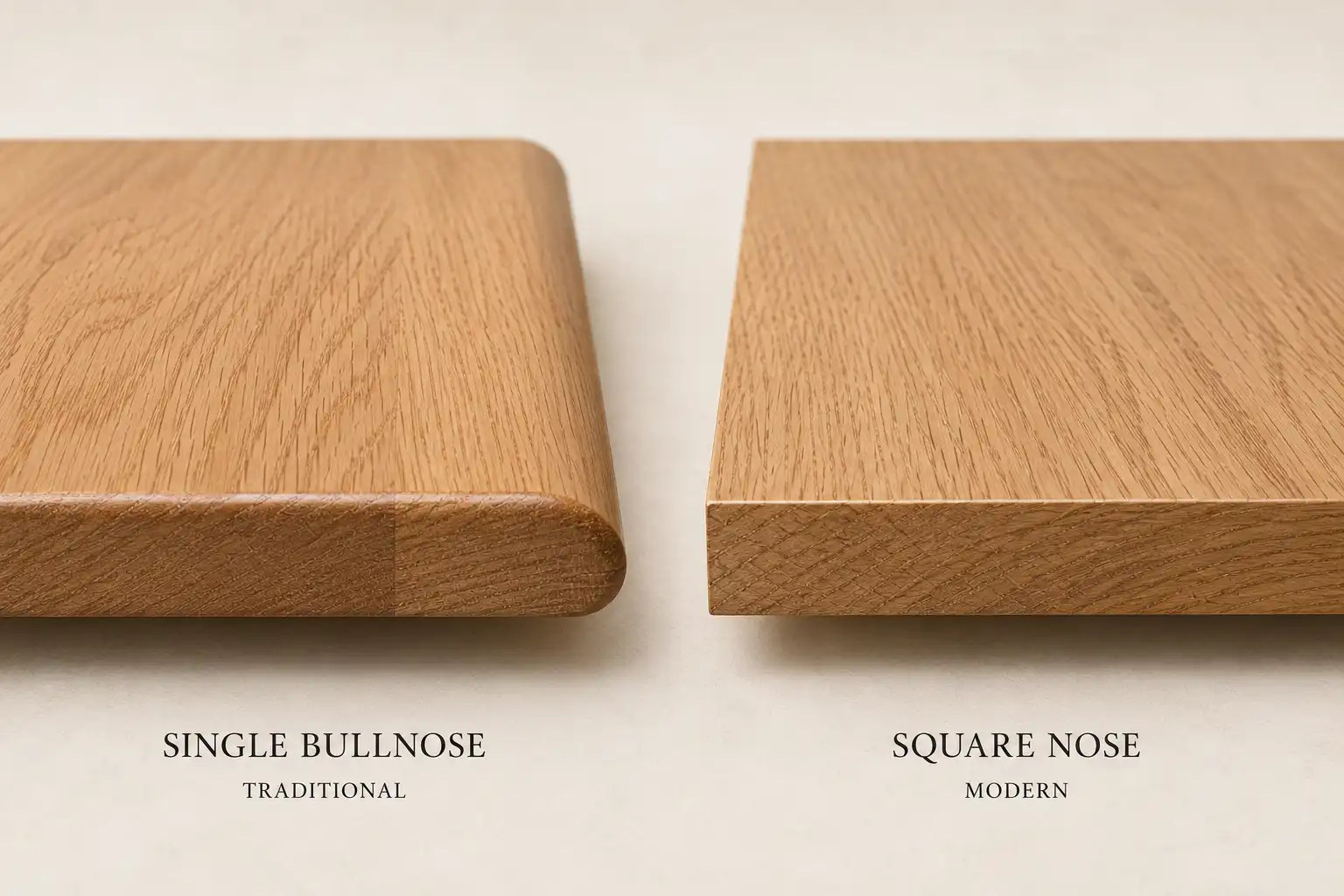
| Single bullnose | One rounded front edge, square sides and back. | Wall-to-wall staircases where the tread sides are against walls or closed stringers | Bullnose radius must be minimum 9/16 inch. Projection 3/4 to 1.25 inches. |
| Double bullnose (return) | Both front edge and one side edge are rounded with a bullnose return. | Open-sided staircases where one end of the tread is visible from the room | Same nosing requirements apply to both front and side bullnose edges |
| Square nose (no nosing) | Completely flat front edge with 90-degree corner. | Floating stairs and modern contemporary staircases with thick treads | If no nosing used, minimum tread depth must be 11 inches instead of 10 inches |
| Eased edge | Very slight rounding on the front edge – not a full bullnose. | Modern or transitional stairs where a full bullnose looks too traditional | Compliant if the eased edge meets the minimum radius requirement |
| Cove and bead | Decorative profile on the underside of the nosing. | Traditional Victorian and Colonial staircases visible from an open foyer | Profile is on the underside – front edge still requires standard nosing compliance |
Prefinished vs unfinished stair treads: which is right for your project?
This is the decision most buyers get wrong. The choice between prefinished and unfinished treads affects cost, installation timeline, final appearance, and how well the treads match the adjacent floor. There is no universally correct answer – the right choice depends on your project type.
Factory stained and sealed before delivery
- Faster installation – no on-site finishing wait time
- Factory finish is harder and more durable than site-applied finish
- No fumes on-site – important for occupied homes
- Color is consistent across all treads from the same batch
- More expensive than unfinished
- Matching to existing floor color requires sending a floor sample for factory color matching
- Cannot be adjusted on-site if color is slightly off
Raw wood, stained and finished after installation
- Can be stained on-site to match existing floor color exactly
- Less expensive than prefinished
- Finish can be adjusted during application until color matches
- All surfaces finished together creates more unified appearance
- Requires 2 to 3 day wait for stain and finish to cure before use
- On-site fumes from stain and finish – home cannot be occupied
- Best choice when exact floor color matching is the priority
NHW recommendation for LA homes: When your goal is to match existing hardwood flooring exactly, unfinished treads are almost always the better choice. Bring a sample of your floor to our showroom and we will match the stain color on an unfinished tread sample before ordering. See our stains and finishes selection for California-compliant products we recommend for tread finishing.
Prefinished floor problem: If your floor is a prefinished hardwood (factory-finished with aluminum oxide coating), matching it exactly with prefinished treads is very difficult. The micro-beveled edges and aluminum oxide coating on prefinished floors create a different surface appearance that off-the-shelf prefinished treads cannot match. In this situation, unfinished treads stained on-site give you the best chance of a close color match. Read our full guide on prefinished floors and curved stair nosing.
Retrofit stair treads vs new build: what is different?
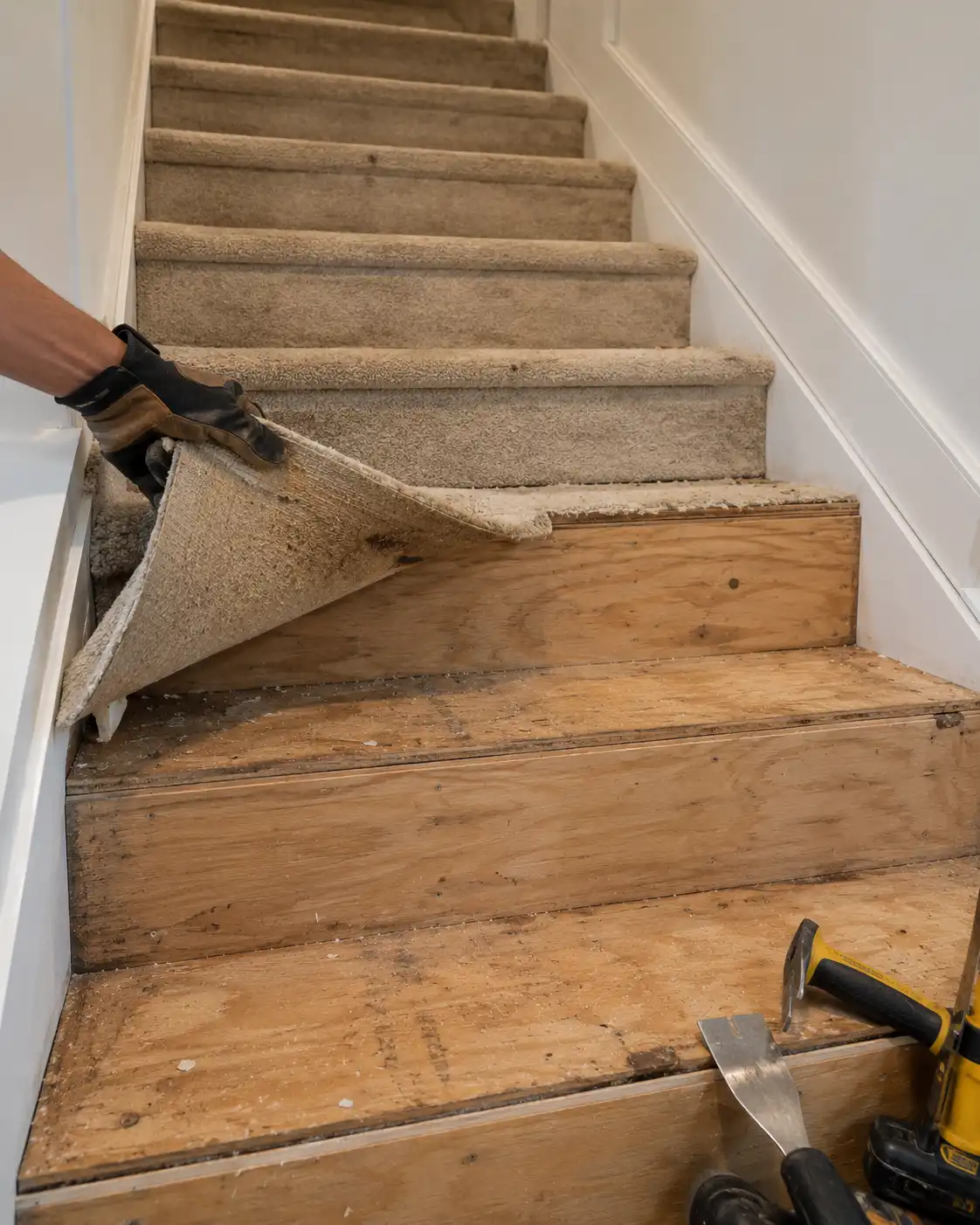
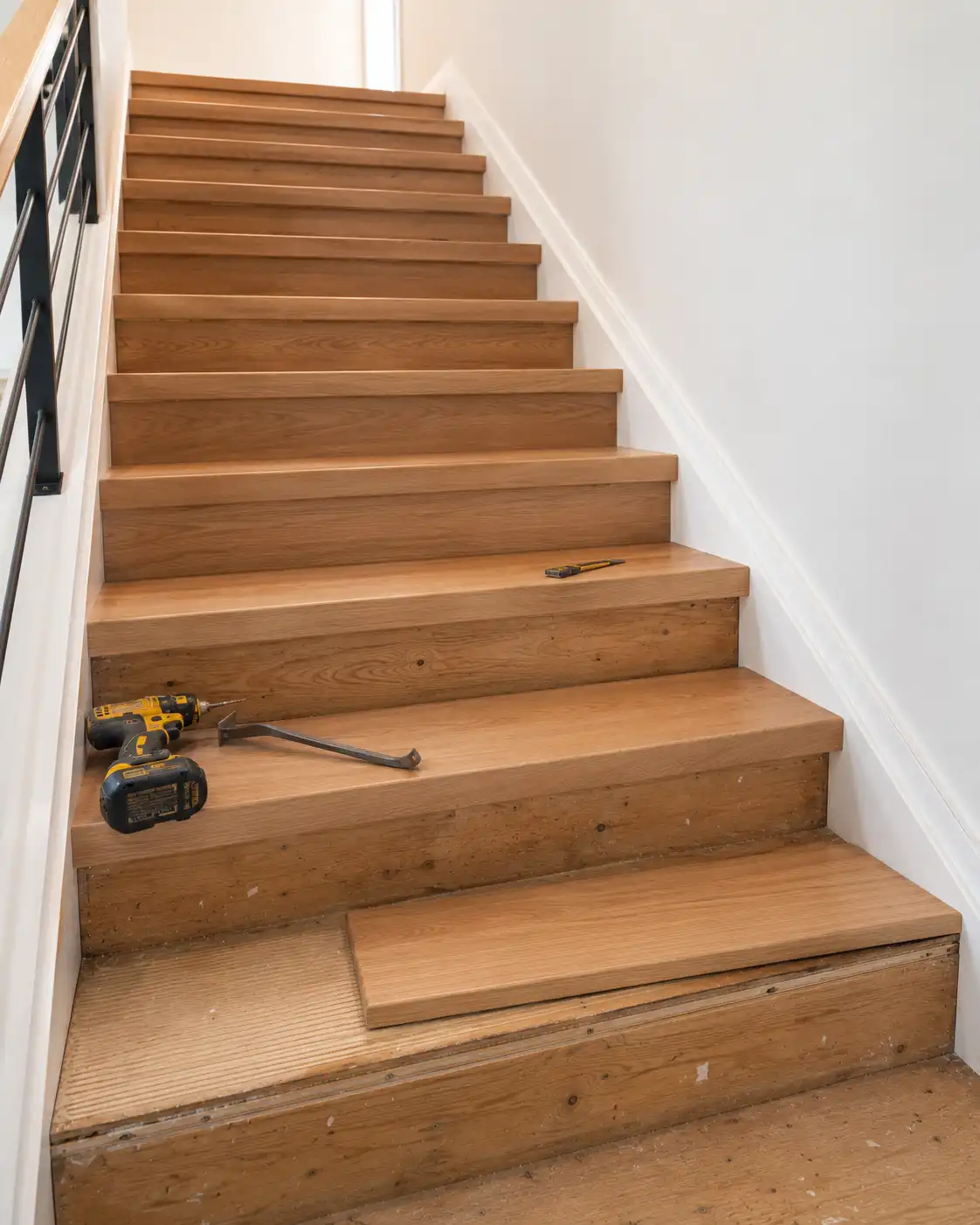
Retrofit installation means installing new hardwood treads over existing stairs – typically over old carpet or worn painted treads. New build means installing hardwood treads in a newly framed staircase. The preparation and tread specification differ significantly between the two approaches.
Retrofit installation: hardwood over existing stairs
Retrofit treads are designed to install on top of the existing plywood or pine sub-tread. They are typically 1/2 inch to 3/4 inch thick – thinner than new build treads – and sized to fit over the existing tread with a nosing that overhangs the existing riser. This approach avoids the structural work of removing the existing stair framing but requires that the existing treads are solid and level.
- Existing treads must be structurally sound – no flex, no loose boards
- Each existing tread must be measured individually – no two retrofit situations are identical
- Nosing must account for the combined thickness of existing tread plus new hardwood tread plus any adhesive
- Riser boards (if painting) must be done before treads are installed
- Riser boards (if replacing with hardwood risers) must be cut carefully to fit between existing stringers
New build installation: hardwood treads on new framing
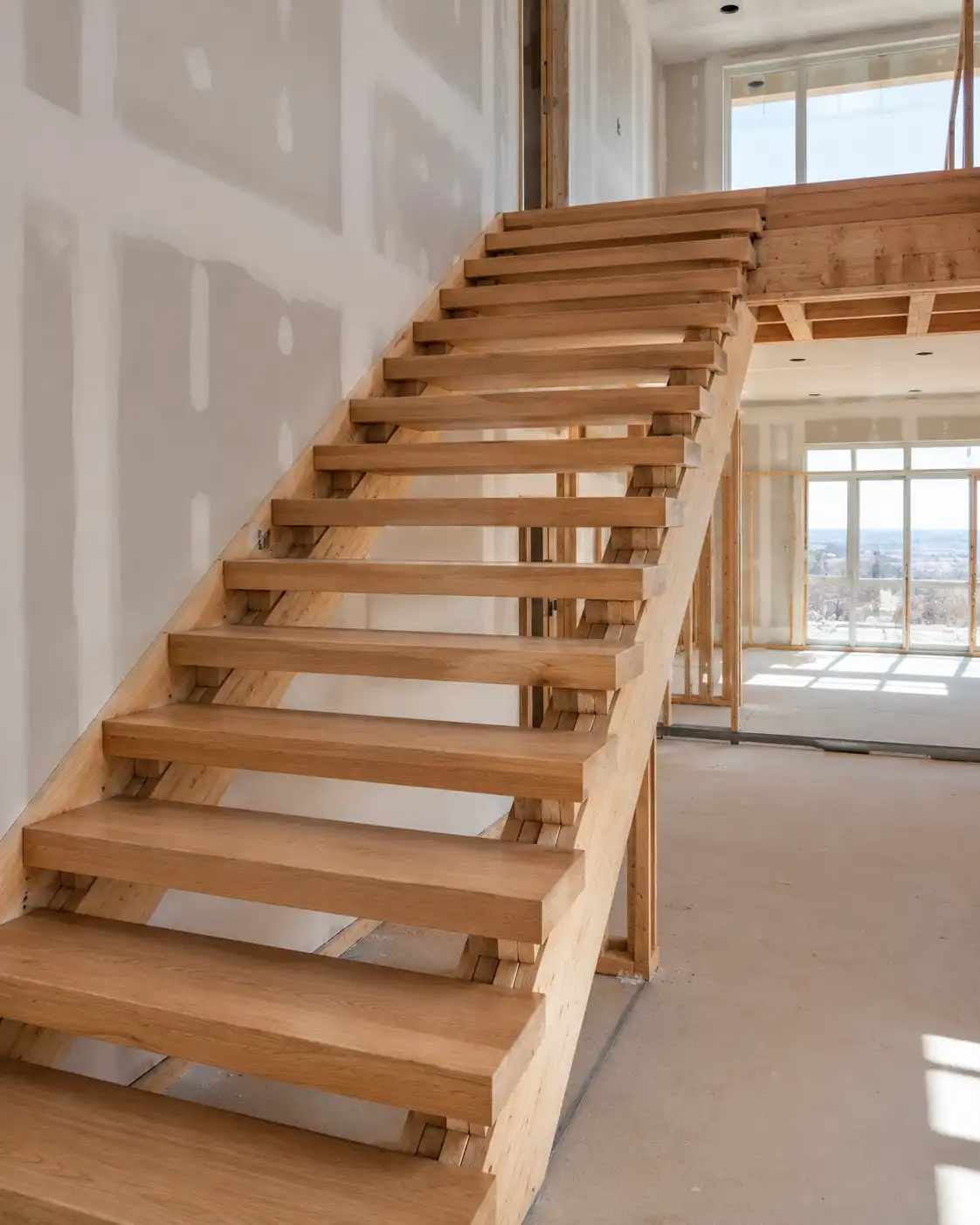
New build treads are installed on freshly framed stringers, typically at 1 inch thickness for conventional stairs or 1.5 inches and thicker for floating stairs. The stringers are built to the tread thickness specification – the tread thickness must be confirmed before stringer framing begins. This approach gives the most flexibility in species, thickness, and profile selection.
California code requirements for stair treads
| Requirement | CA Code Standard | Practical Meaning |
|---|---|---|
| Minimum tread depth | 10 inches measured nosing to nosing | The horizontal surface from front nosing edge to the back of the tread must be at least 10 inches |
| Tread depth without nosing | 11 inches if no nosing is used | For square nose treads with no nosing projection, the tread must be 11 inches deep |
| Maximum riser height | 7.75 inches maximum | The vertical distance between tread surfaces cannot exceed 7.75 inches |
| Riser height variation | Maximum 3/8 inch between any two risers | All risers on the same staircase must be within 3/8 inch of each other |
| Minimum stair width | 36 inches clear | Tread width must be minimum 36 inches between walls or handrails |
| Nosing projection minimum | 3/4 inch beyond riser face | Bullnose must extend at least 3/4 inch past the face of the riser below |
| Nosing projection maximum | 1 and 1/4 inches beyond riser face | Nosing cannot overhang more than 1.25 inches – creates trip hazard if exceeded |
| Tread surface | Slip-resistant finish required | Treads must have a non-slip finish. A satin or low-sheen finish meets this requirement. |
Riser height consistency is the most commonly failed inspection item: If your retrofit tread installation adds height to existing treads unevenly, the riser heights will vary beyond the 3/8 inch limit. Measure every existing tread height before ordering retrofit treads and confirm that adding the new tread thickness creates consistent riser heights across the full staircase run.
Hardwood stair tread installation: step-by-step
This process covers retrofit hardwood tread installation over existing stairs, which is the most common scenario in Southern California residential projects.
Tools required
- Tape measure and level (check each tread for level and twist)
- Circular saw or miter saw for length cuts
- Table saw for ripping any width adjustments
- Finish nailer (15 or 16-gauge) with 2-inch and 2.5-inch finish nails
- Construction adhesive (Loctite PL Premium or similar)
- Tapping block and rubber mallet
- Belt sander or drum sander
- Caulk gun
Hardwood stair tread cost guide: Southern California 2026
Cost varies significantly by species, thickness, finish, and whether treads are standard or custom. A standard 12-to-14 step residential staircase requires 12 to 14 treads plus a landing nosing piece.
| Product | Species | Cost Per Tread | Notes |
|---|---|---|---|
| Standard tread 1 in thick, 48 in – unfinished | Red oak or hemlock | $35 to $65 | Most affordable hardwood tread option. Stained on-site. |
| Standard tread 1 in thick, 48 in – unfinished | White oak | $55 to $90 | Most requested species. Stained or natural finish on-site. |
| Standard tread 1 in thick, 48 in – unfinished | Walnut | $90 to $160 | Premium species. Natural finish on-site. |
| Standard tread 1 in thick, 48 in – unfinished | Hickory | $65 to $110 | Hardest domestic species. Natural or light stain on-site. |
| Thick tread 2 in to 3.5 in – floating stair spec | White oak or walnut | $150 to $600 plus | Custom fabrication. Price varies with thickness and species. See our floating stairs guide. |
| Custom profile or winder tread | Any species | Quote required | Custom dimensions, angled cuts, L-shape winders – all available from NHW in-house mill. |
| Installation labor per tread (SoCal) | N/A | $50 to $150 | Retrofit over existing stairs. New build with framing is higher. Full 14-step retrofit: $700 to $2,000 labor. |
Trade and contractor accounts receive volume pricing on all stair tread materials at National Hardwood.
