
The wood that outlasts
everything else.
Ipe delivers a 3,680 lbf Janka rating, a Class A fire rating without chemicals, and a 75-year lifespan. Used on the NYC High Line, the Atlantic City Boardwalk, and thousands of Southern California decks, fences, and siding projects.
What is Ipe wood?
Ipe (pronounced EE-pay) is a tropical hardwood native to Brazil, Peru, and Bolivia — also called Brazilian Walnut, Ironwood, and Lapacho negro. The tree takes 40 to 100 years to reach harvestable size. That slow growth produces the extraordinarily tight grain, extreme density, and natural oil content that makes Ipe the most durable commercial timber species on earth.
At National Hardwood, we stock only Lapacho group Ipe — the highest performing group within approximately 20 subspecies. We carry Ipe for decking, fencing, exterior siding, stair treads, and interior flooring from our Van Nuys showroom.
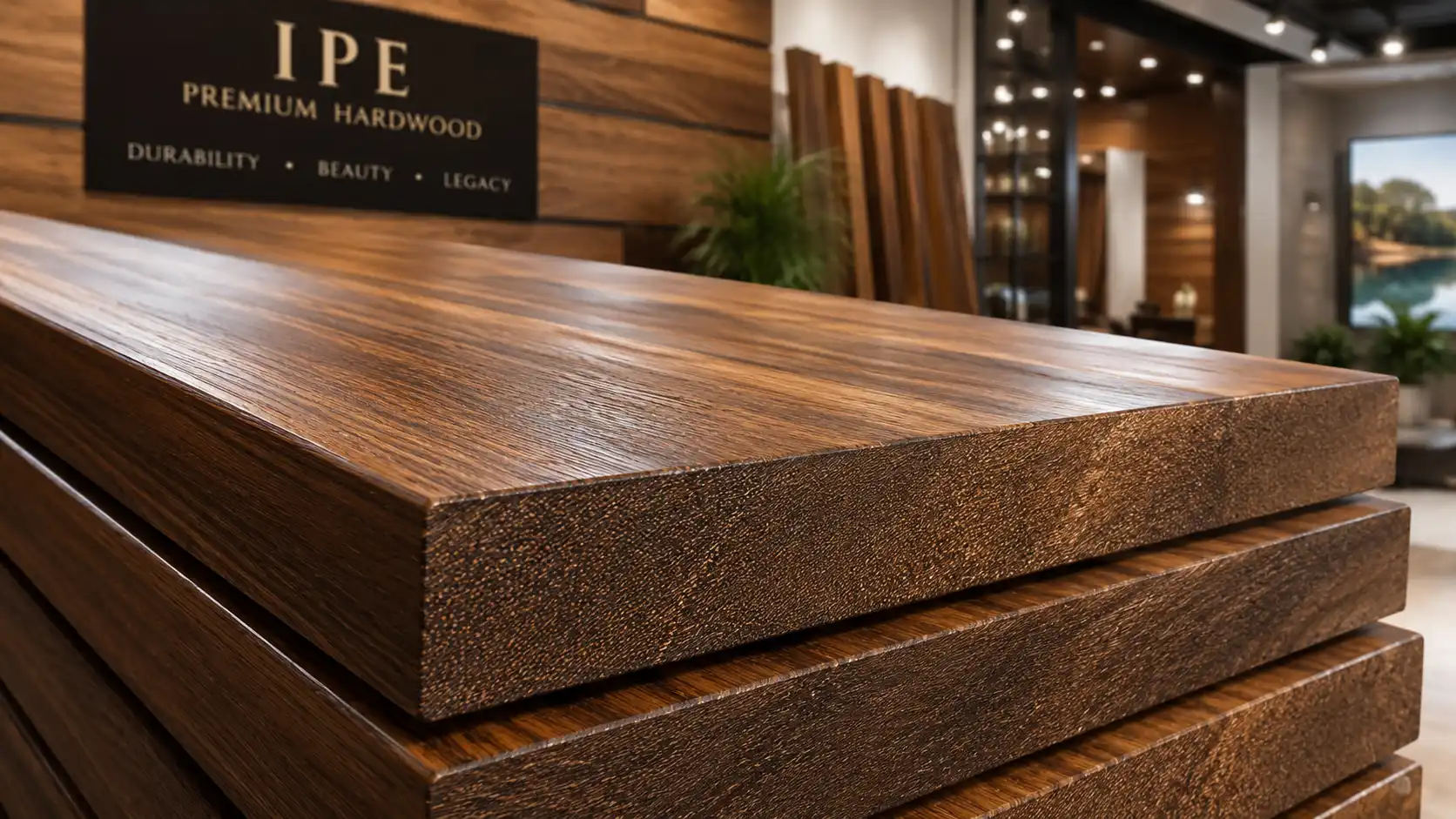
Physical properties at a glance
| Property | Ipe Value | Reference Point |
|---|---|---|
| Janka Hardness | 3,680 lbf | White Oak 1,360 lbf · Cedar 350 lbf |
| Air-dry density | 66–75 lbs per cu ft | Sinks in water — denser than water |
| Fire rating | Class A (ASTM E84) | Equal to steel and concrete |
| Decay resistance | Class 1 Very Durable | Highest USDA Forest Products Lab rating |
| Termite resistance | Highest rating | 15 yrs in ground contact without attack |
| Expected lifespan | 40–75 years | Pressure-treated pine: 10–15 years |
| Seasonal movement | Rated: small | ~1/16 inch on a 6-inch-wide board |
| Fresh milled color | Olive brown to dark chocolate | Weathers to silver-gray unfinished |
Ipe vs every major alternative
We sell hardwood, composite, and everything in between. Here is the honest comparison — every major decking material on the metrics that matter.
| Material | Lifespan | Fire Rating | Maintenance | Materials/sq ft |
|---|---|---|---|---|
| Ipe | 40–75 years | Class A | Annual oil optional | $10–$25 |
| Composite (Trex/Azek) | 20–30 years | Class C | Annual cleaning | $5–$12 |
| Pressure-treated pine | 10–15 years | Class C | Annual stain & seal | $2–$5 |
| Cedar | 15–25 years | Class C | Annual stain & seal | $4–$8 |
| Teak | 40–60 years | Class A | Annual oil | $20–$40 |
| Cumaru | 20–40 years | Class A | Annual oil | $8–$15 |
| Redwood | 20–30 years | Class C | Annual stain & seal | $5–$10 |
Ipe’s cost per year per square foot works out to approximately $0.29 — lower than composite decking at $0.32+ per year once replacement costs are factored in. Over 75 years, Ipe is frequently the less expensive choice.
Why Ipe works especially well in Southern California
Wildfire zones and Class A fire rating
Ipe is one of the only natural wood species that achieves a Class A fire rating per ASTM E84 — without chemical treatment. Pressure-treated pine, cedar, redwood, and composite decking are all rated Class C. Ipe’s extreme density makes it highly resistant to ember ignition, which is the primary mechanism by which homes ignite during wildfires.
Coastal salt air and termites
Ipe’s natural oil content makes it impervious to salt air corrosion. Southern California also has one of the highest subterranean and drywood termite pressures in the US. Ipe heartwood is naturally resistant to termite attack without any chemical treatment — earning the highest termite resistance rating from the US Naval Research Laboratory.
San Fernando Valley temperature extremes
Ipe’s dimensional stability after manufacture is rated small — approximately 1/16 inch of movement on a 6-inch board between extreme wet and dry seasons. This far exceeds the stability of composite decking, which can expand significantly in the 110°F+ summer temperatures common in the Valley and Inland Empire.
Ipe uses beyond decking
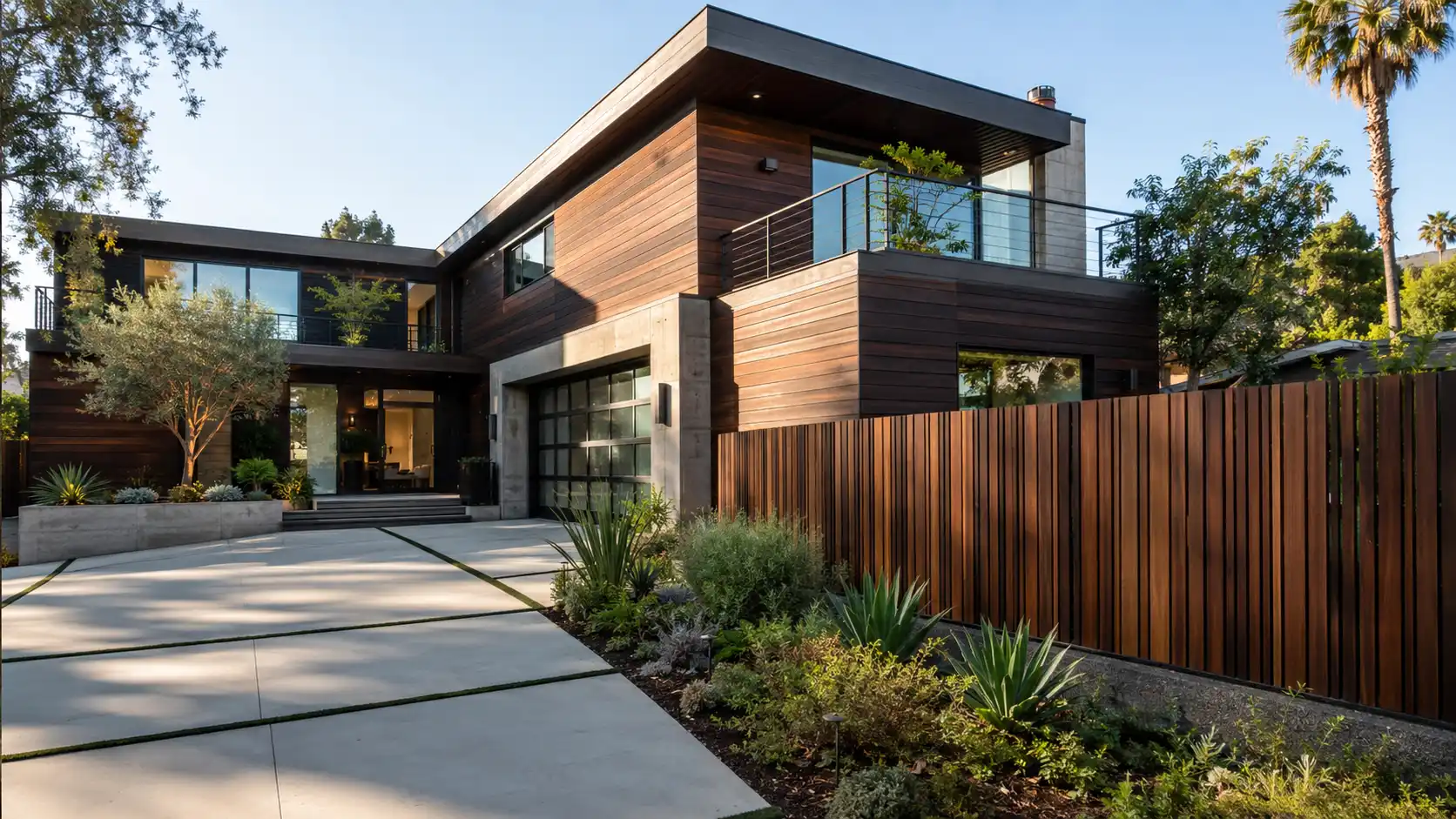
Ipe cost breakdown: Southern California 2026
| Profile | Common Use | Material Cost/sq ft |
|---|---|---|
| 1×6 Ipe decking | Most popular residential profile | $10–$16 |
| 5/4×6 Ipe decking | Heavy residential and commercial | $12–$20 |
| 2×4 and 2×6 Ipe | Heavy timber applications | $15–$25 |
| Ipe fencing boards | Privacy fencing, 1×6 fence grade | $8–$14 |
| Ipe siding | Exterior wall cladding | $10–$18 |
| Project | Size | Total Installed (SoCal) |
|---|---|---|
| Small residential deck | 200 sq ft | $5,000–$9,000 |
| Medium residential deck | 400 sq ft | $11,600–$20,400 |
| Large residential deck | 600 sq ft | $17,000–$30,000 |
| Ipe privacy fence | 100 linear ft | $5,500–$9,000 |
Add 12% to material quantities for waste from cuts. Stair treads, custom railings, and permits are separate cost items. Southern California contractor rates are at the higher end of national ranges.
